Introduction
Studies on skilled worker migration from developing to developed countries have traditionally focused on the loss of talent and expertise, a phenomenon known as brain drain. However, recent research indicates that migration opportunities can result in brain gain through increased investment in education and training, remittances, and return migration (Batista et al., 2025). In the Philippines, historically one of the largest exporters of nurses, this shift in the narrative is supported by evidence showing that between 2000 and 2006, the country produced about nine additional licensed nurses for every nurse who migrated abroad (Abarcar & Theoharides, 2024). This pattern has been associated with overseas demand, government policies, nursing schools, recruitment networks, family expectations, and cultural factors that make working abroad seem realistic and desirable (Dimaya et al., 2012; Lorenzo et al., 2007; Ortiga, 2020). However, simple counts may overstate brain gain if it is assumed that more licenses automatically mean more locally practicing nurses. In reality, some licensed nurses may leave domestic nursing due to low pay, difficult workplace conditions, limited advancement opportunities, or better jobs outside nursing (Dimaya et al., 2012; Gotehus, 2023).
This study reviews existing literature and presents survey evidence to examine institutional, social, and cultural factors related to whether licensed Philippine nurses migrate, remain in domestic nursing, or exit from the profession. Focusing on these factors helps clarify why nurse production alone may be an inadequate indicator of migration’s long-term impact on the Philippines, which currently faces large shortages of healthcare professionals, especially in government-funded health stations. The Philippines falls below the World Health Organization’s recommended skilled health-worker-to-population ratio of 4.45 per 1,000 people, and public facilities alone reportedly face a shortage of 121,000 nurses (Asis & Dans, 2025). This deficit illustrates why growth in the number of licensed nurses should not automatically be treated as evidence of gains in the domestic health workforce.
Previous research has documented many of the institutional, social, and cultural influences on Philippine nurse migration and career decisions, as well as the varied pathways nurses follow after education and licensure. However, considering these influences alongside post-licensure pathways may help clarify whether growth in nurse production translates into gains in the domestic healthcare workforce.
This study therefore asks: How do institutional, social, and cultural factors relate to the migration, domestic retention, and career pathways of licensed nurses in Negros Occidental? It further considers whether nurse licensure alone provides an adequate measure of gains to the domestic nursing workforce when licensed nurses may migrate, remain in migration-oriented career pathways, or leave nursing.
Literature Review
Institutional Factors
Institutional factors shape the choices available to Philippine nurses and the challenges they may face. Government entities, nursing schools, local hospitals, recruitment agencies, overseas employers, and non-nursing employers play significant roles in career opportunities, constraints, and post-licensure pathways.
Government policy plays a central role in shaping overseas labor migration, and the Philippines has developed an extensive state-managed migration system. Through government agencies and formal migration processes, overseas employment has become integrated into national labor and economic policy. Migration policy is economically significant because overseas workers’ remittances have become an important part of the Philippine economy (Galam, 2015).
The large scale of nurse migration heightens the significance of the relationship between migration policy and domestic healthcare. Philippine Department of Health data from 2021 indicated that its records included approximately 617,000 licensed nurses, of whom about 316,000, or 51%, were estimated to have migrated overseas (Migration Policy Institute, 2024).
At the same time, the government has attempted to address brain drain through policies related to migration management, return and reintegration, domestic workforce shortages, compensation, working conditions, professional development, and salary incentives (Asis & Dans, 2025; Dimaya et al., 2012). These competing priorities create a policy dilemma in which the government seeks to retain nurses for domestic healthcare while continuing to support migration as part of a broader labor-export strategy (Ang & Tiongson, 2023; Dimaya et al., 2012).
Philippine nursing programs have often been oriented toward overseas labor demand. Within a policy environment that supported labor migration and the growth of nursing education, private nursing programs expanded rapidly, increasing the number of nursing graduates and licensed nurses (Abarcar & Theoharides, 2024; Ortiga, 2018). Total four-year nursing enrollment rose from about 90,000 in 2000 to over 400,000 in 2006, while the number of nursing graduates increased from about 9,000 to 70,000 over roughly the same period (Abarcar & Theoharides, 2024). Nursing education was often viewed as an investment in future migration (Ortiga, 2018, 2020). However, the number of graduates exceeded the supply of stable local hospital jobs, contributing to underemployment and making it harder for some licensed nurses to obtain the clinical experience required for overseas work (Ortiga, 2018; Ortiga & Macabasag, 2021).
The local healthcare system affects nurses’ career paths through wages, workloads, staffing levels, workplace conditions, and employment opportunities. Limited availability of stable nursing positions can make domestic nursing difficult to sustain while also restricting opportunities to build relevant work experience required for overseas employment (Ortiga, 2018).
Recruitment agencies, migration-related institutions, and overseas employers guide nurses’ migration pathways through information and employment connections, as well as requirements related to clinical experience, exams, credentials, documentation, fees, and visa processing. These requirements can delay migration or place it beyond some nurses’ immediate reach, leading some to remain in local employment while gaining experience or preparing for eventual overseas work (Dimaya et al., 2012; Gotehus, 2023; Lorenzo et al., 2007; Ortiga, 2018, 2020; Ortiga & Macabasag, 2021).
Local non-nursing employers, especially call centers and health-related BPO (business process outsourcing) jobs, provide licensed nurses with an alternative route for socioeconomic mobility. These jobs can build on the English skills nurses develop through nursing education and may offer faster hiring or better pay than local hospital work. For example, health-related BPO jobs have been estimated to pay an entry-level annual salary of ₱780,000, compared with ₱456,261 for entry-level nurses in the Philippines (Ang & Tiongson, 2023). For nurses facing low hospital wages, limited openings, difficult workplace conditions, or delayed migration plans, these jobs may provide an attractive alternative to clinical practice (Dimaya et al., 2012; Gotehus, 2023).
Social Factors
Family pressures may influence nurse migration. Many families view overseas nursing as a means of securing higher income, supporting relatives, and improving the household’s future. Because families may invest substantial resources in nursing education, graduates can feel pressure to pursue overseas opportunities associated with the profession. This indicates that nursing and migration are often treated not only as individual career choices but also as family projects tied to household mobility (Ortiga, 2020). Family expectations and financial responsibilities can sustain interest in migration even when migration is delayed or uncertain (Ortiga, 2018, 2020).
Family expectations and obligations can also work in the opposite direction by delaying or preventing migration. Migration often requires additional financial resources for review courses, exams, documents, applications, and the clinical experience required by overseas employers (Ortiga, 2018, 2020). Nurses may face pressure to begin earning or support relatives rather than continue waiting for an overseas opportunity, while caregiving responsibilities may make them less willing or able to leave. Remaining in the Philippines therefore does not necessarily indicate abandonment of migration aspirations; it may reflect a temporary or strategic decision shaped by family responsibilities, resources, and available opportunities (Gotehus, 2023; Ortiga, 2018, 2020; Ortiga & Macabasag, 2021).
Informal social networks can guide nurses’ migration decisions by spreading information about overseas work and by making migrant success visible within families and communities. Classmates, coworkers, friends, relatives abroad, and nurses already overseas can make migration seem more realistic by sharing information about exams, job openings, applications, and life abroad (Gotehus, 2023; Ortiga, 2020). Nursing relatives abroad may motivate aspiring nurses by describing overseas job opportunities and presenting overseas nursing as attainable (Ortiga, 2020). Networks may also circulate warnings about failed applications, expensive exams, family separation, or nurses who remain stuck despite years of preparation (Gotehus, 2023; Ortiga, 2020).
Cultural Factors
Culture of migration refers to a social environment in which working abroad is seen as normal, desirable, and expected. For Philippine nurses, migration may be seen not only as a response to low wages or limited job opportunities but also as a pathway to success, adulthood, family responsibility, and upward mobility.
Migration has also become embedded in everyday community life through visible signs of migrant success, such as improved houses, spending, and lifestyle changes (Galam, 2015). Such displays may reinforce associations between migration, progress, and achievement. Migration aspirations can develop early, as children and families in migrant-sending communities come to imagine working outside the Philippines as a future path (Chu et al., 2025).
For nurses specifically, this culture of migration can present working abroad as the natural next step after nursing education or early clinical experience (Gotehus, 2023). Filipino migrant and returnee nurses may face pressure to become “ideal migrants,” whose overseas work is associated with financial achievement and responsibility toward family members in the Philippines (Spiliopoulos & Cuban, 2025).
Even nurses who remain in the Philippines may continue to understand their careers through the possibility of migration (Ortiga & Macabasag, 2021). The culture of migration affects not only those who leave, but also those who stay, wait, or redirect their careers when migration becomes delayed or blocked.
Methods
This study used an exploratory survey to examine institutional, social, and cultural factors associated with migration and career decisions among licensed nurses in Negros Occidental, Philippines. Existing literature was reviewed to establish the broader context for the study and inform interpretation of the survey findings. Relevant literature was identified primarily through Google Scholar using search terms related to brain drain, brain gain, Philippine nurse migration, and the Philippine culture of migration. Sources consisted primarily of peer-reviewed scholarship, supplemented by publications from recognized research organizations. English-language sources relevant to Philippine nurse migration and related workforce issues were included; nonacademic commentary and duplicate sources were excluded.
The survey involved 45 licensed nurses in Negros Occidental, a central Philippine province chosen as the study site given access to local nurses. The survey was administered in April 2026. Eligibility was limited to licensed nurses. Participants were recruited through convenience and snowball sampling, with a local contact approaching nurses through healthcare, community, and professional networks and additional participants recruited through referrals. Specific job titles, employment settings, and current employment status were not collected.
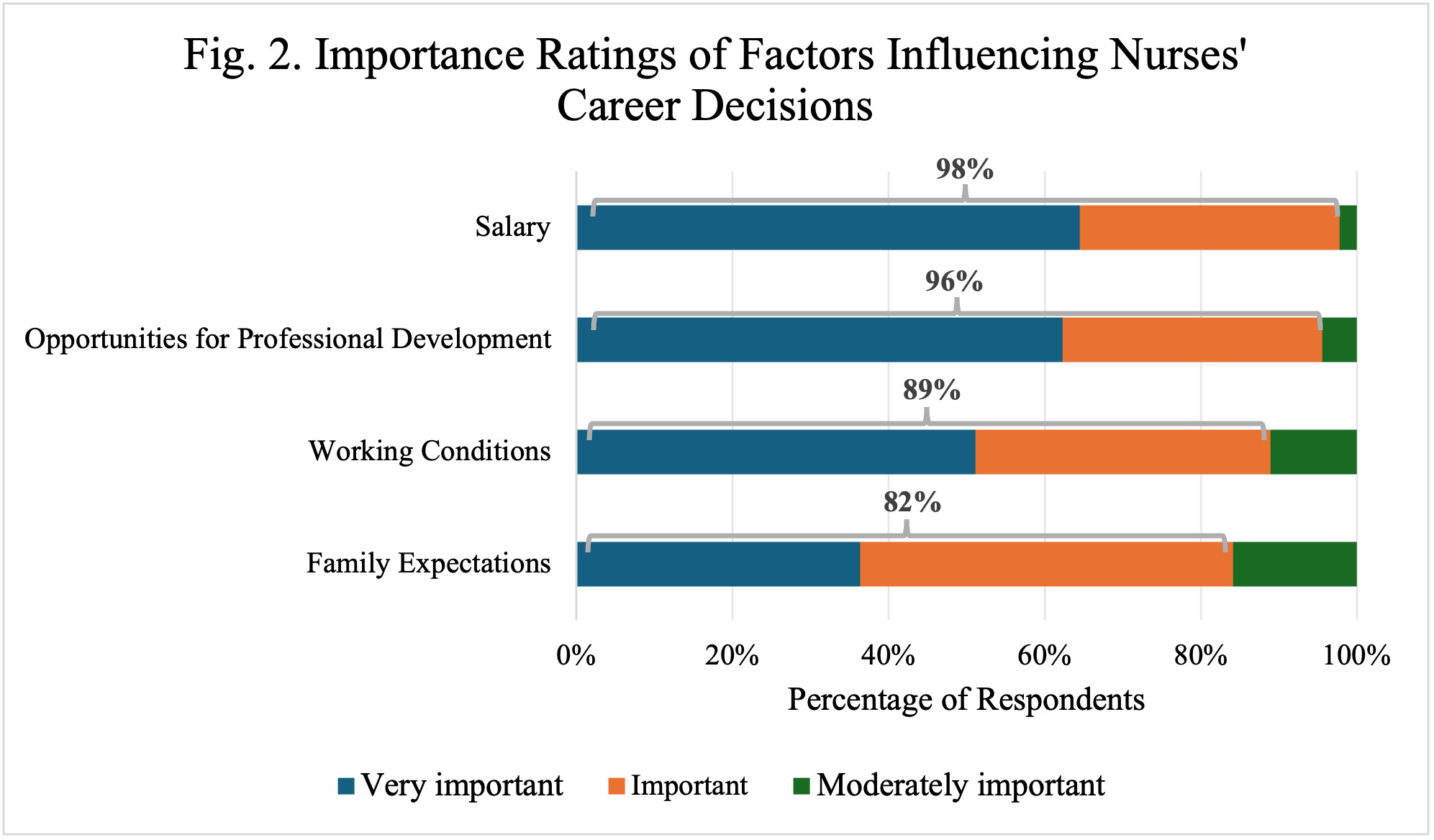
The questionnaire contained 13 numbered questions, several of which included follow-up items, addressing nursing education, migration plans, domestic nursing work, family expectations, workplace and financial factors, social influences, perceptions of overseas work, and reasons nurses stay or migrate. Questions used a combination of multiple-choice, open-ended, and mixed closed- and open-response formats. One question used a five-point Likert-type scale ranging from 1 (Not important at all) to 5 (Very important) to rate salary, working conditions, opportunities for professional development, and family expectations as factors in career decisions.
Open-ended responses were grouped into descriptive categories developed from recurring themes in participants’ answers rather than established in advance, and responses could be assigned to more than one category when applicable. All open-ended responses were categorized by the author. Missing responses were excluded question by question, and percentages were calculated using the number of respondents who answered each question. For open-ended questions, the percentage for each category was calculated using the total number of respondents who answered that question as the denominator. Because individual responses could be coded into more than one category, percentages across categories could exceed 100%.
Responses were collected confidentially. No names were placed on the surveys, and completed surveys were kept separate from signed consent forms. Before data collection began, the survey questions, research plan, recruitment procedures, confidentiality protections, informed consent procedures, risks and benefits, and consent form were reviewed and approved by a Unionville High School Institutional Review Board, which was composed of a registered nurse, an assistant principal, and a local science teacher.
Survey responses were summarized using descriptive statistics and qualitative categorization of open-ended responses. Findings were interpreted in relation to themes identified in existing literature, with attention to areas of agreement, variation, and additional insight.
Survey Results
The survey results are organized around institutional, social, and cultural themes identified in the literature on Philippine nurse migration. Forty-five licensed Philippine nurses from Negros Occidental were surveyed for this study. Among respondents, 75% were ages 35–54, 18% were ages 18–34, and 7% were ages 55–64. Among the 41 respondents who reported clinical experience, the average was 11 years and the median was 12 years.
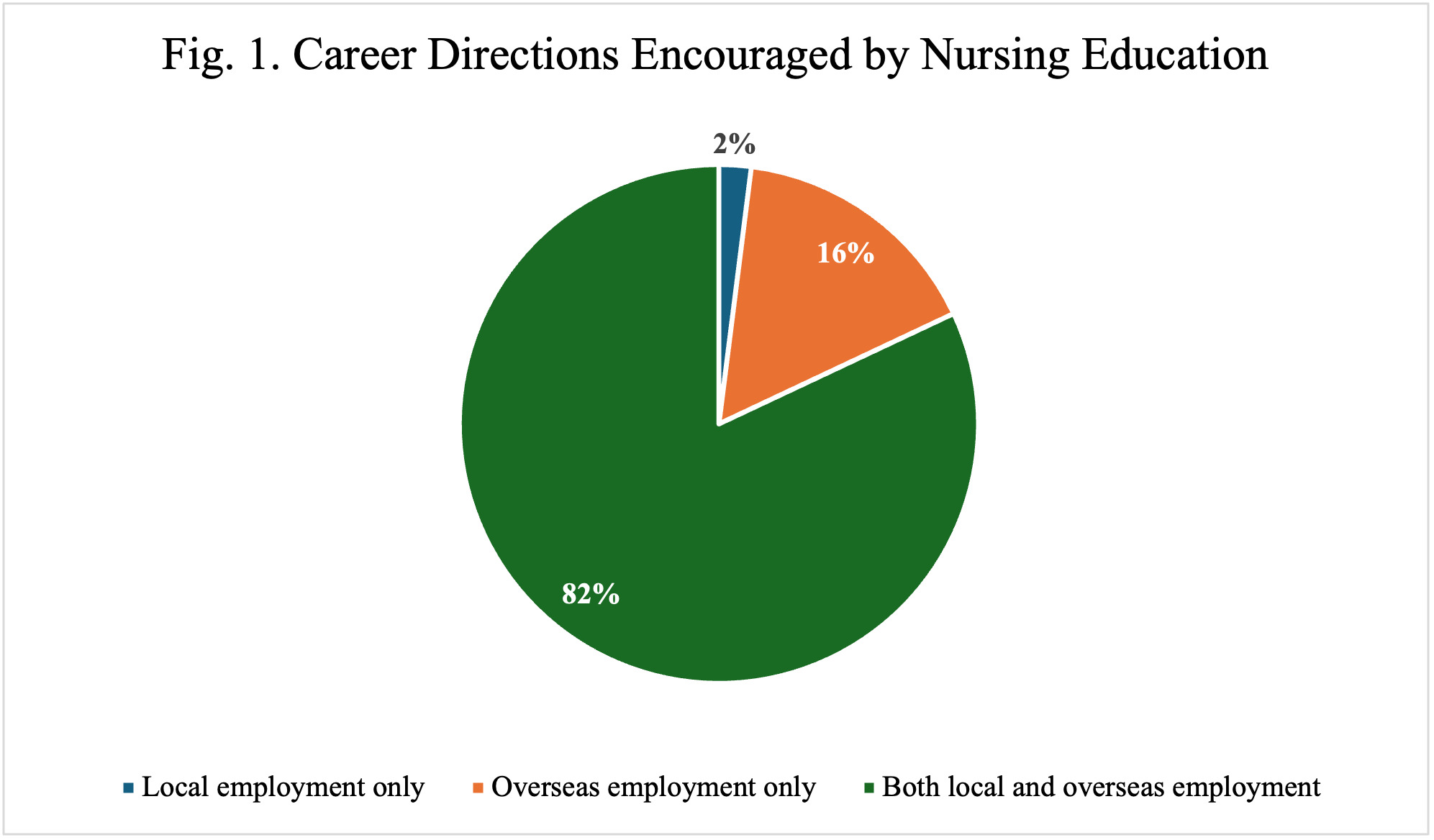
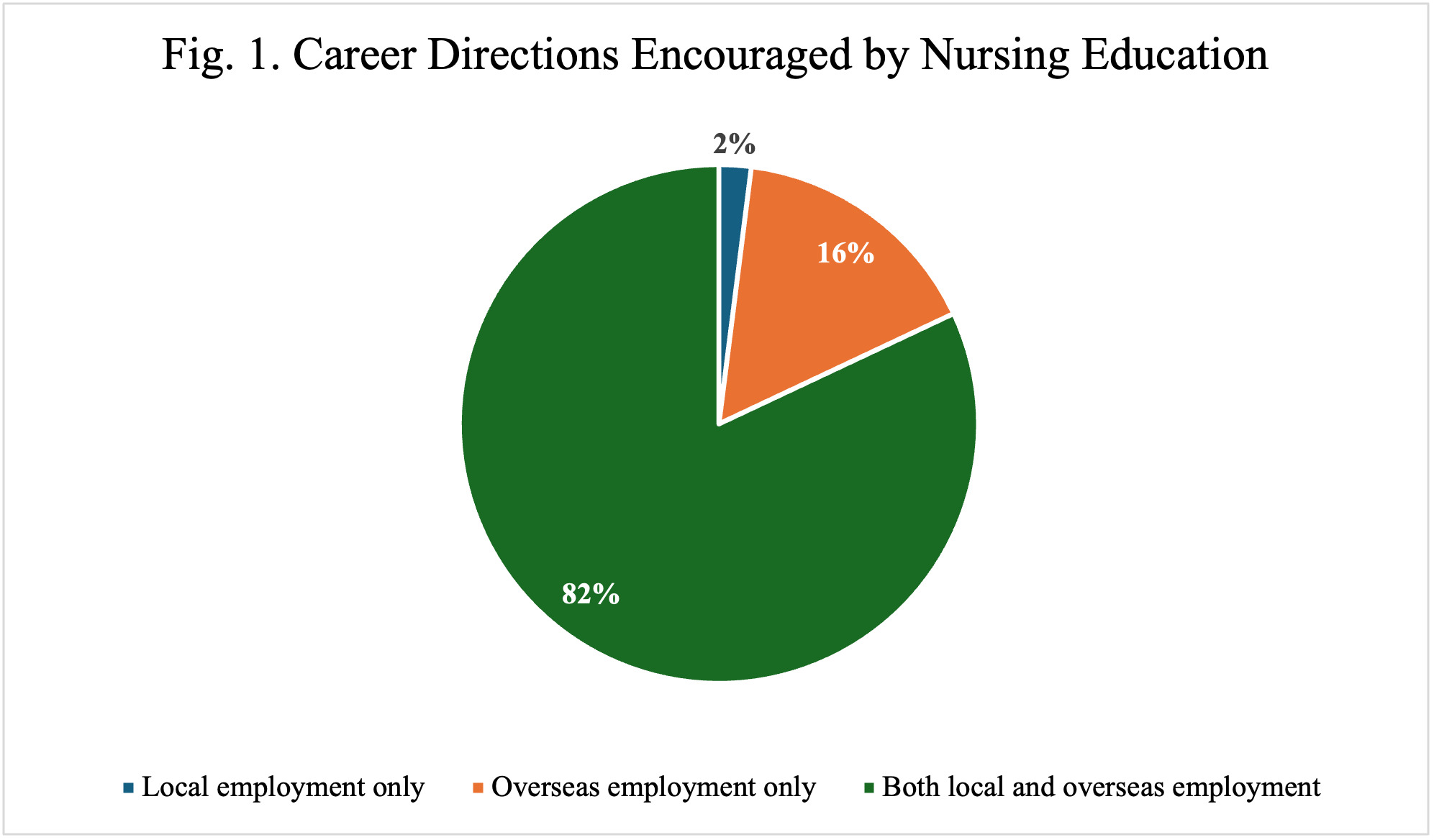
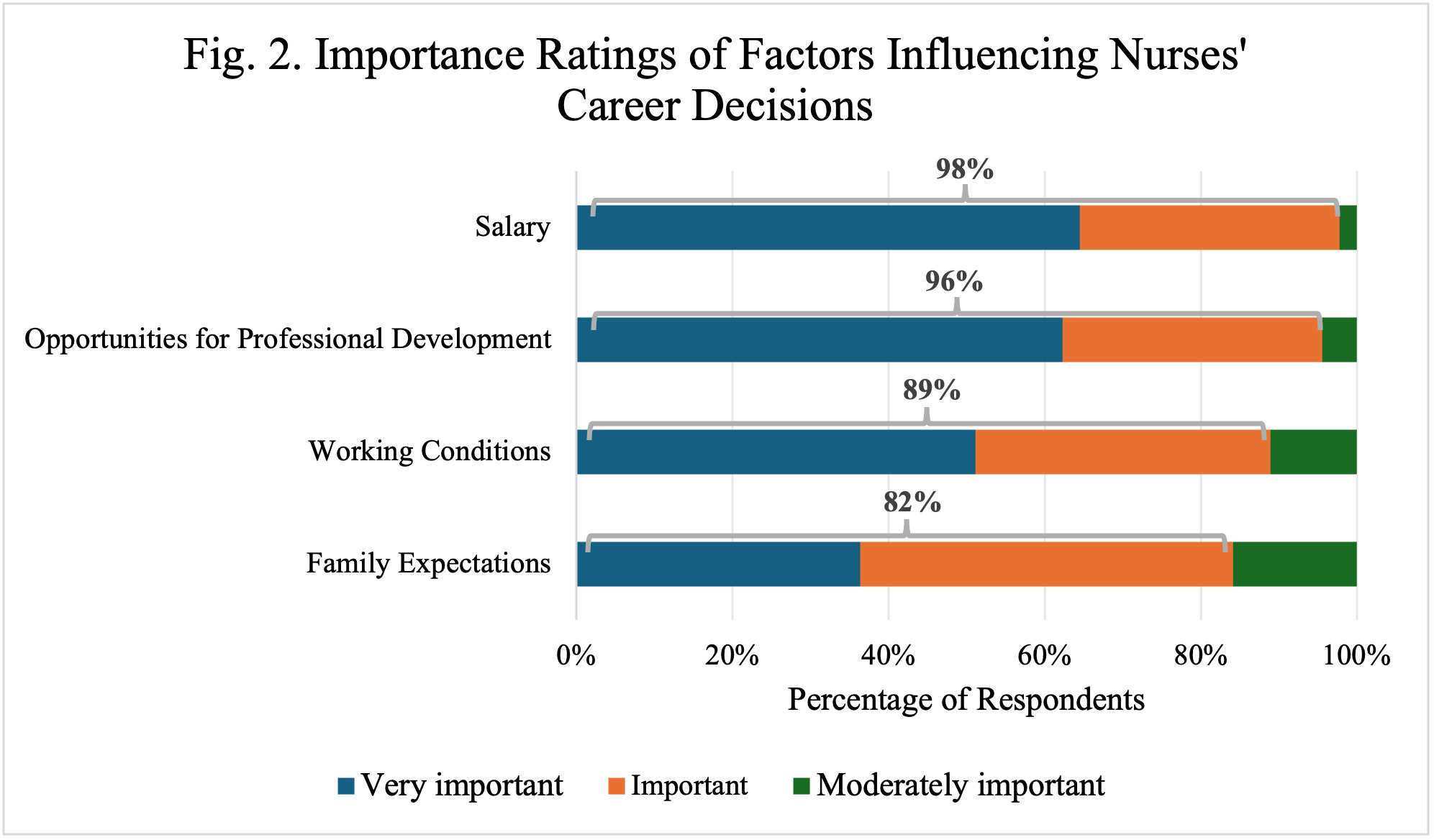
Participants reported on several institutional factors related to career decisions, including nursing education, workplace conditions, and non-nursing employment. Nearly all respondents (98%) indicated that their nursing education encouraged overseas employment in some capacity, either exclusively (16%) or alongside local career opportunities (82%), while only 2% reported that their education encouraged local employment alone (Fig. 1). When asked to rate the importance of factors influencing career decisions, salary was rated as important or very important by 98% of respondents, followed by professional development (96%), working conditions (89%), and family expectations (82%) (Fig. 2). When asked what would need to change for more nurses to remain in the Philippines, 96% identified higher salaries or better benefits, while 40% cited improvements in working conditions. Non-nursing employment also appeared in respondents’ experiences. 73% reported that some classmates had left nursing for other industries, such as call centers.
Participants also reported on social factors, including family expectations, household obligations, and informal networks. When asked why they pursued nursing studies, respondents most frequently cited childhood aspirations, vocation, or a desire to help others (32%) and financial stability or “greener pastures” (30%). Other responses included family influence (25%), working abroad (23%), and better opportunities (20%). Forty-four respondents answered this question. Because responses could be coded into more than one category, percentages exceed 100%.
Family also appeared across several measures of career decision-making. When asked how family influenced their career decisions, 55% mentioned family support and encouragement, while 26% cited financial reasons. When asked separately about reasons for remaining in the Philippines, family was the most frequently cited reason, appearing in 69% of responses.
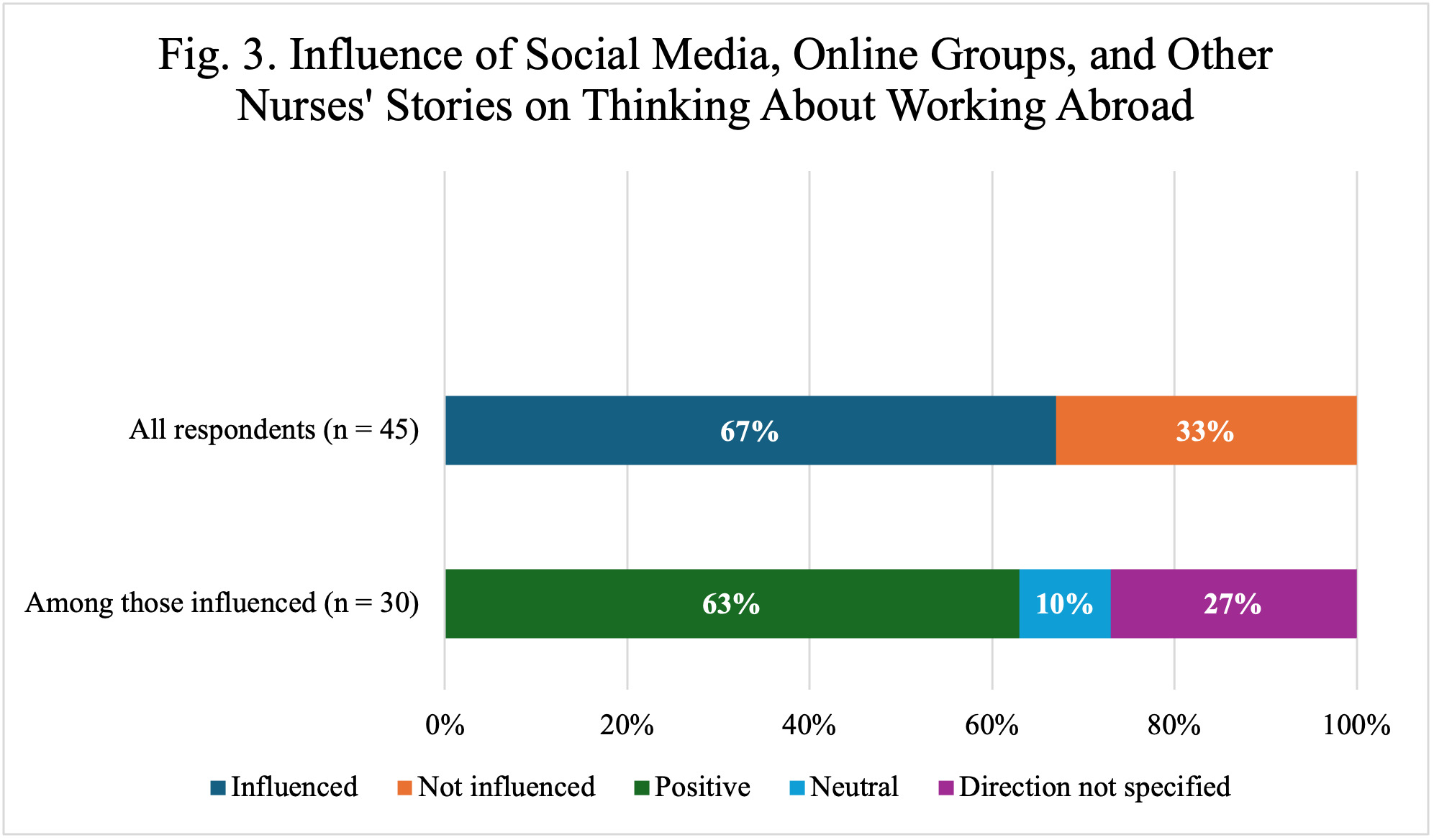
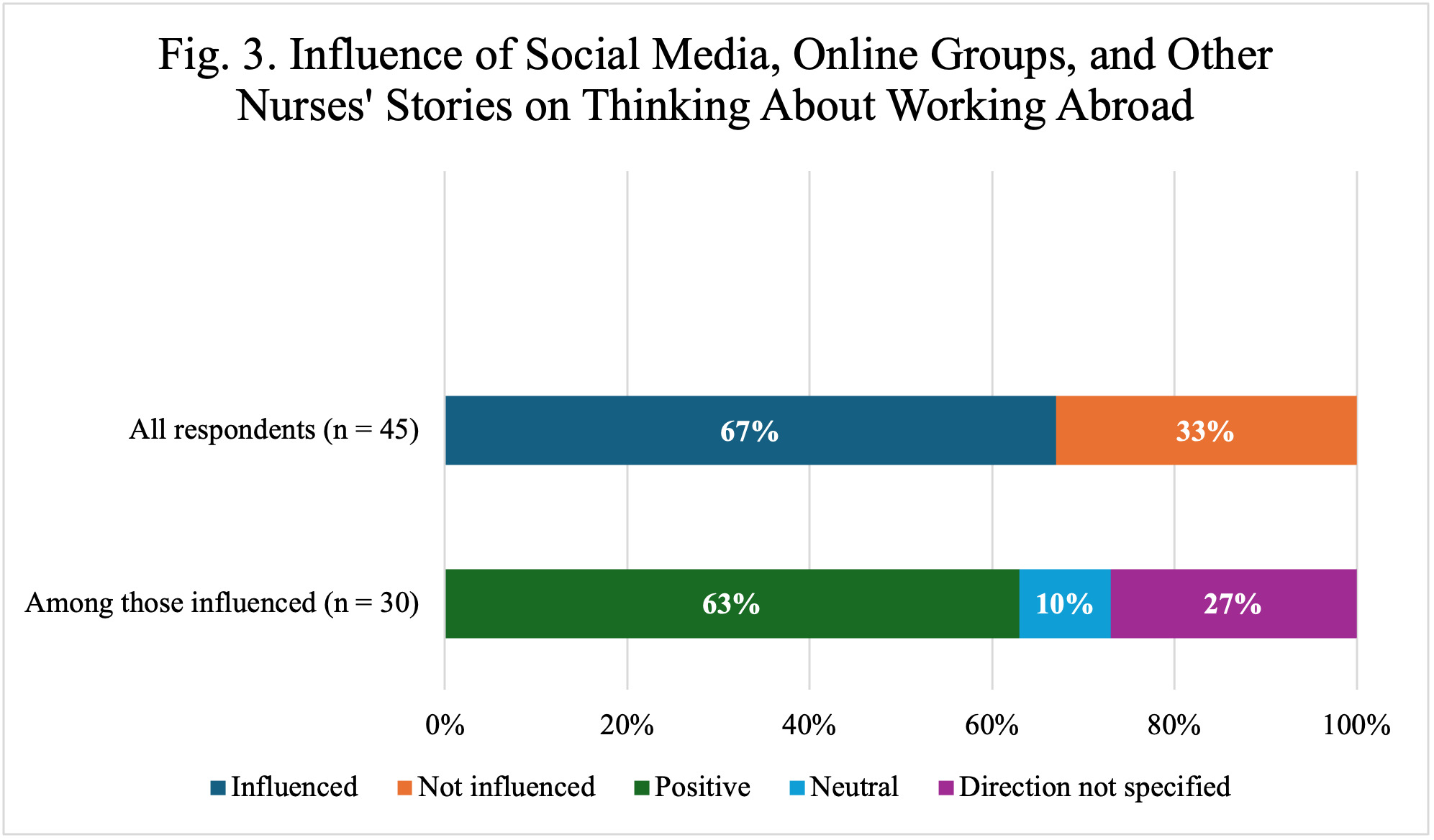
Informal networks were also reported as a social influence. Respondents said these sources provided information about salaries, working conditions, job opportunities, benefits, and life abroad. Thirty of 45 respondents (67%) said social media, online groups, or stories from other nurses affected their thinking about working abroad. Among those 30 respondents, 19 (63%) described the influence as positive, while none described it as negative. Fig. 3 summarizes these responses.
Participants also reported on cultural expectations and the broader culture of migration. 82% of respondents said working overseas was an option they would consider. Among the 29 respondents who answered a follow-up question about the duration of overseas work, 55% viewed it as a temporary career move, while 45% viewed it as permanent. 64% of respondents believed nurses feel pressure to migrate even if they are unsure. Respondents were more divided on whether working abroad should be considered a sign of success, with 55% answering yes and 45% answering no.
Discussion
The literature shows that government migration policy, nursing education, workplace conditions, overseas labor demand, family expectations, informal networks, and cultural expectations are associated with nurses’ career decisions (Dimaya et al., 2012; Gotehus, 2023; Lorenzo et al., 2007; Ortiga, 2018, 2020). Institutionally, respondents identified salary, benefits, professional development, and working conditions as major influences on career decisions. Although 98% of respondents reported that their nursing education encouraged overseas employment in some capacity, 82% reported encouragement of both overseas and local career opportunities, compared with 16% who reported encouragement of overseas work exclusively. This study adds evidence that migration-oriented nursing education can reflect both domestic and international career opportunities rather than directing licensed nurses exclusively toward overseas employment.
Many respondents also said classmates had left nursing for other industries such as call centers. Taken together, these findings add an important post-licensure dimension to the brain gain debate by showing why growth in nurse production may not translate directly into gains for the domestic nursing workforce. Although all participants were licensed, their responses point to different possible outcomes, including overseas employment, domestic retention, and movement outside nursing. Licensure may therefore represent only one stage in nurses’ careers, and counting licensed nurses alone may overstate gains to the domestic nursing workforce.
The survey also illustrates the multiple roles family may play in nurses’ career decisions. Family appeared at several points in respondents’ answers, including as an influence on entering nursing, through support and encouragement and financial considerations, and as a factor in decisions to remain in the Philippines. Family expectations were important to many respondents, yet family was also the most frequently cited reason for remaining in the Philippines. The survey adds evidence that the same social influence may be relevant to different career pathways depending on individual and family circumstances. Rather than treating migration and domestic retention as outcomes shaped by entirely separate influences, these findings suggest that family can be relevant to both.
Informal networks provide another point of connection between the survey and existing research. Thirty of 45 respondents reported that social media, online groups, or stories from other nurses affected their thinking about working abroad. Among those 30 respondents, 19 characterized the influence as positive, while none characterized it as negative. These findings are consistent with research showing how classmates, relatives, and nurses abroad can circulate information about salaries, job opportunities, working conditions, and life overseas (Gotehus, 2023; Ortiga, 2020). However, the survey does not establish that these networks caused respondents to pursue migration; rather, it indicates that informal sources formed part of the information environment in which many respondents considered overseas work.
Culturally, most respondents said working overseas was an option they would consider, and many believed nurses feel pressure to migrate even if they are unsure. At the same time, respondents expressed differing views about both the duration and meaning of overseas work. Among those who answered the follow-up question about duration, 55% viewed overseas work as temporary and 45% as permanent, while respondents were similarly divided on whether working abroad should be considered a sign of success (55% yes; 45% no). These findings add nuance to the literature on the culture of migration by suggesting that overseas work can be widely considered and socially normalized without carrying the same career goal or meaning for all nurses.
These findings point to several potential policy implications. From a workforce perspective, increasing nurse production therefore cannot be considered separately from what happens after licensure. The survey illustrates why the post-licensure pathway matters, as overseas employment was commonly considered, salary and working conditions were prominent concerns, and many respondents were aware of classmates who had moved into other industries. These findings do not establish how many licensed nurses ultimately migrate or leave nursing, but they demonstrate why licensure alone cannot capture the range of career pathways that may follow nursing education. Although migration may generate broader gains through increased education, remittances, and return migration, evaluating its effects on the Philippine healthcare system also requires attention to nurses’ subsequent participation and retention in the domestic healthcare workforce.
Policymakers can focus on retention by providing competitive salaries, improved benefits, safer staffing levels, better working conditions, stable employment, and clearer professional development pathways, all of which have been associated with health-worker satisfaction and retention within the healthcare system (Asis & Dans, 2025). Policy responses could include expanding permanent public nursing positions, improving rural and government health facility staffing, offering retention incentives, creating career ladders, and supporting continuing education. Given the survey’s finding that nursing education was commonly reported as encouraging both local and overseas opportunities, educational institutions may also have a role in supporting viable domestic career pathways alongside preparation for international employment.
Limitations
This study has several limitations. The survey included only 45 licensed nurses from Negros Occidental, and other regions of the Philippines were not represented. Participants were recruited through convenience and snowball sampling rather than random sampling, which may have introduced selection bias and limited the extent to which the findings can be generalized to licensed nurses in Negros Occidental or the Philippines more broadly. Specific job titles and employment settings were not collected.
The survey relied on participants’ self-reported experiences and perceptions, and open-ended responses were categorized by a single researcher. The study was also cross-sectional, capturing respondents’ views at one point in time. As a result, the findings identify reported patterns and associations but cannot establish causal relationships or determine how migration intentions and career decisions develop or change over time. Because the study was coordinated remotely from the United States, opportunities for in-person recruitment, clarification, and follow-up interviews were also limited.
Future research could use larger, more geographically diverse samples drawn from multiple Philippine provinces and collect more detailed information about respondents’ job roles, practice settings, migration status, and career trajectories. Longitudinal studies could follow nurses from education and licensure through domestic employment, migration, or movement into other occupations to examine how career decisions develop over time. Qualitative interviews or focus groups could further explore how nurses weigh economic conditions, professional opportunities, family expectations, informal networks, and cultural influences when making these decisions.
Conclusion
The literature and survey findings in this paper indicate that interconnected factors are associated with nurses’ career choices, including government policy, nursing education, workplace conditions, overseas employment opportunities, family expectations, informal networks, and cultural expectations surrounding migration. This study adds evidence that these influences do not necessarily lead nurses toward a single outcome. Nursing education was commonly reported as encouraging both local and overseas opportunities, family appeared in decisions related to both migration and domestic retention, and respondents differed in how they understood the duration and meaning of overseas work.
Taken together, these findings add a post-licensure dimension to the brain gain debate by suggesting that producing more licensed nurses does not necessarily strengthen the Philippine healthcare system if licensed nurses subsequently migrate, remain oriented toward future migration, or move outside the nursing profession. Licensure may therefore represent one stage in a nurse’s career pathway rather than a sufficient measure of gains to the domestic nursing workforce. The extent to which nurse production translates into domestic healthcare capacity depends in part on what happens after licensure.
Strengthening retention will likely require coordinated efforts among policymakers, healthcare institutions, educational programs, nurses, and families. Improving compensation and working conditions, while investing in professional development, may help create employment stability and encourage retention. Supporting viable domestic career pathways alongside preparation for international employment may also help ensure that growth in nursing education translates into greater domestic healthcare capacity.
Although this study was limited to one province and a relatively small sample, it provides evidence that post-licensure pathways are important to understanding the Philippines’ nursing workforce challenges.