
Introduction
The goal of this research is to understand the views held by American high school boys on political violence—defined as the use of violence to achieve political goals—and how affective polarization and loneliness affect their views on political violence. Political violence in the United States is on the rise. Threats against members of Congress in the last year have risen by 58% since 2024 (Bridging Divides Initiative, 2026).
More significant are the changing views on political violence—85% of Americans believe that political violence is increasing (Pew Research Center, 2025). Along gender lines, men under 45 are more likely to say political violence is sometimes okay than women (Maese & Ritter, 2025), indicating the need to evaluate the underlying factors which could contribute to this divide.
Literature Review
Affective polarization—the gap between individuals’ positive feelings toward their own political party and negative feelings toward the opposing party (Iyengar et al., 2019)—is increasing (Druckman & Levy, 2022). According to ANES data compiled from 2020 to 2024, positive feelings toward one’s party have increased, but that rise is accompanied by growing antagonism toward their opposing party (American National Election Studies, 2025). Researchers have theorized many different causes for this polarization: media, social, racial division, and political campaigns, but there is a lack of consensus on the relationship between affective polarization and political violence. Some research indicates that polarization is self-fulfilling, and individuals who erroneously believe the opposing political party is extreme tend to adopt comparably extreme beliefs (Ahler, 2014). Other research goes further to indicate that political polarization is directly tied to increasing violence in politics as it creates a moralized ethos to politics which intensifies opposition and sometimes justifies violence (Piazza, 2023).
On the contrary, others argue that previous research on this subject overemphasizes actual partisan violence because of its vague questions which allow respondents to hide behind the ambiguity of the question (Westwood et al., 2022), and that those who were proven to be polarized still respected democratic norms, which makes them less likely to use violence to change the political system (Broockman et al., 2023).
The link between radicalization and loneliness is well researched. Systemic marginalization and exclusion often require a pathway to resolve those negative experiences which an individual holds. For some select few that means using actual violence to express their disillusionment with an issue in society, for others it makes them more prone to supporting extreme and violent political parties and actions (Pfundmair et al., 2024). The theme of discontentment among young men in their social position is rising and relevant when regarding how it motivates them to act (Miller, 2025). There is also evidence that shows that loneliness has no correlation with political violence (Downey, 2025). These considerations are why we chose to report on high school boys’ views on political violence in relation to loneliness. The study was designed in order to observe if the trend of pessimism toward society caused by isolation translates to a more aggressive view on political violence and the role which loneliness plays in that interaction.
The most formative years for an individual’s political life are during adolescence. According to Jan-Emmanuel De Neve’s work, childhood variables such as trauma, perceptions of safety at school or in one’s neighborhood, and number of friends are correlated with future political ideology, making the political views of adolescents particularly important to understand (De Neve, 2015).
Research Gap
Despite its significance, research on attitudes toward political violence remains largely based on adult samples due to structural factors such as consent requirements, institutional review processes, and the reliance of national panels on respondents aged 18 and older. Major instruments in the literature—including Gallup, Pew, the Harvard Youth Poll, and ANES—therefore leave largely unobserved the adolescent period during which political socialization research suggests these attitudes begin to form. As a result, political scientists often examine attitudes toward political violence only after partisan identities have begun to consolidate. Our study provides a glimpse into how high school boys in this cohort view political violence during the formative years of their ideological and political development. Specifically, we examine whether higher levels of affective polarization and loneliness are associated with greater endorsement of political violence, while also considering whether respondents who identify as independents differ from those who identify with a political party in their endorsement of political violence.
Materials & Methods
The survey was sent to seniors (12th grade) in an all-boys preparatory school in the southeastern United States during the 2025-2026 academic year. There were 65 responses. One response did not fit into one of the three categories: Republican, Democrat, Independent. Therefore the questions regarding affective polarization or partisan versus independent nature have a sample size of 64. When applicable the 65th respondent’s data were used. Students were invited by the school from May 6-19, 2026 to participate via an anonymous Google Form. Participation was voluntary and required documented parental consent prior to student access to the survey. Demographic characteristics of the respondents were not recorded.
We used a validated questionnaire that had previously been used in the Harvard Youth Poll (Harvard Public Opinion Project, 2025). This instrument asks if political violence might be justified in any of five predetermined scenarios. It intentionally does not define specific acts of violence and therefore measures abstract attitudes toward violence. The questions taken from the Harvard Youth Poll were: (a) 2-4, (b) 18, (Appendix). Questions 13 and 14 were collected but not analyzed in this report.
To measure the loneliness of the respondents we used a UCLA Three-Item Loneliness Scale abbreviated from the loneliness scale designed for surveying groups (Hughes et al., 2004). The questions were modified for increased specificity with advice from the school administration to include: How often do you feel you lack companionship; How often do you feel left out of conversations in your friend group; How often do you feel isolated from others even with people around you. Item 1 was used as published and items 2 and 3 were altered to add context-specific information. Each item was rated on a three-point scale (1 = hardly ever, 2 = some of the time, 3 = often), and item scores were summed to yield a total loneliness score ranging from 3 to 9, with higher scores indicating greater loneliness (Hughes et al., 2004). Internal consistency was acceptable in the present sample (Cronbach’s α = .74).
Respondents rated each political party (Democrat and Republican) on a 0-100 point scale. 0 is the most unfavorable and 100 is the most favorable. The results were computed by an absolute warmth gap (|Democrat thermometer − Republican thermometer|). This process captured, regardless of partisan identity, opposing feelings toward the parties. A higher score indicated higher affective polarization (Iyengar et al., 2012).
For the traits question, respondents were presented with an adapted list of eight adjectives which in their opinion described the parties (Democrat and Republican) with the four-point Likert scale. Five adjectives were positive (intelligent, patriotic, honest, open-minded, generous)—three were negative (selfish, hypocritical, mean). Negative items were reverse coded to ensure the results could be compared. Per-party favorability scores were computed as the mean of the eight items, yielding a score from 1 (very favorable) to 4 (very unfavorable) for each party. A trait-based affective polarization score was then computed for partisan respondents as in-party favorability minus out-party favorability, with lower scores indicating greater affective polarization (Iyengar et al., 2012). Internal consistency was acceptable for both the Republican favorability scale (Cronbach’s α = .88) and the Democrat favorability scale (α = .84).
Respondents rated their agreement with parallel statements that Republicans, and separately Democrats, are a threat to the nation’s well-being (Appendix). Adapted from the Pew Research Center (2014) political polarization survey, instead of a binary response (agree or disagree) respondents indicated their level of agreement on a four-point Likert scale. Their responses were coded in this manner: Strongly Agree = 1, Agree = 2, Disagree = 3, Strongly Disagree = 4. The threat level polarization score was then computed for the respondents as (|Democrat threat − Republican threat|). With items on a 1–4 scale, the threat score ranges from 0 to 3 (higher = more polarization) (Pew Research Center, 2014).
Three items measuring political engagement were adapted from the Harvard Youth Poll. Respondents indicated their level of agreement (Agree or Disagree) with each of the following: (1) “I avoid talking about politics because I worry about how others [classmates] might react”; (2) “Americans with different political views from me still want what’s best for the country”; and (3) “People often make me feel judged when I share my political views.” (Harvard Public Opinion Project, 2025) These questions were collected in the original instrument for exploratory purposes beyond the study’s primary hypothesis.
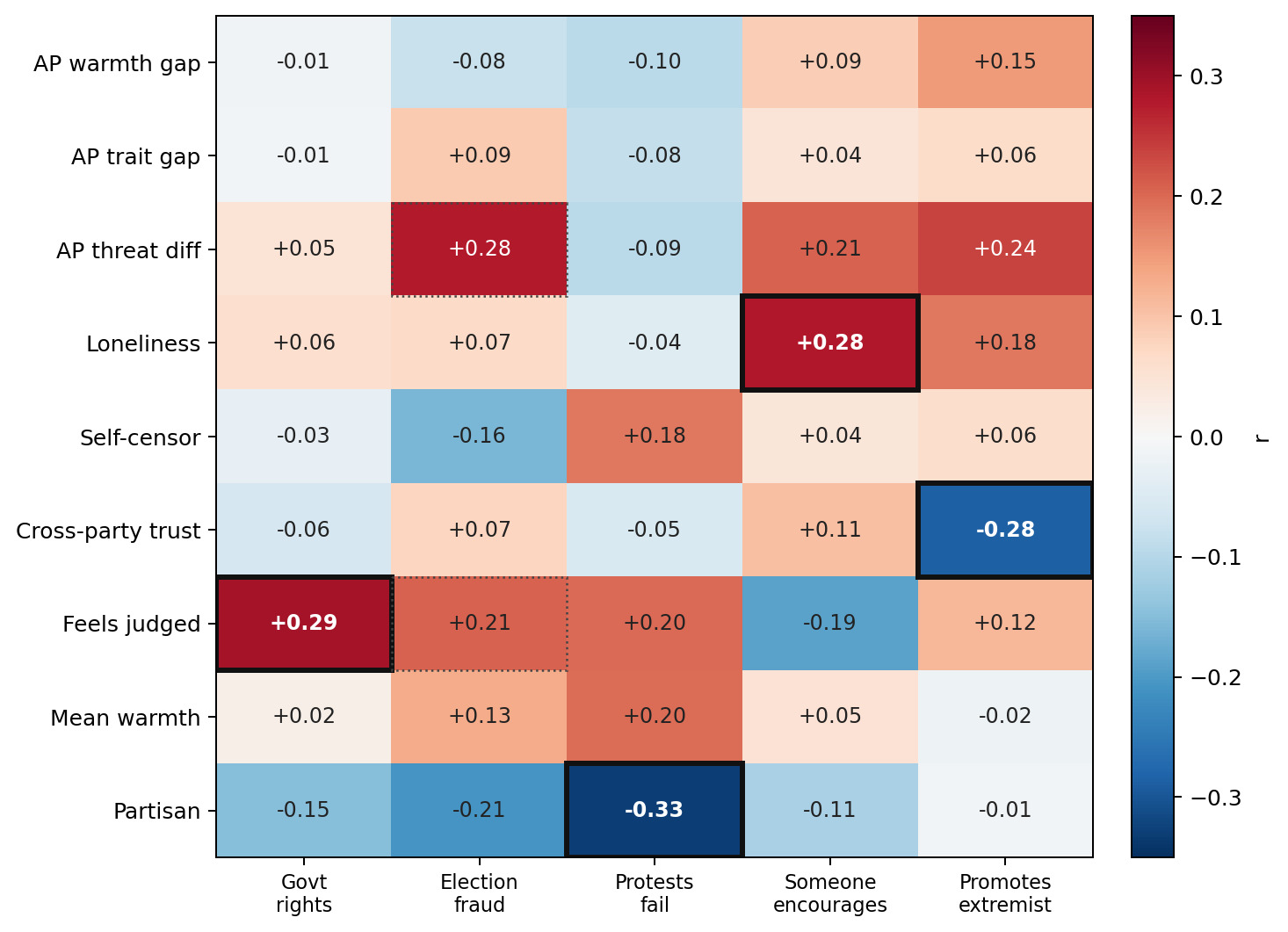
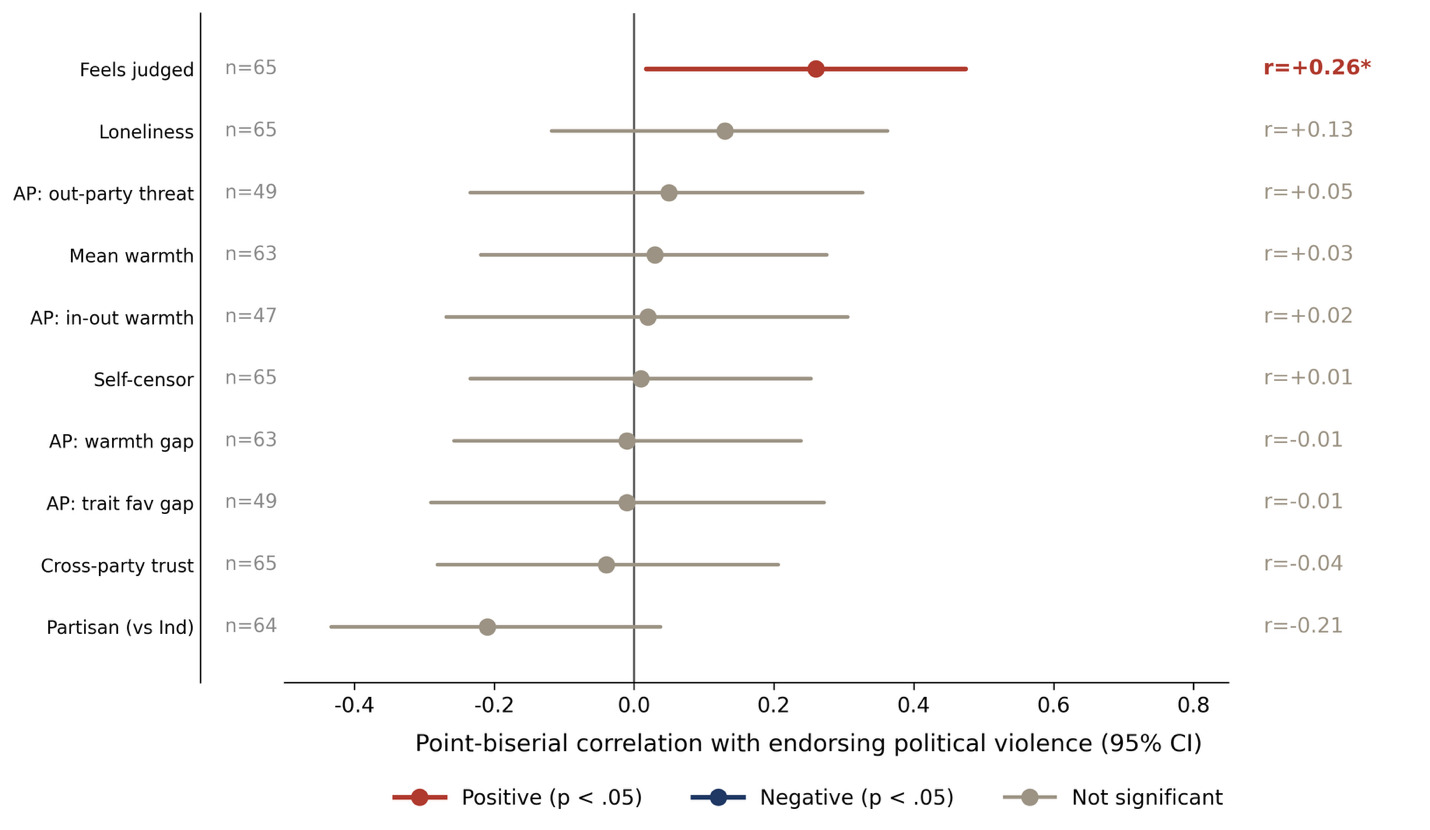
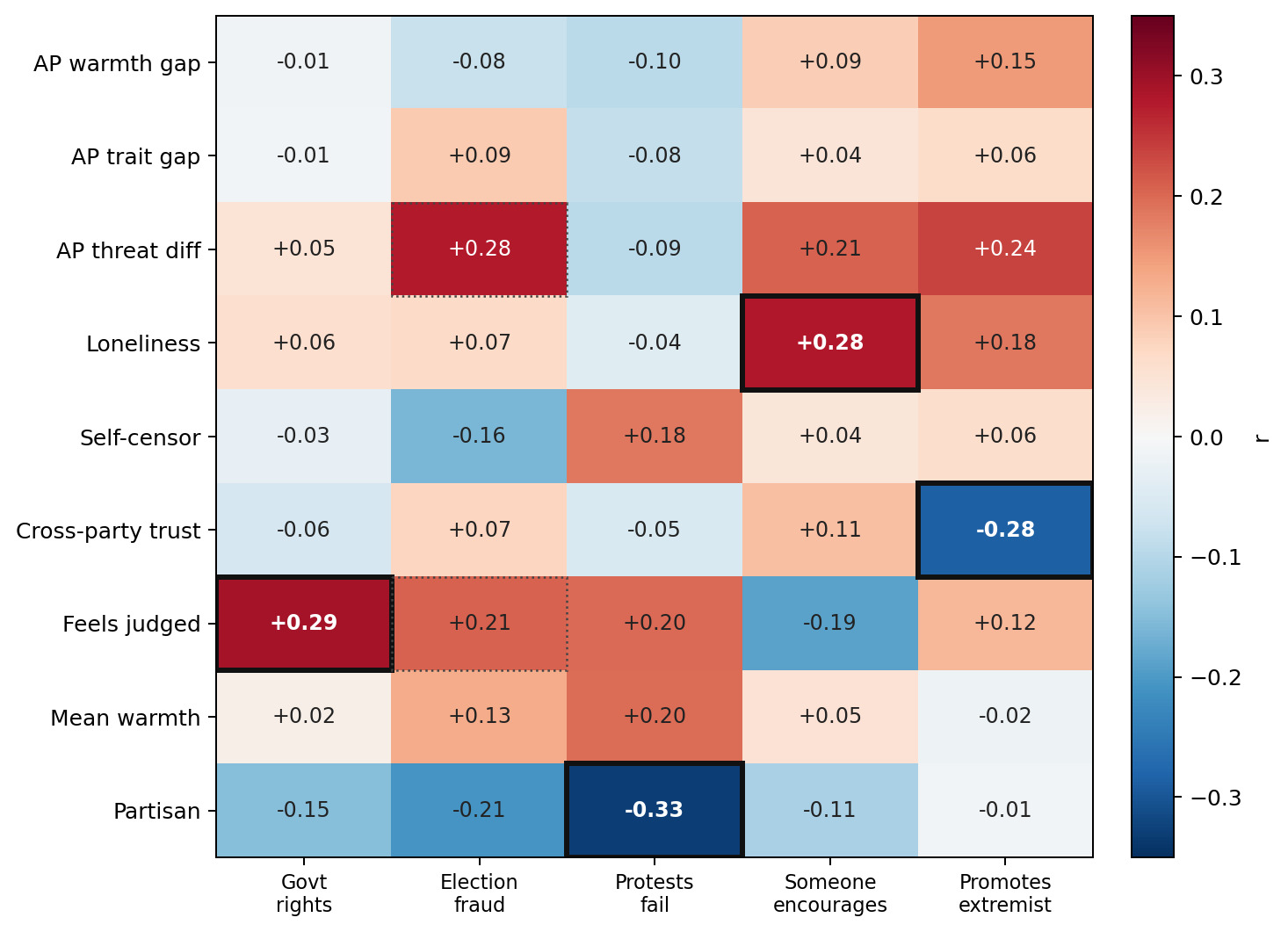
Survey data were exported into an Excel master file and analyzed using Python and related packages (SciPy, scikit-learn and statsmodels). We used a point-biserial correlation as univariate analysis between the predictor and this binary outcome and reported the correlation coefficient (r) with a 95% confidence interval computed using Fisher’s z-transformation. We then ran a multivariable logistic regression including feeling judged, loneliness, the affective polarization warmth gap, and partisanship (Democrat or Republican versus Independent) as predictors. Continuous predictors were standardized so that odds ratios are reported per one-standard-deviation change. Each of the five individual violence-justification circumstances was also examined separately by computing point-biserial correlations between each predictor and each circumstance. These results are presented in Fig. 3 as a heatmap. Because this involves a large number of tests (9x5) we used Benjamini-Hochberg false discovery correction with q= .05. We then calculated 95% confidence intervals for the endorsement of political violence by party affiliation. Finally, due to the exploratory nature of the study we are reporting uncorrected p-values. P-values< .05 are considered statistically significant.
Results
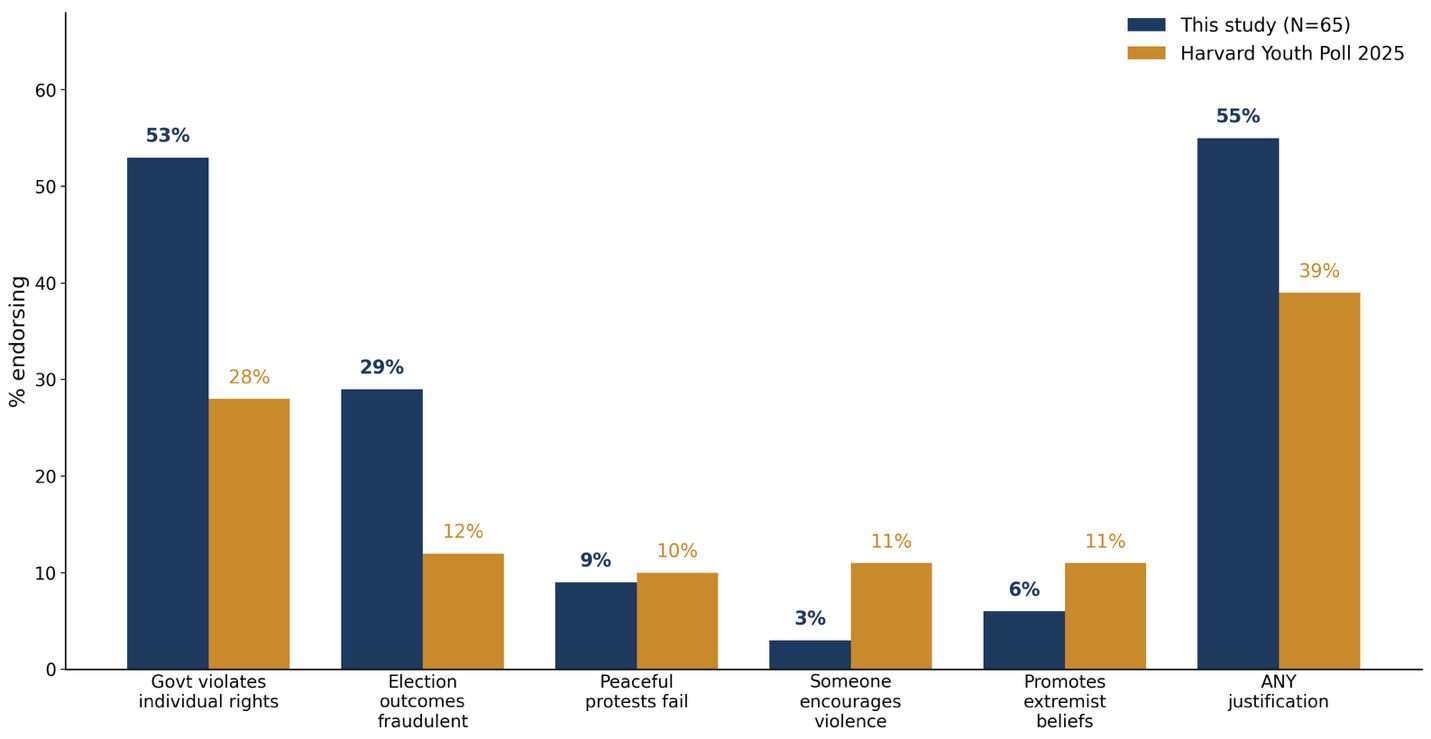
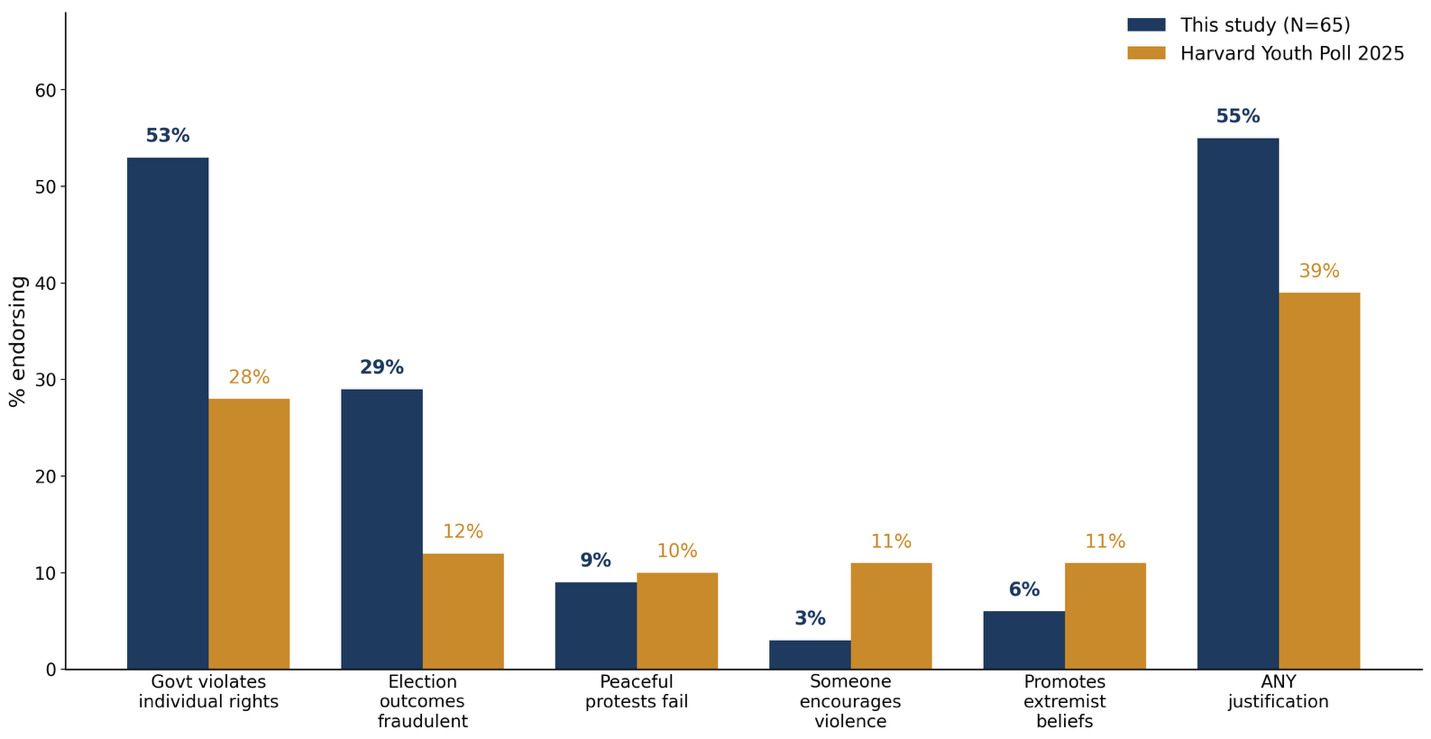
From May 6-19, 2026, 65 surveys were returned. Of the respondents, 55% felt that political violence was justified in at least one of the predetermined scenarios (Fig. 1). 20% of participants only endorsed a single instance in which political violence might be justified, 26% endorsed two scenarios and only 9% endorsed three or more scenarios. Endorsement varied across the five scenarios (Fig. 1): government violates individual rights (53%), fraudulent election outcomes (29%), unsuccessful peaceful protests (9%), someone encourages violence (3%), and promotes extremist beliefs (6%).
Correlation with self-reported variables
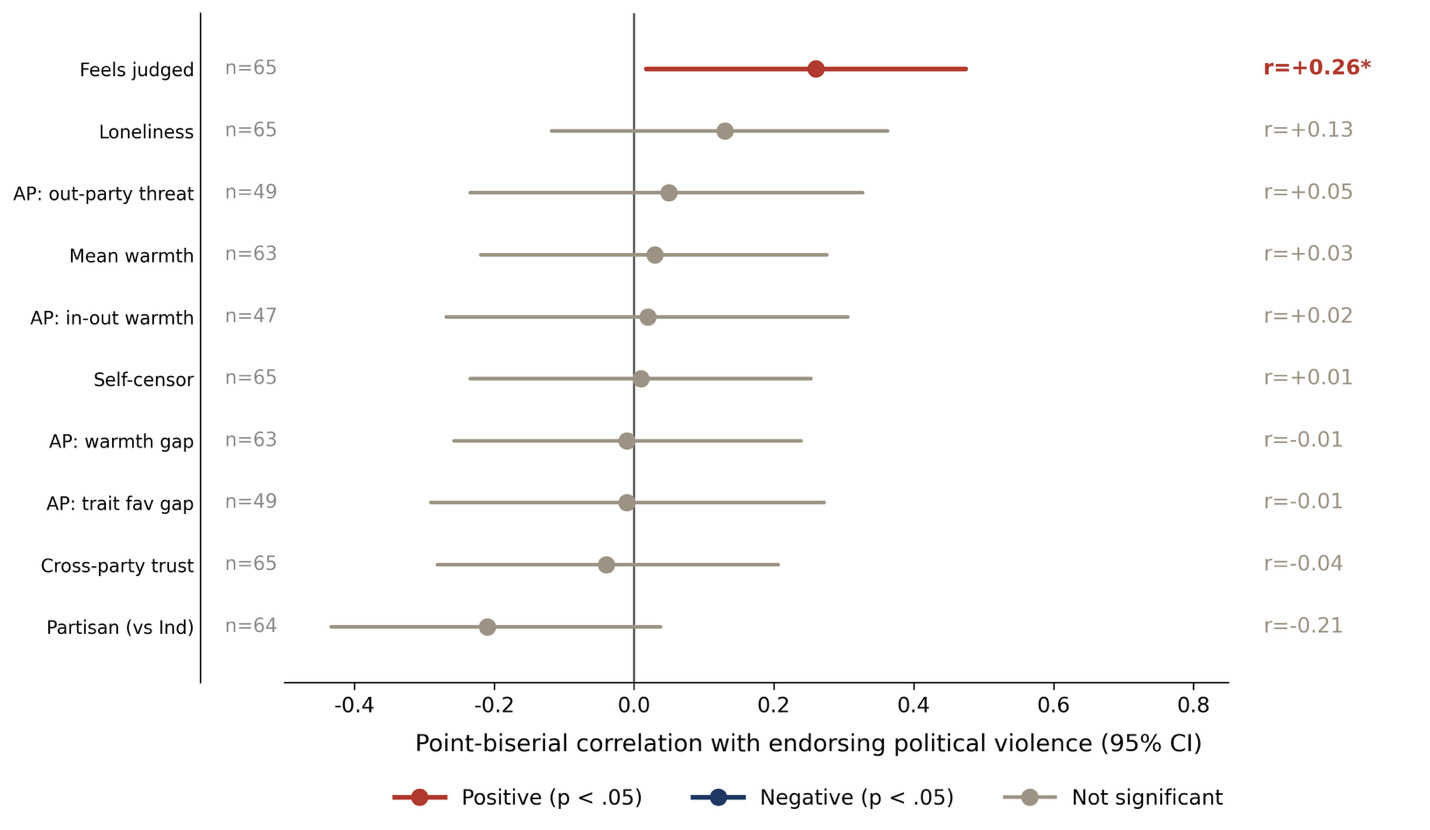
Next, we investigated a possible correlation between self-reported variables (affective polarization, loneliness, cross-party trust, self-censorship, partisan vs. independent, feeling judged) and views on political violence. In a univariate analysis, only “feeling judged” emerged as a predictor for the acceptance of political violence under certain circumstances (Fig. 2). Measures of affective polarization did not correlate with the embrace of political violence. Partisan party affiliation versus independent affiliation trended in the opposite direction. This trend was also seen in a multivariable analysis (Supplemental Fig. 1), although this did not have statistical significance. Our data show that the percentage of independents supporting violence is higher relative to partisan respondents (Supplemental Fig. 2).
Exploratory analysis of predictors for positive answers to individual political violence questions
We performed an exploratory univariate analysis correlating each predictor variable with the five different political violence questions generating a heatmap of variables that trend either with or against the acceptance of political violence (Fig. 3). Four pairs achieved a p-value of <.05: feeling judged favoring violence when the government is violating rights; loneliness as a predictor for encouraged violence; partisanship as a predictor against failing protests; and cross-party trust as a predictor against extremist promoted violence. None of the variables were significant after a Benjamini-Hochberg false discovery rate analysis setting significance at a q = .05.
Discussion
Our findings were unexpected. H1 was not supported: affective polarization showed no correlation with acceptance of political violence. H2 was not confirmed: our data trended in the direction of H2 but lacked statistical significance. An answer to RQ1 revealed a trend opposite to what the polarization literature would suggest, with independents endorsing political violence more frequently than partisans. Instead, “feeling judged for one’s political views” emerged as the strongest predictor for an affirmative response.
Political Socialization Theory
In her book “Uncivil Agreement” Lilliana Mason compares political socialization — the process by which people learn about their government — to broader social socialization (Mason, 2018). Social identity theory holds that individuals derive self-esteem from group membership, which produces systematic favoritism toward the ingroup and discrimination against the outgroup (Tajfel & Turner, 2000). Lilliana Mason argues that partisan identity is a stronger determinant than acceptance or disagreement with specific policies. She argues that in the past, political partisanship was tempered by cross-membership in non-overlapping alternative groups, such as social, religious, friends etc. Cross-group individuals were sometimes called “politically impotent” (Lazarsfeld, 1944/2021), because they were much less likely to actively support the party line.
As partisan groups have become more homogeneous by race, socioeconomic status, and religion, that tempering effect has diminished, and individuals care less about the policies their party champions than about defeating the other side. As discussed in the literature review, however, this relationship has not been universally demonstrated (Broockman et al., 2023; Westwood et al., 2022). In our cohort, affective polarization showed no association with endorsement of political violence across three separate measurements — a feeling thermometer gap, a trait-based favorability gap, and a threat assessment gap. The convergence of three null results makes measurement failure an unlikely explanation.
These findings may differ in adolescents and young adults because of different developmental timelines of political socialization (Sears & Brown, 2023). While the participants clearly fall within the “impressionable years” in which party affiliation is formed, evidence suggests that full and more permanent socialization does not crystallize until the mid-to-late twenties. Even though the study participants identify as Republicans, Democrats or independents, their identification with the group may be less strong, resulting in less intense feelings against the outgroup. While this may explain the fact that partisanship is not a predictor for political violence endorsement, it does not explain the fact that there is a trend against political violence in partisans. Therefore, our results should not be interpreted as evidence against Mason’s theory, but as an indication that the partisan identity has not yet consolidated at this age. This raises the question why independents tend to view political violence as justified numerically more frequently.
Interpreting Independents Trend
Klar and Krupnikov make a counter-intuitive argument that the typical independent is an undercover Republican or Democrat (Klar & Krupnikov, 2016). Declared independents, despite having political leanings, do not want to be known as partisan due to negative stereotypes associated with each party. The implication of this theory is that independents are less likely to support a party through grassroots efforts or political discussions but still demand that their party pursue winning. If this theory is applied, then the percentage of true independents is very small. This number differs significantly in young adults. A recent paper by Reilly and Hunting (2025) surveyed 1315 Arizona voters between 20 and 30. 49% of these identified as independents. They had a lower motivation to vote (around 53 vs 78% among partisans) and an overwhelming majority (80%) disagreed with the statement that the current political system works for them (Reilly & Hunting, 2025).
It is therefore possible that in our study the independent group harbored more negative views of our current two-party system and higher rates of political alienation explaining why independents were more likely than partisans to support political violence (Supplemental Fig. 2). Support for this possibility comes from the Harvard Youth Poll where endorsement of political violence was more driven by economic worries and institutional distrust (Harvard Public Opinion Project, 2025). While feeling judged appears as a reason for why many partisans went undercover as independents, these partisans still agree with a party. Reilly’s paper on young adults and our observation that feeling judged for one’s political views is the strongest predictor of political violence endorsement suggest that feeling judged may have a different effect on adolescents, possibly because of the lack of other safe spaces that they can retreat to or not having fully developed a political ideology.
Spiral of Silence Theory
Noelle-Neumann coined the Spiral of Silence theory (Noelle-Neumann, 1974), in which self-censorship leads to fewer opinions being voiced and a perception of the majority as much more prevalent than in reality. Not feeling free to voice one’s opinion (recorded by the feeling judged questions) in the classroom or on campus for fear of reprisals from students and faculty causes a sense of isolation. In the social media age, the stakes of posting an unpopular opinion are magnified and can have even more far-reaching social and educational consequences. This isolation may push students to other peer groups to find acceptance, either in person or, more often, online groups, which could have a radicalizing effect (Pfundmair et al., 2024). According to Kruglanski’s three-pillar of radicalization model this is the network element (in addition to need and narrative) required for the possible progression to violent extremism (Kruglanski et al., 2019).
Our findings are consistent with this framework, though our design does not test it. Because the data are cross-sectional, the direction of the association cannot be determined: respondents may feel judged as a result of endorsing political violence, or an unmeasured factor such as social alienation may produce both responses. The association remains notable as the only statistically significant relationship in the study.
Our own data qualify this framework. Respondents were also asked whether they avoid talking about politics for fear of how others might react — a more direct measure of the self-censorship the Spiral of Silence describes. That item showed essentially no association with endorsement (r = +0.01), while feeling judged was the strongest association in the sample. If self-censorship were the pathway linking perceived judgment to endorsement, the two measures should behave similarly. That they do not suggests either that perceived social sanction operates through a route other than silencing, or that a single agree-or-disagree item did not capture the behavior.
Interpreting Loneliness Correlation
The data trended in the direction of exclusion-radicalization literature, and respondents in the cohort who reported higher levels of loneliness were more likely to support political violence, although this association lacked statistical significance. Given the sample size, and the restricted variance produced by a three-item scale with a three-point response format, this study was underpowered to detect an association of modest magnitude, and our result should not be read as evidence against that literature or Downey, who reported no correlation (Downey, 2025). Across exploratory analysis loneliness trended with endorsement of violence when someone else encourages it — the circumstance least connected to institutional grievance and most plausibly related to interpersonal susceptibility — however, this pair did not survive the Benjamini-Hochberg correction. Both trends highlight the importance of further research on this relationship in adolescent boys with a larger cohort.
Harvard Youth Poll Comparison
Finally, it is worth considering what an affirmative answer means and why our positive rate exceeds the Harvard Youth Poll’s. These instruments ask vague questions about attitudes toward political violence, not about plans to act on them. The two scenarios drawing the most endorsement — government violation of individual rights and fraudulent election outcomes — echo the collective-resistance tradition invoked in the Declaration of Independence and in Paine’s Rights of Man (Jefferson, 1776; Paine, 1791), neither of which advocated individual violence. Some affirmative answers may therefore reflect protectiveness toward constitutional rights rather than willingness to act, a reading supported by the concentration of endorsement in government-overreach and election-fraud scenarios. Endorsement of violence in response to incitement and extremist belief was lower than in the Harvard Youth Poll (Harvard Public Opinion Project, 2025), suggesting this cohort has not drifted into a radicalized echo chamber — though whether they remain off that pathway as their identities consolidate is a question our design cannot answer.
Gender differences may explain part of the higher affirmative rate. A 2025 Gallup poll found that men aged 18–44 endorsed political violence more frequently than women of the same age, while the percentages were roughly equal among older Americans (Maese & Ritter, 2025). Because our study draws entirely from an all-boys school and the Harvard Youth Poll reflects the national gender balance, this distinction could account for the discrepancy.
Three further differences bear on the comparison. The Harvard sample spans ages 18–29, placing our respondents below its youngest cohort. It draws nationally, while ours comes from one private college-preparatory school. And our respondents share a single campus, so their sense of being judged reflects one peer environment rather than many.
One caveat to this explanation lies in the shape of the responses. By relying on the gender analysis alone, one would expect both high-endorsement and low-endorsement to be higher than the Harvard Poll. However, only low-endorsement is greater, but the high-endorsement group matches Harvard’s at 9% versus 10%. Lack of trust in the current system and worries about the future emerged as the strongest predictors in the Harvard Youth Poll (Harvard Public Opinion Project, 2025).
Overall, these data suggest a much more critical view of political parties and a more issue-focused and less social-group-dependent approach than what has been previously hypothesized. The Harvard Youth Poll was conducted in November 2025, six months before our survey was administered. In the interim, there were several high-profile acts of political violence, for example the White House Correspondents’ Dinner shooting on April 25, 2026, and it is possible that these influenced the outcomes of our survey. However, endorsement of violence when someone else encourages it was less frequent than in the Harvard survey, which makes this less likely.
For political scientists, this may form an initial basis for larger follow-up studies of an age group that political socialization theory places in its impressionable years and that is likely more fluid in its views than the slightly older Harvard Youth Poll cohort. Refinements to the instrument would include asking about the political leanings of independents and more in-depth questions about the fear of being judged. Our data also carry an application for democratic-resilience work: the high-endorsement group matches the national figure while low-level endorsement is elevated, so the population of concern is not a radicalized fringe but ordinary students who feel unable to speak, making intervention different from conventional efforts to limit radicalization (Harvard Public Opinion Project, 2025).
For teachers and school administrators, it becomes very important to create a supportive, non-judgmental space in which students are freely able to discuss their political opinions without fear (Hess & McAvoy, 2014). Our evidence indicates that perceived judgment, not partisan hostility, is associated with endorsement, so it is important in practice to place the classroom environment at the forefront of efforts to address these challenges.
For policy-makers, this is an opportunity to reach adolescents in their impressionable years. Action-based civics education, in which students address real community problems rather than study the branches of government (Levine, 2015), and perspective-taking debates, in which each group argues the other’s position (Kalla & Broockman, 2020), may show students that their opinions matter and that diversity of thought is a civic strength.
Limitations
The most significant limitation is our sample size. With 65 respondents, the study was underpowered to detect associations of small or moderate magnitude. The application of loneliness and feeling judged trends should take into account the smaller sample size. Given this, the loneliness result and the partisanship trend should be read as inconclusive rather than as evidence that no relationship exists. The same thing doesn’t apply to polarization since three separate tests indicate a lack of correlation. Because all the responses come from one all-boys preparatory school, results could differ from the results of other coeducational, public, or religious schools.
There could also be a response bias. Because participation was voluntary and required parental permission, students who chose to respond may differ systematically from those who did not. Another limitation is the design. Our data are cross-sectional, meaning the direction of the association reported cannot be confirmed. The exploratory item-level analysis involved a large number of tests, and none of those associations survived correction for multiple comparisons. Political violence was also not defined in the questionnaire. That means there was no distinction between ripping down a campaign poster versus inflicting physical harm on a political candidate or office holder or any other forms of violence. What is provided with an affirmative response is an abstract idea of permissible violence rather than a plan to commit it. We also did not get the partisan leanings of independents which affects our ability to determine whether they are closet partisans as per our Klar and Krupnikov interpretation.
Conclusion
This study provides a snapshot of 65 respondents’ views from a single all-boys preparatory school. Neither hypothesis was supported. Because the survey did not measure the ideological direction of perceived political judgment, the association between feeling judged and endorsement of political violence cannot be attributed to Republican, Democratic, conservative, or liberal viewpoints. Affective polarization showed no correlation with support for political violence across three separate indicators—traits, feeling thermometer, threat level. Loneliness trended in the predicted direction but lacked statistical significance. Independents endorsed political violence more frequently than partisans, though this difference did not reach statistical significance. The proportion of students endorsing three or more circumstances closely matched the national figure, while endorsement was concentrated in scenarios involving governmental overreach. The only statistically significant association was between feeling judged and endorsement of political violence, though our cross-sectional design cannot establish which precedes the other. For teachers and administrators, creating a safe environment to express political opinions is of utmost importance. If partisan identity has not yet consolidated at this age, then predictors validated on adult samples may not transfer to adolescents, and the social conditions surrounding political expression may matter more than the ideological ones. Research on how these views change as respondents enter their 20s and 30s would test whether this holds.