
Introduction
While the present century continues to advance at an unprecedented pace, bringing invaluable technological and economic improvements, modern problems have begun to appear as barriers to growth. One of the most well-known issues of the present era is the aging demographic phenomenon, impacting many countries around the world. An aging demographic is marked by an increase in the proportion of elderly citizens in a certain region. This occurs when a country invests their resources into advancing human capital, making healthcare more accessible, and improving educational standards (Temsumrit, 2023). The implications of these progressive efforts are a higher life expectancy and a lower fertility rate, both of which contribute to an increase in the old-age dependency ratio (OADR).
The OADR measures the number of elderly dependents (aged 65+) per 100 people of the working-age population (ages 15-64). It serves as an indicator of financial burden for working-age individuals and provides a description of age structures within certain areas. This demographic ratio is also used as a sign of government expenditure on healthcare and social protection, meaning that an increase in the elderly population in proportion to the working class diverts spending away from investments in infrastructure and education (Temsumrit, 2023).
An aging demographic not only poses as a barrier to economic growth but also raises questions regarding the role of younger generations. Should they be responsible for the increased financial burden associated with an aging population? Beyond the monetary costs, it is apparent that increased financial dependence can impose restrictions on family planning, increase stress, and overwork providers as well. Furthermore, it is also important to weigh the advantages of economic growth with the consideration of dependents’ human rights in mind; elderly citizens’ rights and values should not be measured solely on their ability to spur growth in an economy. Implementing policies that take into consideration economic efficiency, intergenerational justice, and human rights is therefore crucial to ensure the prosperity of the economy and society alike in an aging era.
This paper aims to corroborate existing research on the relationship between a rapidly increasing OADR and economic growth while providing additional evidence on the possible ways a high OADR can indirectly impact economic growth. This study hypothesized that a quickly increasing OADR is associated with lower economic growth over time, correspondingly, Ha: B < 0. Thus, the null hypothesis is that there is a positive or no real relationship between OADR and real GRP per capita, H0: B ≥ 0. It also investigates whether OADR can affect its associated secondary effects differently, which can then have varying levels of impact on economic growth. Using data from thirty-one districts collected from the National Bureau of Statistics of China, this paper evaluates changes in OADR in relation to real GRP per capita, consumption expenditure on healthcare per capita, and birth rate. To test the main hypothesis, real GRP per capita was regressed against OADR using a log-log transformed two-way fixed-effects (TWFE) panel regression. Recognizing which related consequential effect slows down economic development most strongly is key to designing policies that suit the independent needs of different countries while also promoting human justice.
Literature Review
Policies concerning the OADR and future economic productivity have been heavily debated, some suggesting immigration and pronatalist efforts to reconstruct the age structure, while others support pension planning and fiscal funding to reduce the financial burden on the working-age population. Many studies recommend generic strategies to deal with the related consequences of a high OADR in different countries, instead of accounting for the differences in the severity of its secondary effects. However, as countries vary greatly in context, they require individual assessments to recognize core barriers. This paper aims to identify the most prominent secondary effect linked to a high OADR in China, and to propose solutions to address it while also considering human rights. It also examines the relationship between a quickly rising OADR and long-term economic growth, providing insight into the various factors that are associated with development.
China is classified as an aged country, with the population of those 65+ years old being 15.6% (Miksa, 2015). A key implication of an aged population is that the government’s finances are pressured by healthcare spending and pension plans (Bouey et al., 2026). Consequently, this will divert funding away from physical infrastructure, education, and research, all important investments for future economic development. An aging or aged society signals a quickly rising OADR, since a rise in the elderly population in proportion to the remaining demographic results in a higher amount of elderly dependency. This essentially means that a higher OADR may contribute to fiscal burden, forcing governments to reallocate funding to areas that do not notably support future economic growth.
Furthermore, (Temsumrit, 2023) finds that as a developed country ages, its government allocates less spending towards education and housing and more towards social protection and healthcare. However, this could be partly owing to the fact that as a society ages, fertility rates drop, and funding towards education and housing becomes less crucial. Still, it is important to note the impact of a rising OADR on budget reallocation, and its consequences on future growth. On the other hand, when lower to middle income countries experience an aging demographic, there is an increase in spending on defense. This study’s results differ for countries of different income levels, suggesting that context matters, and that policies may not be suitable for all backgrounds.
To understand why an aging demographic can contribute to lower birth rates, and vice versa, this paper refers to (Hock & Weil, 2011) and its study of the relationship between the OADR and fertility rate. It reveals that, in the long run, lower fertility increases elderly dependence. This is because lower fertility translates into fewer future working-age adults for the same number of elderly dependents, increasing their financial burden and lowering disposable income. Moreover, (Hock & Weil, 2011) also states that if a country is experiencing a high OADR, they have to allocate more resources towards the elderly, reducing disposable income for youth dependents, and lowering fertility even further.
The correlation between OADR and fertility is important because it explains yet another indirect consequence that OADR poses on economic growth. When fertility rates drop, there will be a smaller population of working-age adults, and therefore a reduced labor force. This alone will cause a direct drag on economic growth because of reduced labor input. Since GDP is the product of the number of hours worked in an economy and the average amount of output produced per hour, assuming that productivity is held constant, there will be fewer hours worked, and as a result, lower GDP (Bivens, 2025). Because GDP is a primary indicator of economic growth, which is the increase in the production of goods and services over time, low fertility and high OADR are both associated with lower economic growth.
(Tunzi, 2018)'s study analyzes the effects of an aging population, represented by OADR and life expectancy, on consumption expenditure on healthcare. It reveals that in the long run, a higher life expectancy exhibits a significant relationship with higher healthcare expenditure. However, even though OADR has a positive impact on healthcare consumption, it is not significant in either the short or long run. Although these findings deviate from the hypothesis, since OADR is not directly associated with healthcare spending, it does provide insight on high life expectancy, a primary catalyst of a rising OADR. This is because an increase in life expectancy pushes the number of elderly dependents to increase while the working-age adult population remains constant, resulting in a higher OADR. Moreover, a higher consumption expenditure on healthcare forces working-age adults to allocate more disposable income towards medical costs, leaving less spending for consumption and investment, two crucial components of growth in an economy. Thus, an aging demographic has an influence on the allocation of disposable income on healthcare, yet another associated consequential effect of OADR on economic growth.
(Bloom et al., 2010) delves into the relationship between the OADR and YDR (Young-dependency ratio), the proportion of children between ages zero and fifteen to the working-age population, in relation to economic growth. The findings indicate that both OADR and YDR have significant negative effects on the short run growth rate. However, in the long run, the OADR has a negative but insignificant relationship while the YDR demonstrates a negative and significant correlation. Despite these findings, it is possible that the effect of YDR on economic growth may only be clearer than OADR because youth are entirely dependent on working-age adults. Since they do not have an income, they require more financing, therefore illustrating their effect on economic growth more distinctly. However, since the elderly are likely to have some savings for retirement, meaning that they are not entirely dependent on the working-age population’s funding, OADR’s relationship with economic growth is less apparent.
(United Nations, 2011) explores rights-based policies related to an aging population in the context of Latin America and the Caribbean. It focuses on how, regardless of age or economic contribution, every individual has a role in society and deserves to be treated equally. This is particularly important in regard to the equality and dignity of elderly citizens, ensuring that they not only are not discriminated based on age, but that they also receive the proper respect they deserve. Furthermore, it emphasizes the importance of giving particular attention to the needs of the elderly population concerning public policies. This is especially relevant in the healthcare sector, where older citizens require more fiscal funding than self-sufficient working-age adults.
Methods
This quantitative study uses data from 31 districts in China to evaluate overall trends in secular economic growth, consumption expenditure on healthcare per capita, and birth rates in comparison to the OADR. It provides insight onto the contributions of a rapidly rising OADR and its related consequential impacts on economic growth, allowing for a more well-rounded understanding of the various factors that are associated with development.
All 31 districts listed in the data provided by the National Bureau of Statistics of China were included in this study to ensure an unbiased and holistic analysis. Data for all years between 2016 to 2024 were selected to benchmark real GRP per capita changes over time, minimizing short-term cyclical distortions. Real GRP per capita was selected as the indicator of economic health because it represents changes in real growth while also accounting for population differences. OADR data for the chosen years was obtained for the 31 districts from the National Bureau of Statistics of China. Data for consumption expenditure on medical services per capita and birth rates for 31 districts in 2024 was also obtained from the National Bureau of Statistics of China.
To test the relationship between OADR and real GRP per capita, a log-log TWFE regression with cluster-robust standard errors (CR2) was run; a left-tailed test was used to examine whether OADR and real GRP per capita have a negative association. The fixed effects allowed for time-invariant characteristics of districts and global time shocks to be controlled for, minimizing possible confounders. Additionally, the cluster-robust standard errors with CR2 corrections were implemented to account for serial correlation in panel data while also adjusting for a smaller sample size.
The chainlinking method was used in data calculations since real GRP per capita data was not publicly available. This paper refers to (CSO, 2021), which explains that the chainlinking method allows for values in different years to be calculated at constant prices, removing price distortions. It uses a reference year, where the current price GDP is the same as the constant price GDP. The annual real growth rate of the next year is multiplied by the base year value GDP, because the nominal GDP is the real GDP in that year. The product is the real GDP of the following year, and this value is multiplied by the annual real growth rate of the subsequent year. This chain continues, deriving GDP for the following years using the reference year’s prices.
This method was applied to find real GRP per capita using constant prices from a reference year. 2016 was chosen as the base year, where constant price GRP per capita equals current price GRP per capita, and subsequent GRP per capita values are calculated using prices from 2016. To calculate real GRP per capita data for all years, nominal GRP per capita values for 2016 and annual real growth indices for years 2017 to 2024 for the 31 districts were sourced from the National Bureau of Statistics of China. For the following years, the real GRP per capita of the current year is multiplied by next year’s annual real growth index divided by 100 to obtain the real GRP per capita for the subsequent year. This chain of linked multiplication continues for all years between 2016 and 2024. A java program was created to simplify calculations of real GRP per capita for the 31 districts of the chosen years. The values for the district of Hebei were manually calculated using chainlinking and compared to the programs’ values to ensure software reliability.
Although this paper aims to minimize confounding variables, limitations still exist within the data. Efforts to control for time-invariant entity traits, such as geographics and baseline wealth, as well as global shocks, were implemented to isolate the relationship between OADR and real GRP per capita. Nonetheless, time-invariant traits are possible confounders that can introduce noise and obscure the true association by increasing the spread of the data. Additionally, the focus on China lowered the number of clusters analyzed, despite the inclusion of all available district data. This functioned to potentially lower the precision of key statistical indicators, consequently providing less evidence for the relationship between OADR and real GRP per capita. Even so, meticulous data collection and analysis ensured that the data remained relatively unbiased and accurate.
Results
This paper argues that a quickly rising OADR is associated with stagnant long run economic development. It also provides insight into the many associated consequential effects of OADR and reveals how they can contribute to growth to different degrees. To test these ideas, data from the National Bureau of Statistics of China was methodically collected to produce regression results and scatterplots illustrating various relationships between OADR and real GRP per capita, consumption on healthcare per capita, and birth rates.
The regression results indicate that a 1% increase in OADR is associated with a 0.063% decrease in real GRP per capita (95% CI: -0.138%, 0.013%). However, the confidence interval includes a range between negative and positive values, thus, we cannot rule out the possibility of the true relationship being zero or positive. Similarly, the p-value is not statistically significant (p = .062); we fail to reject the null hypothesis. OADR explains 4.1% of the within-district variation in real GRP per capita when controlling for constant entity-specific traits and time shocks, meaning that many omitted time-variant factors, besides OADR, account for variation in real GRP per capita.
Even so, this does not necessarily mean there is no negative relationship between OADR and real GRP per capita; it indicates that the evidence is not strong enough to reject the null hypothesis with the current data. In fact, many limitations in the data could have potentially contributed to this result. For instance, the usage of only thirty-one clusters provides a smaller amount of data for the regression analysis, possibly lowering statistical power and increasing the standard error. This has implications on both the t statistic and p-value, both of which are estimated using the standard error. Many other possible confounders could have contributed to this result as well, including time-variant entity characteristics that influence the variables studied. Not only do these increase the variability of within-entity data, but they can also introduce omitted variable bias that can obfuscate the true relationship.
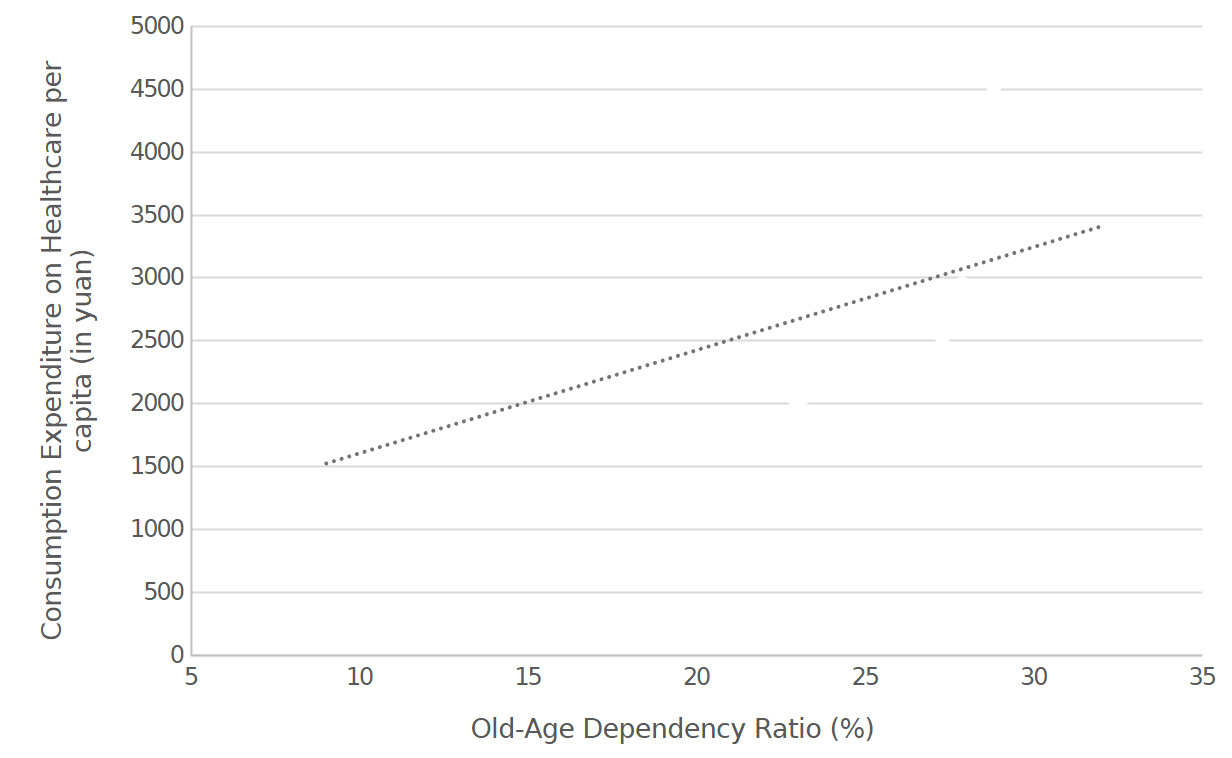
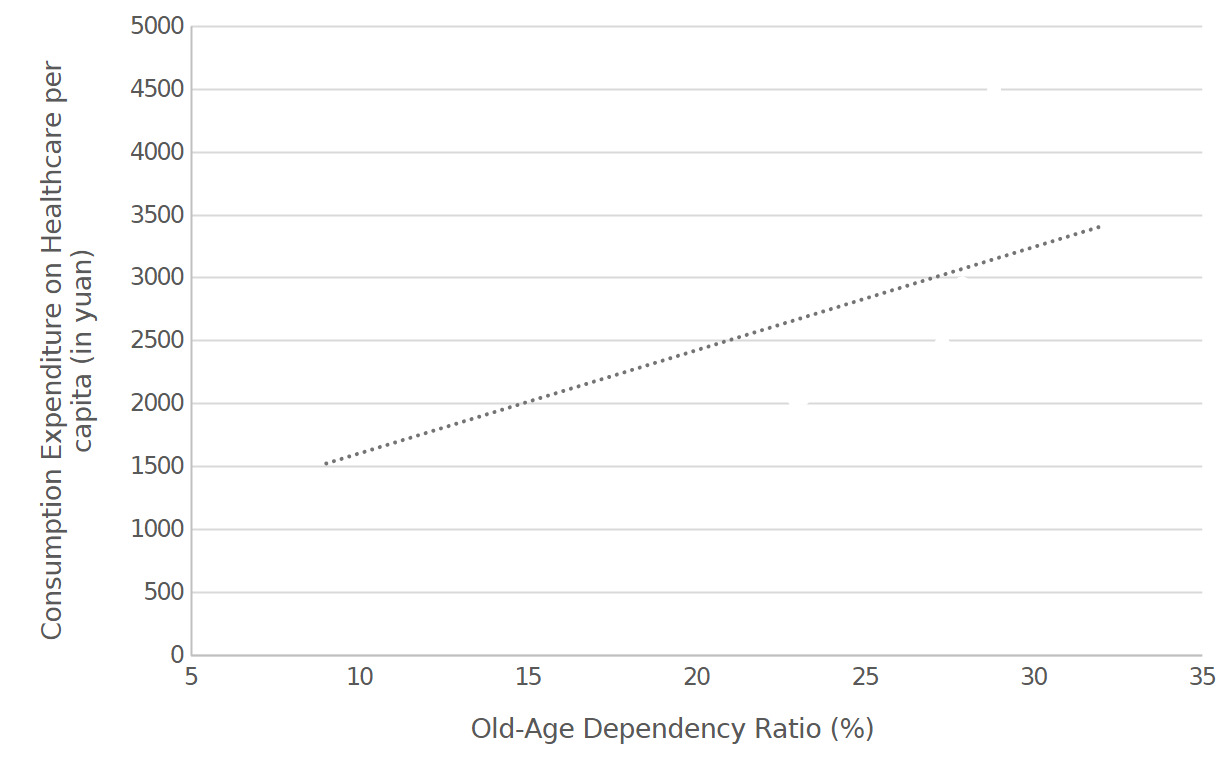
Figure 2 illustrates a trendline showing weak to moderate positive correlation between OADR and consumption expenditure on healthcare per capita. The data is volatile, with many points residing well above or below the trendline. Furthermore, the Pearson correlation coefficient is 0.57, revealing that although the association between OADR and healthcare spending is positive, the relationship is less consistent throughout the data. The volatility in the data, whether explained by omitted variables or noise, supports the idea that OADR can have varying degrees of association with its related secondary effects.
This variation may also be a result of the different characteristics of districts, such as the amount of government funding on healthcare, which consequently raises or lowers household consumption on healthcare per capita. Thus, this does not necessarily mean that there is no relationship between OADR and spending on medical services per capita, but that there may be multiple external variables responsible for obfuscating the correlation. Nevertheless, the findings imply that the link between the two variables is comparatively weaker, and that spending on medical services per capita does not have a prominent relationship with OADR in China.
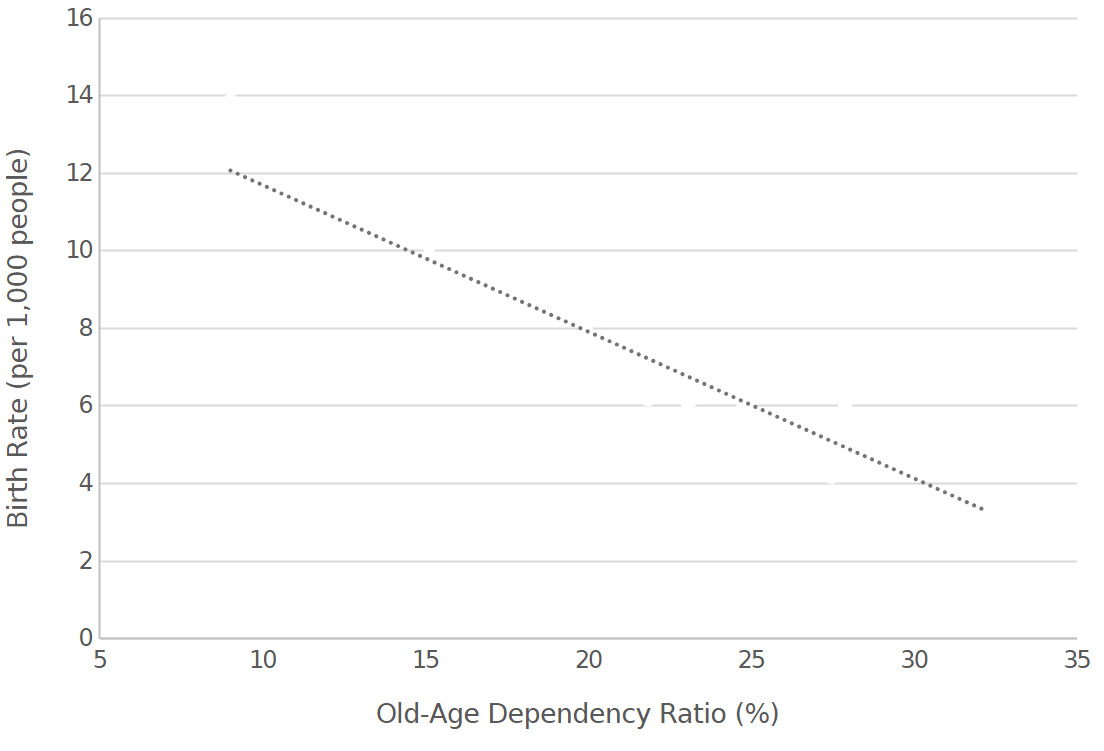
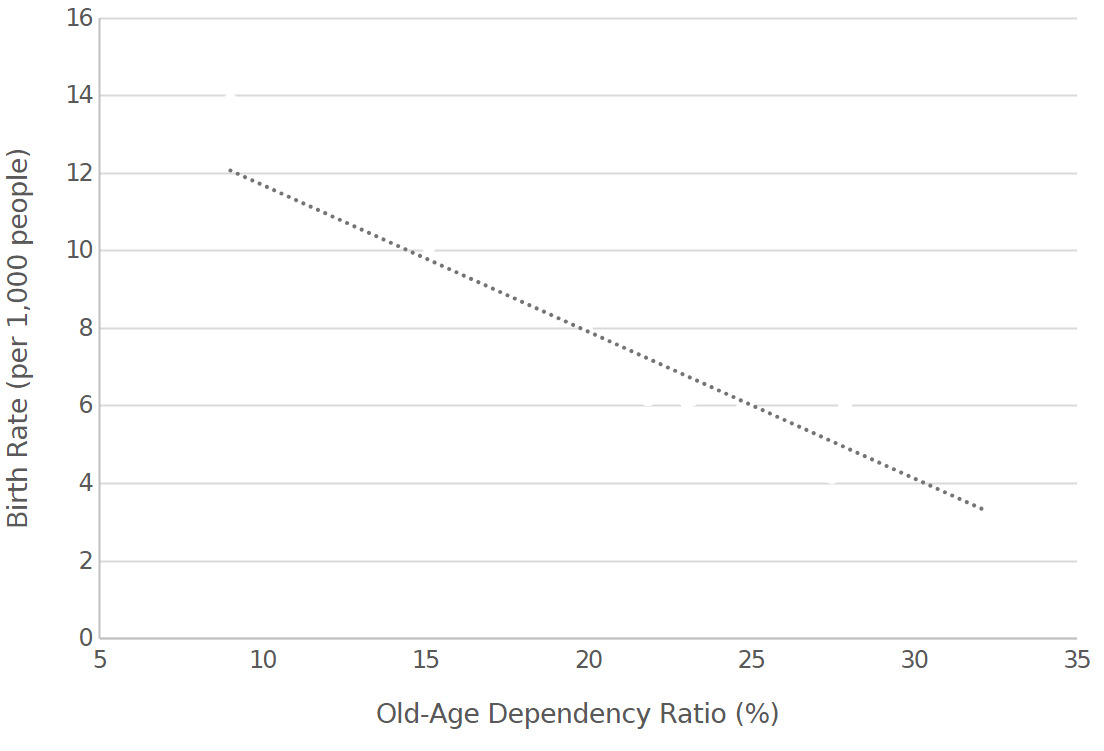
Figure 3 depicts a trendline with a strong negative correlation between OADR and birth rate. The data follows the general trend of the line, and no extreme outliers are present. The calculated Pearson correlation coefficient of -0.88 further reiterates a consistently negative association between the two variables. Despite the observed correlation, a causation relationship is unable to be established because of potential confounding variables. Even so, analyzing the data reveals a stronger connection between OADR and birth rate, implying that the two variables may share a more defined relationship.
Discussion
The findings do not provide sufficient evidence to confirm a negative relationship between OADR and real GRP per capita in the context of districts in China. Despite this conclusion, many possible limitations can explain the results of the regression analysis. One in particular is especially apparent in the regression, that being the case study of China alone provides less evidence for a definite conclusion. The available data from the National Bureau of Statistics of China only provides information for thirty-one provincial-level divisions, possibly contributing to less precise regression metrics. Similarly, time-variant confounding variables could have acted to obfuscate the true relationship between OADR and real GRP per capita. Therefore, it does not mean that there is no negative relationship between OADR and real GRP per capita, but that the current evidence is not strong enough to reject the null hypothesis.
Moreover, the results suggest that OADR has a weaker correlation with spending on healthcare per capita in China, indicated by the Pearson correlation coefficient. This supports the idea that OADR can have varying levels of influence on its many associated secondary effects, which can then contribute to economic growth to different degrees. Recognizing whether an indirect effect of OADR is a primary barrier to development can help identify and target the primary cause of stunted growth, but it is also important to consider the human rights of elderly citizens. In China, consumption on healthcare per capita does not seem to have a prominent relationship with OADR, implying that it may not be a major source of stagnation. However, even if allocating resources towards healthcare may be an economic cost, it represents an investment into society that promotes the health and dignity of elderly citizens. Policies that address the healthcare sector therefore have to consider its economic and social implications to ensure that human rights for elderly are taken into consideration.
On the other hand, OADR has a stronger relationship with birth rate, as shown by the consistent negative correlation in the data. Because of this, birth rate appears to be a more profound associated consequence of OADR and may have a bigger contribution to economic growth in China. This corroborates the idea that OADR can impact its related secondary effects differently, causing them to have varying associations with development.
Since China faces a greater barrier to growth through decreased labor input, determining suitable policies to address birth rates is essential to stabilizing long term development. However, it is important to take into consideration reproductive freedom while designing pronatalist policies. Not only should the policies aim to increase economic growth through a larger work force, but they should also ensure that the policies do not compromise reproductive autonomy. Incentives such as tax breaks, childcare subsidies, and housing support can help promote fertility through reduced childcare costs, ensuring that individuals are able to financially support fertility choices. This way, existing reproductive intentions are able to be fulfilled without harmful exploitative policies.
A high OADR can cause the responsibilities of caretaking to fall primarily on women, potentially reducing opportunities for employment and decreasing income. Thus, an aging demographic can also introduce economic inequalities between genders. Future studies are able to explore the relationship between population aging and gender inequality.
This paper aims to minimize confounding and extraneous variables, both of which can misrepresent relationships in data. Nevertheless, there is a possibility that these omitted factors obfuscated the correlation between the variables studied. Efforts to control for entity-specific traits and time shocks accounted for time-invariant confounders and global trends but did not treat time-variant confounders for individual districts. Moreover, less data in the analysis could have potentially decreased statistical power. Thus, future studies on this topic can include more data by focusing on smaller divisions within China and include key omitted variables in the model to verify the statistical significance of these relationships. Doing so allows for a better understanding of the associations studied and can provide additional insight into aiding society and the economy during an aging era.
Conclusion
This study investigated the relationship between a rapidly rising OADR and its related secondary consequences on economic growth. By gathering data from the National Bureau of Statistics of China and analyzing results, it revealed that lower birth rates as an indirect effect of high OADR has a more prominent association with stagnation than consumption on healthcare. However, it failed to reject the null hypothesis that OADR has no real or positive relationship with real GRP per capita. Nevertheless, the conclusions contribute to existing knowledge on OADR’s indirect associations with economic development and provide insight onto future studies involving OADR and economic growth.
Although the methods were designed to minimize potential sources of inaccuracy, this paper is still able to benefit from improvements. One of the limitations was a smaller data size, since data for only thirty-one provincial level divisions were available, rather than mainland China’s total of 965 municipal districts. This could have potentially lessened the precision of the study by lowering the regression’s statistical power. Furthermore, the lack of statistical tests to verify cause-and-effect relationships between OADR and its correlated secondary effects reduced the reliability of the evidence. Even though correlations were observed, there were no findings to definitively establish causation.
An aging demographic affects countries globally, and its implications on future growth are still heavily disputed, leading to uncertainty about the future. Some suggest generic policies to address its associated consequences, despite these countries having distinct social, economic, and political contexts. Conversely, it is essential to implement policies that can fit the demands of independent countries while also supporting growth and promoting human justice. Looking beyond its effects on the economy, however, it is evident that an aging population can cause struggles for its citizens as well. Financial burden from a higher proportion of elderly dependents can restrict freedom for family planning, increase stress, and overwork working age adults, therefore diminishing the overall happiness of a society. Therefore, it is crucial to design policies that effectively address both growth and human justice to not only protect long-term economic development, but also to ensure the fair distribution of costs across generations in an aging era.
Conflict of Interest Statement
The author declares that there are no personal or financial motives that could have potentially influenced the work done in this research paper.