INTRODUCTION
Consider two students, one with strong family support and connections, who is confidently planning their higher education in a field of their choice. In contrast, another student hesitates to aspire beyond familiar career paths, not due to a lack of ambition but limited access to resources needed to turn those ambitions into reality. Just as humans in earlier times made survival decisions shaped by the limitations of their environment, individuals from lower socioeconomic backgrounds often make career choices based on financial security rather than personal ambition. When stability is a priority over risk-taking, students in these circumstances may lean towards careers with clear, reliable pathways. Leading students from lower socioeconomic backgrounds to choose career paths that are more attainable or readily available rather than aspirational. Previous research in India has shown a significant correlation between high school students’ socioeconomic status and their future career aspirations. For instance, a study published in The International Journal of Indian Psychology found a significant
indication suggesting that adolescents from higher SES backgrounds tend to have more ambitious career goals than those from lower SES backgrounds (International Journal of Indian Psychology, 2020). While it is predominantly predicted that high school students from higher socioeconomic backgrounds are more likely to aspire for more prestigious and high-paying careers, conversely those from lower socioeconomic backgrounds may face greater challenges in setting ambitious goals and aspirations due to the lack of financial resources, family support, mentorship opportunities and exposure to a wider range of career possibilities. Despite this assumption, there may be notable outliers where students from low and high socioeconomic backgrounds aspire to similar occupations. These anomalies may highlight unexpected influences like personal drive, and other factors such as optimism for the future, and the aspiration to create new opportunities for themselves beyond their current circumstances. The research will investigate the various multifaceted influences on a high school student’s career aspirations. These intersections will include the disparity between aspirations vs expectations of these students, how socioeconomic status plays a role in the gap between one’s ambitious career goals and the realistic likelihood of achieving them. Moreover, the study will investigate how disparities in access to resources provided to them and exposure to extracurricular enrichment affect their career choices. The study will also consider the extent to which parents play a role in shaping a student’s occupational aspirations and goals. These factors play a crucial role in shaping how a student perceives their individual career possibilities, influencing both the ambitions they set for themselves as well as the opportunities and future they believe are attainable for them to aspire for and achieve. This research is meaningful because it explores the important role of socioeconomic background in shaping high school students’ career aspirations. This has a broad impact on understanding economic equity, which focuses on fair access to opportunities, and social mobility, which looks at how individuals can improve their economic status over time.
METHODS
I have designed this test after a detailed literature review about the topic and prior findings. After taking into consideration all the factors that influence’s a high schooler’s career aspirations, I have put together a survey that will help us obtain a more data - driven understanding of how socioeconomic status influences high schoolers’ career aspirations. For the higher, middle and lower income students, the sample size was 60 students each, from grade 10 through 12. We chose this sample size based on the availability of the students. The sample size was selected to adequately represent students from various socioeconomic backgrounds, ensuring diversity in career aspirations and parental occupations. Moreover, the sample size was also based on the availability of the students in the respective schools. Not all students were present in each classroom room and hence we had to give the survey to whomever was available at the time. The schools in this study were categorised based on income levels to analyse differences in occupational aspirations across socioeconomic backgrounds. Higher-income schools included Anand Niketan, Ahmedabad International School, and Riverside, which primarily cater to students from affluent families. These students often have financial freedom concerning education, allowing them to choose careers based on passion and interest rather than stability and necessity, making them an imperative comparison group for this research. Middle-income schools comprised Little Flower School, Maharaja Agrasen School, these were chosen to show more varied financial backgrounds, as these students generally lie between the two extremes of affluence and poverty. While much prior research focuses on the extremes of high-income and low-income students, middle-income students arefrequently overlooked. Hence, the decision to approach students from middle-income families will help give us a deeper understanding and help us identify any gaps. Moreover, the middle-income population takes up approximately 31% of India’s population as of 2025 (IIBF, 2025), including this group ensures that the research findings are representative of the broader population. Lower-income schools were included to capture perspectives from students with limited financial resources and other barriers that may affect their career choices. These students may have career choices based on job security, income potential or the exposure they have been given about the wide spectrum of career fields. This can also give more insight into government-run schools and guidance given to these students who have limited exposure through their parents and other resources, like counsellors. For students from higher-income schools such as Anand Niketan, Ahmedabad International School, and Riverside, the questionnaire was distributed online via Google Forms. This method was chosen as these students have reliable access to personal digital devices and network access quite conveniently. Using an online survey model helped increase efficiency, as the response time was quick. Furthermore, this method increased convenience for the respondents, as they got to respond to the survey in their environment—this can also help improve accuracy. The snowballing method was also used as I also belong to one of the schools mentioned here, making the participants easily approachable for the study. For middle-income students from Little Flower School and Maharaja Agrasen School, the survey was administered in person following a series of briefing sessions. During these sessions, students were encouraged to reflect carefully and provide thoughtful, grounded responses. The participants were approached both directly and through their respective schools, with surveys conducted within classrooms to ensure convenience and ease of participation. Administering the survey in person allowed the purpose of the study to beclearly communicated, while also providing opportunities to address questions and clarify doubts in real time. This process contributed to more complete and reliable responses. Data collection for lower-income students was facilitated with the support of a community representative, who acted as an acquaintance familiar to the participants. This individual conducted in-person visits, guiding students through the process of reflecting on and writing their responses. This approach was chosen to enhance accessibility for a group that might otherwise have been difficult to reach. To further improve comprehension and readability, the survey was translated into Gujarati, the local vernacular commonly spoken by students from this demographic. The involvement of a trusted community insider helped create a more comfortable and trustworthy environment for respondents. Additionally, to encourage participation, an incentive was offered in the form of a raffle, in which all participants were entered, and one randomly selected winner received ₹500.
ETHICAL CONSIDERATIONS
Participation in the survey and interviews was entirely voluntary. Informed consent was obtained from the students, and verbal permission was also sought from school authorities where applicable. All responses were anonymised to protect the identity and privacy of the participants. The data collected was used solely for academic purposes, and no personal identifiers were recorded or shared.
RESULT / FINDINGS
This study examined how socioeconomic status (SES) influences the career aspirations of high school students by analysing patterns across lower, middle, and higher-income groups. The findings indicate that SES significantly shapes not only the types of careers students aspire to, but also the processes through which those aspirations are developed, supported, and planned. In the following section, the findings for each income group are discussed independently
Lower-Income Group
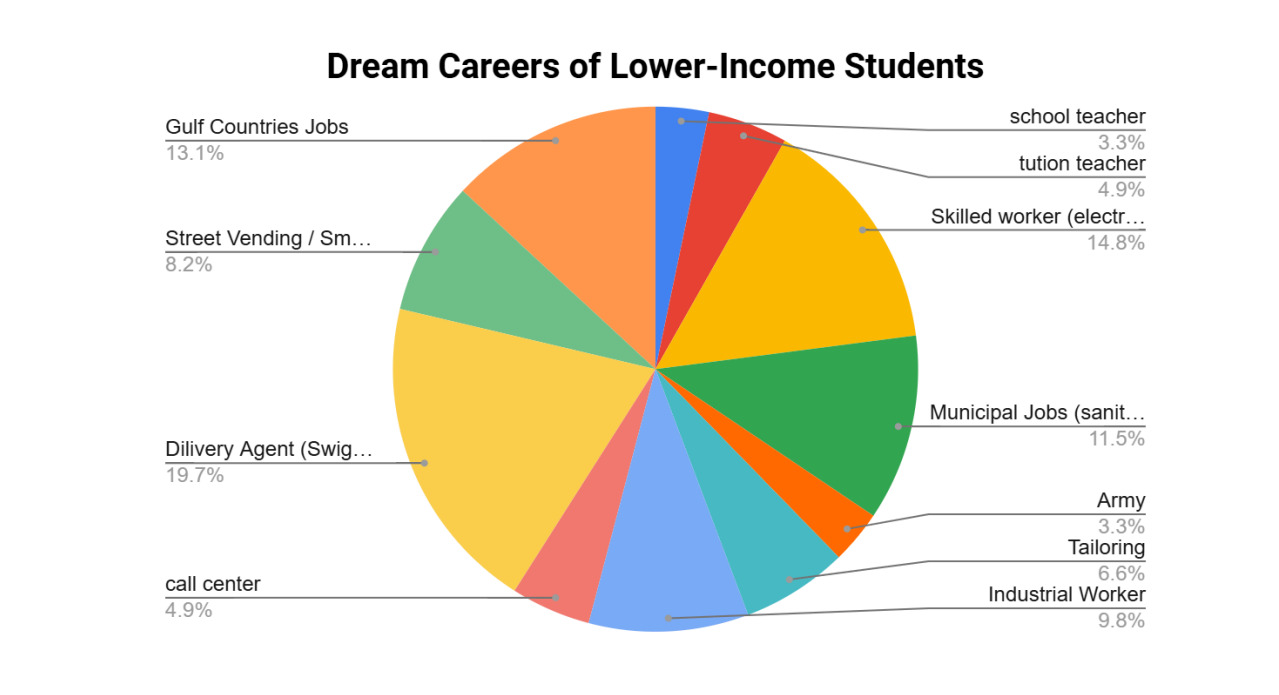
In the lower-income group, survey questions focused on parental occupation, career goals, motivations, barriers, and support systems. Students were first asked about their parents’ professions, where the overwhelming majority reported that their mothers were housewives. This reflects both economic constraints and traditional gender roles, limiting exposure to working women and shaping gendered perceptions of work (Siddiqui & Ramani, 2023). Fathers’ occupations were often recorded vaguely as “job,” without specification—suggesting either limited awareness or the informal, unstable nature of such employment. This lack of clarity restricts students’ understanding of professional pathways, contributing to vague or mismatched aspirations (Pandey et al., 2023). In the lower-income group, the pattern of aspirations reflected a strong grounding in economic survival and immediate employability. Unlike abstract ambitions often expressed in other socioeconomic groups, students here named tangible jobs as their dream careers.These preferences highlight a striking orientation toward roles that are accessible without extensive higher education and can provide quick financial returns.
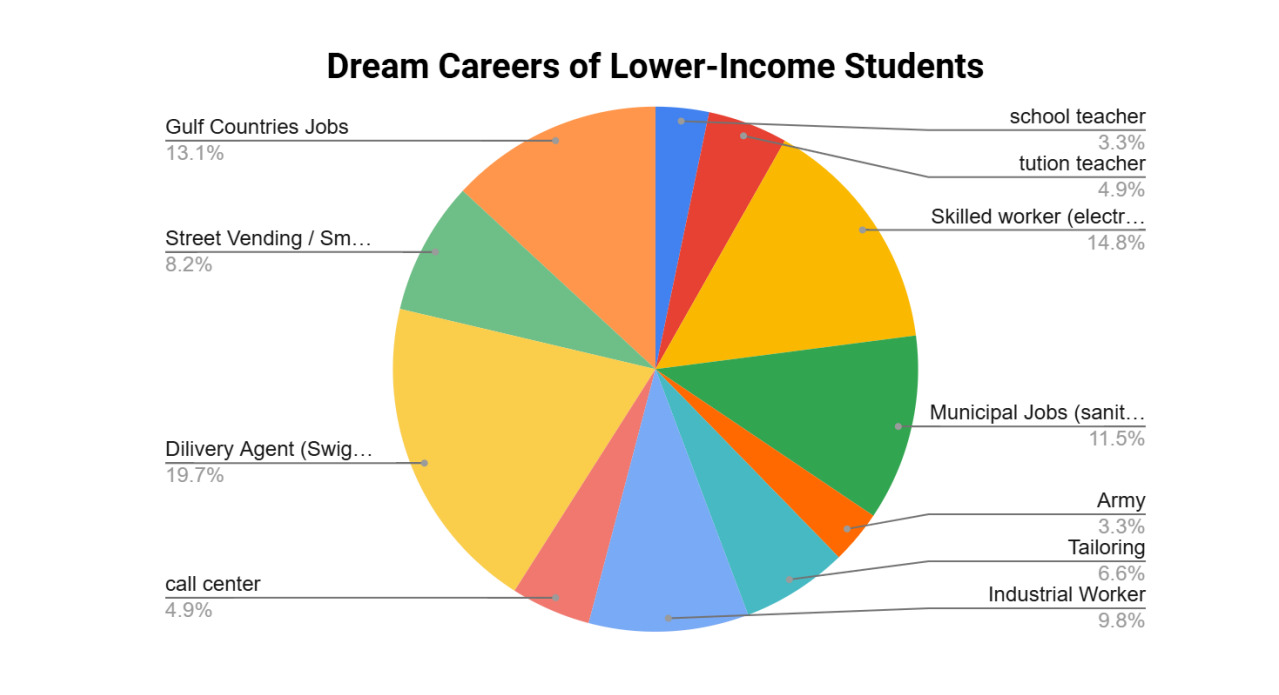
A key insight that emerged was the relationship between interest and dream. For these students, “interest” often described activities they found meaningful or enjoyable, while “dream” referred to the concrete jobs they felt capable of attaining or compelled to pursue. This duality demonstrates how aspirations were both imaginative and pragmatic—students imagined futures aligned with their interests but translated them into job roles that matched their socio-economic circumstances. For example, a student interested in mechanics identified industrial or skilled labor as their dream job, showing alignment between what they would like to explore and what they believe is realistically achievable. What stands out is that these goals are largely short-horizon careers, designed to be entered quickly after finishing school rather than requiring prolonged university study. The near-absence of aspirations for higher-status professions like doctors, engineers, or lawyers reflects both the students’ recognition of the economic and educational barriers
they face and their rational choice to pursue work that ensures immediate stability. In this sense, their career goals are more than mere aspirations—they are survival strategies. The survey also included questions on role models, influences, and barriers. Every student in this group identified parents or guardians as the most influential figures in their career decisions. All students reported barriers, with financial constraints being universal. They recognized the importance of financial support, naturally none could specify clear university preferences, despite being at a stage where such planning is critical. A final set of questions asked whether students had a “Plan B.” Almost all reported not having an alternative pathway if their primary goal failed. Upon discussion with them I realized that all of them have prior connections with people who could get them their jobs in their field of interest. This pragmatic orientation suggests a powerful capacity for resilience and adaptability among students from lower-income households, but also underscores systemic exclusion; their inability to access higher education narrows their dreams into what can be secured within the near future. As such, their career narratives reveal not a lack of ambition, but a forced negotiation between desire, necessity, and opportunity.
Furthermore,when students were asked about their reasons for choosing careers, the most common motivations cited were “money” and “respect”. This indicates that financial and social factors play a dominant role in aspiration formation. This practical and survival-oriented mindset reflects the students’ desire to overcome economic disadvantage rather than to pursue personal fulfillment. Upon further discussions with the students I realized that there is a lack of understanding on how to achieve even those economically, survival oriented goals. There exists a disparity in goals, capabilities and aptitudes. In summary, students from lower-income backgrounds are driven and ambitious, but their career development is hindered by financial hardship, limited exposure to role models, and a lack of support systems. Their aspirations are shaped more by necessity than by choice, which underscores the importance of targeted interventions such as financial aid, mentorship, and accessible career counselling in the early stages of schooling as well throughout.
Middle-Income Group
Among middle-income students, career aspirations tended to reflect a balance between ambition and caution, often shaped by family influence and financial considerations. A notable pattern was observed when both parents worked in similar fields, such as teaching, business, or public service. In these cases, students often expressed a desire to pursue the same professions, suggesting the presence of strong modelling behaviour. In households where the mother was a homemaker and the father a businessman, children were more likely to express individual preferences, yet commonly cited the family business as a backup plan if their initial career goals didn’t work out.
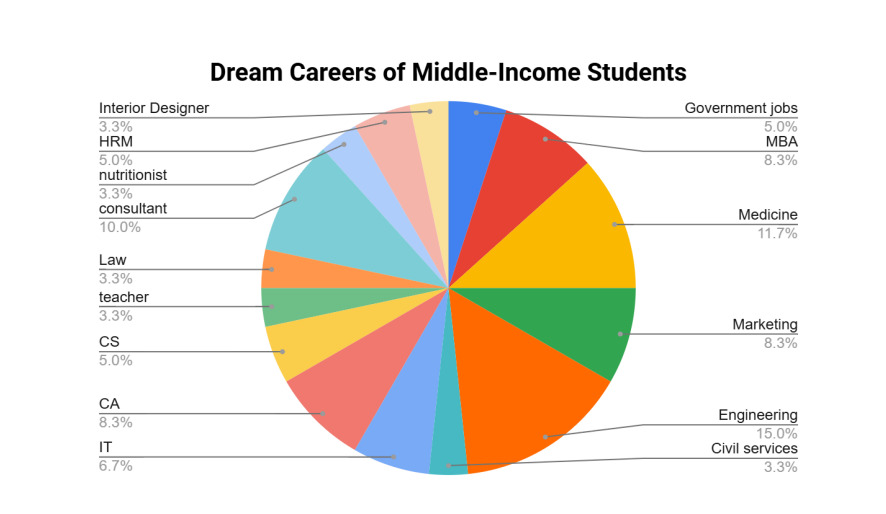
Students in this group overwhelmingly reported that their parents or guardians had the most impact on their career choices. Commonly chosen professions included engineering, medicine, law, chartered accountancy (CA), company secretaryship (CS), and management-related roles. These careers are typically considered safe, respectable, and financially rewarding. Notably, many students stated that their primary motivation for pursuing these careers was a “huge paycheck” or job security, rather than passion or interest (Hussain & Mukhopadhyay, 2023). The influence of social norms and expectations seemed to guide decision-making more than personal exploration. There were career choices that defied the normative roles such as psychologist, Human resource management, consultant, nutritionist, Interior designer.
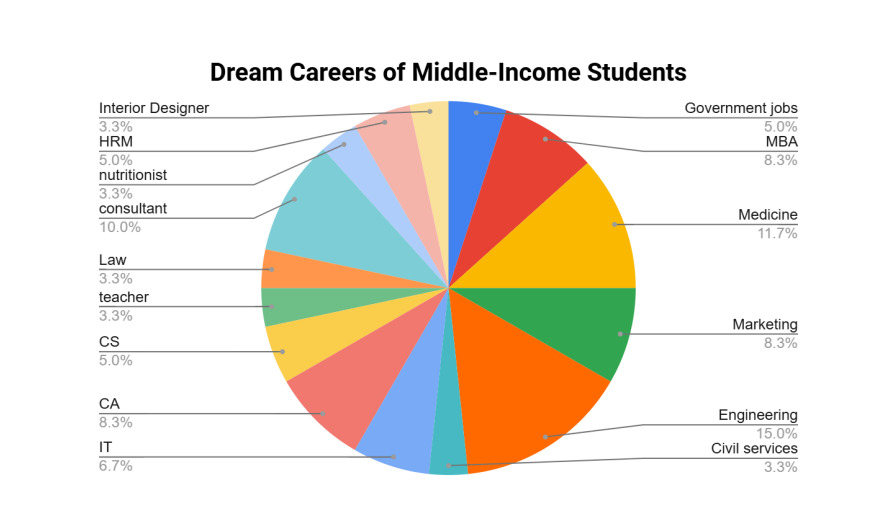
Students from this group were aware of the probable options and struck a balance between what they actually wanted to what is achievable. Their goals gave them a sense of satisfaction and security. Therefore, their career planning encapsulated clear pathways. While this group showed a significantly greater degree of specificity and planning than the lower-income group,they also demonstrated clear signs of pressure to conform to “norm fields.” There was limited enthusiasm for non-traditional or creative professions, suggesting that economic caution and parental expectations significantly restrict risk-taking and career experimentation.
Higher-Income Group
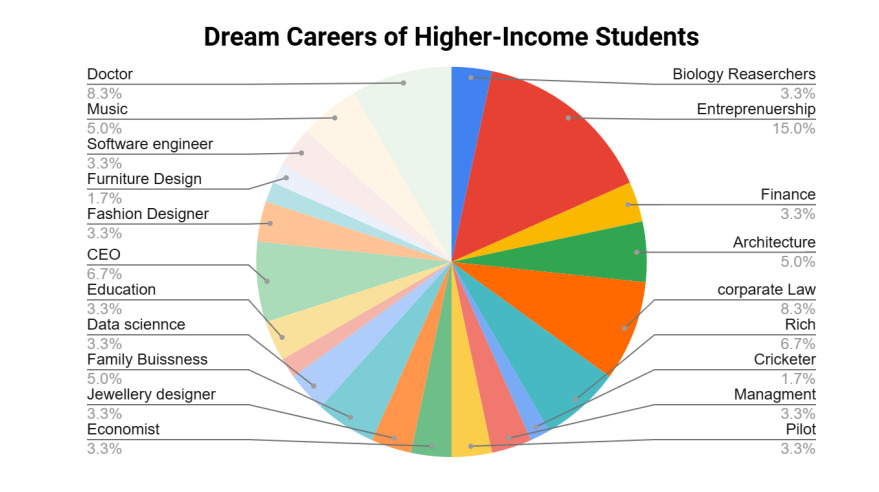
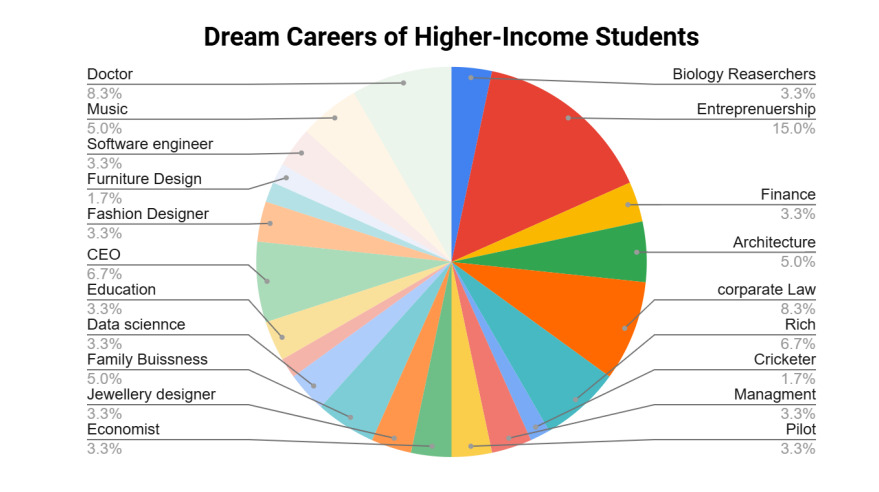
The higher-income group showed the most variety, clarity, and confidence in career decision-making. Students in this category expressed interest in a wide range of professions—including Entrepreneurship, architecture, finance, psychology, data science, design, and entrepreneurship—and their choices often aligned closely with personal interests and long-term goals. Unlike the lower- and middle-income groups, passion and curiosity were frequently cited as guiding factors. Many students also had a well-defined Plan B, which in most cases involved joining or expanding a family business. This fallback option points to the presence of economic safety nets and generational wealth, which allow students to dream more freely and take risks in their primary aspirations.
University preferences were especially distinct in this group. Ivy League institutions and top global universities such as Stanford, NYU, UChicago, and LSE were frequently mentioned. What stood out was that students often selected these institutions based not just on course offerings, but on factors like institutional values, location, networking potential, and even lifestyle. This reflects a more holistic and aspirational approach to higher education planning, made possible by early exposure, informational access, financial flexibility and Social Networks(Maheshwari & Viswanathan, 2025). Even students who were unsure about their specific career paths had strong preferences for particular universities, suggesting a high level of preparatory awareness.
Parents in this group were generally working professionals, with mothers and fathers engaged in diverse fields. This provided students with broader exposure to various professions and more encouragement to explore non-traditional or emerging career paths. Students also reported receiving guidance from not just family, but also mentors, professional networks, and media, further enriching their understanding of career possibilities.
Collectively, these features highlight how higher socioeconomic status translates into better support, broader exposure, and more freedom in career planning. These students benefit from structured guidance, multiple safety nets, and greater confidence in navigating competitive academic and professional environments.
DISCUSSION
The data in this study reveals more than just differences in career aspirations across socioeconomic groups—it also sheds light on how aspirations are socially constructed, emotionally charged, and deeply tied to a student’s perceived place in society. The findings challenge the common assumption that young people always “follow their passion.” In reality, passion appears to be a privilege, accessible primarily to those with the economic security to take risks.
Students from lower-income backgrounds were not necessarily lacking in ambition but were operating within constraints that made practicality—not preference—their guiding force. Their uniform focus on money and respect may reflect a deeper desire not just to succeed, but to escape marginalisation and earn legitimacy in the eyes of society. What appears as a career goal is often a coded expression of survival, stability, or a need for social upliftment.
In contrast, students from higher-income households seemed to experience career choice as a form of self-expression. Their aspirations were often tied to identity, personal growth, and lifestyle, not just income or prestige. This suggests that in wealthier contexts, career decisions are increasingly individualised, shaped by exposure to global narratives of “finding your purpose” and “doing what you love.” The freedom to imagine alternate futures—and to fail safely—was a unique affordance not available to their lower- and middle-income peers.
Interestingly, the middle-income group served as a bridge between these two worlds. These students often internalised the pressure to succeed like those from lower-income backgrounds, but were still cautious about stepping outside the bounds of socially accepted careers. Their reluctance to explore non-traditional paths may reflect a fear of downward mobility—of “wasting” the relative stability their families had worked hard to build.
Another overlooked but significant finding is the lack of structural planning across SES lines. Even many higher-income students, despite their resources, lacked detailed knowledge about career paths or articulated backup strategies beyond vague fallbacks like “family business.” This points to a broader systemic issue. Schools may not be adequately preparing students, not just to dream, but to design a pathway toward those dreams with informed choices and critical reflection.
The influence of parents as the dominant guiding force across all groups also raises important questions about intergenerational aspiration transmission. While parental support can be empowering, it may also become a limiting factor when students absorb unchallenged expectations or conform to family-defined success.
Beyond the patterns of choice and constraint, the data also suggests that career aspirations function as a kind of cultural storytelling. Students are not only expressing what they want to do but also narrating who they believe they are allowed to become. These narratives differ sharply across socioeconomic lines, revealing how opportunity is translated into imagination. For some, imagination stretches outward that is towards creativity, exploration, and global belonging. For others, imagination folds inward towards safety, endurance, and recognition within immediate social worlds.
What emerges here is not merely a difference in resources but a difference in psychological time. Students with economic security tend to think in terms of futures with long arcs of development, trial, and reinvention , while those from under-resourced settings often orient themselves to the present, where immediate responsibilities and risks outweigh distant dreams. This temporal gap has profound implications because then the very act of picturing one’s future becomes stratified, with some students rehearsing multiple scenarios and others rehearsing only one, repeated until it feels inevitable.
Equally striking is the subtle role of silence in the data. Many students, across groups, seemed to avoid naming aspirations that fall outside the “acceptable” spectrum of careers. This silence speaks volumes, pointing to how aspiration is policed not only by material conditions but also by unspoken cultural boundaries. The absence of certain dreams, whether artistic, activist, or unconventional, reminds us that what is unsaid may be as revealing as what is declared. Lower-income students show the highest emphasis on money, respect, and job security as career motivations, while higher-income students report very low reliance on these factors, indicating a shift from necessity-driven to interest-driven aspirations.
CONCLUSION
The findings invite reflection on what schools and policymakers often overlook. The emotional architecture of aspiration. Guidance structures tend to assume that students approach choices with clarity and confidence, yet the reality is that many arrive at these crossroads burdened with doubt, silence, or a learned inability to articulate alternatives. Any intervention that ignores this inner landscape risks producing compliance rather than conviction.
Another missing layer is the cultivation of adaptability. In a rapidly changing world of work, preparing students to hold multiple, flexible identities may be as important as preparing them for a single stable career. Encouraging exploration, tolerating uncertainty, and normalising detours can serve as equalising strategies, giving disadvantaged students permission to see their futures not as narrow ladders but as branching paths. The schools need to start educating students on different pathways out there rather than fixating on conventional methods of assisting tests that dictate qualities and strength as an anchor for a certain type of work titles. There is a shift in the perspective of awareness in the coming generations which is not of one self but of the increasing choices out there, paired with lack of knowledge on how to reach them.
Finally, the study highlights the importance of listening to what is absent in students’ voices. The careers not mentioned, the possibilities prematurely ruled out, and the hesitations cloaked in silence all point to the hidden curriculum of limitation. Addressing this requires systemic courage, creating spaces where students are not only taught how to succeed but also granted the freedom to imagine differently without fear of failure or social disapproval.
By 2030 India is set to have the highest proportion of youngsters. The conventional career counselling methods need to adapt to the growing needs of the current era.