Introduction
Antibiotics are medicines used to treat or prevent bacterial infections (Uddin et al., 2021). Since Fleming discovered penicillin (the first antibiotic) in 1928, these drugs have saved over 500 million lives from infections like strep throat, urinary tract infections, skin infections, and more (Sir William Dunn School of Pathology, 2025). However, the rise of antimicrobial resistance (AMR), a process that occurs when bacteria and other microbes, such as fungi or viruses, change, makes antibiotics less effective. This means that antibiotics like penicillin risk becoming obsolete, leaving numerous infections untreatable (Lobanovska & Pilla, 2017). Global health experts now describe AMR as “the silent pandemic,” causing an estimated 1.27 million annual deaths in 2019 alone (Salam et al., 2023). In 2021, the World Health Organization (WHO) warned that certain strains have become increasingly difficult to treat (WHO, 2023). Overall, AMR poses one of the most serious modern health threats, as it compromises the foundation of contemporary medicine, from routine surgeries to cancer treatments (Salam et al., 2023).
Literature Review
AMR occurs through specific biological processes, and although it is a natural evolutionary process, it has been accelerated by humans. The WHO, an international authority on health, has determined that “Antimicrobial resistance is one of the top 10 global public health threats facing humanity” (WHO, 2023), linking it to the widespread use of antimicrobials by humans. The peer-reviewed book Antibiotic Resistance, published by the NIH and authored by Yacob Habboush, Board-certified in Internal Medicine, and Nilmarie Guzmán, Infectious Diseases Physician of the Internal Medicine Program, both at HCA Florida Orange Park Medical Center, adds that multiple biological mechanisms, like intrinsic resistance, which are natural resistant factors like a nonpermeable membrane or efflux pumps in bacterial cells; genetic mutation, mutations that arise randomly and protect the bacteria from antibiotics; and horizontal gene transfer, which allows bacteria to gain resistant benefiting traits through conjunction (cell-to-cell contact), transduction (through bacteriophages), and transformation (uptake of free DNA in the environment), contribute to AMR, all allowing the bacteria to evade treatment (Habboush & Guzman, 2023). Despite penicillin marking the beginning of the antibiotic era, Mariya Lobanovska and Giulia Pilla, PhD graduates from Sir William Dunn School of Pathology, University of Oxford, provide a historical review that illustrates how quickly this accelerated evolutionary process, explained by Habboush and Guzman can occur “…within a few years of the introduction of penicillin, strains of Staphylococcus aureus were already resistant…and by the late 1960s, over 80% of hospital and community strains showed penicillin resistance” (Lobanovska & Pilla, 2017), highlighting how quickly selective pressures (like human usage) can accelerate bacterial evolution.
Md. Abdus Salam and collaborators from the Department of Basic Medical Sciences at the International Islamic University specify that although AMR is normal, it has been amplified by the misuse of antibiotics (Salam et al., 2023). For example, unnecessary antibiotic use, incomplete courses, misdiagnosis due to a lack of tools, and overprescription by clinicians are all selective pressures on microbes; specifically, around 30-50% of patient antibiotic prescriptions are unnecessary (Habboush & Guzman, 2023). Due to the overuse of antibiotics, many drug-resistant bacteria have become common, threatening the treatment of tuberculosis, pneumonia, urinary tract infections, and other diseases (Habboush & Guzman, 2023). Tanvir Mahtab Uddin and collaborators from the Department of Pharmacy at the University of Bangladesh project that by 2050, around 20 million deaths will be caused by AMR per year (Uddin et al., 2021). Salam; Habboush and Guzman; Uddin; and Lobanovska and Pilla all show that antibiotics, while life-saving, can lose effectiveness through natural and unnatural factors, creating resistant strains that spread widely.
However, these broad and mechanistic perspectives fall short in examining how public knowledge and behavior contribute to these patterns. The WHO’s surveillance data measures resistance levels but does not capture underlying factors. Lobanovska and Pilla demonstrated overuse of antibiotics over time, but not the perceptions that led to it. This gap matters because resistance is not only a microbiological phenomenon but also a behavioral one: misuse in one individual can generate resistant strains that affect others. By focusing on the biological inevitability of resistance without addressing the human knowledge and behavior behind antibiotic consumption, the current global and historical sources lack a holistic perspective.
AMR is directly linked to human behavior, particularly how antibiotics are prescribed, accessed, and used. Dr. Viroj Tangcharoensathien, the Secretary General of the International Health Policy Program Foundation, explains that taking antibiotics for viral infections or not completing the full treatment creates selective pressures that allow bacteria to become resistant (Tangcharoensathien et al., 2021). Because of these misconceptions, Kristian Kvint with the Department of Infectious Diseases at the Sahlgrenska Academy, University of Gothenburg, Sweden, and Martin Palm and Anne Farewell with the Department of Chemistry and Molecular Biology at the University of Gothenburg stress that, “education for the general public about antibiotic resistance is a key component of our response to this crisis” (Kvint et al., 2020). The reasons for this behavior are complex, “reflecting economic, political, and psychological factors” (Kvint et al., 2020), making behavior-focused education essential for reducing the growth of AMR.
WHO’s Global Action Plan and the GLASS surveillance system identify public awareness and education as a central solution for AMR. The WHO pipeline report explicitly notes that “new antibacterial treatments are…urgently needed” (WHO, 2020), but also warns that without changes in prescribing and use, innovative drugs will quickly lose effectiveness like those before them. “The world faces an antibiotics pipeline crisis… and urgent need for additional measures to ensure equitable access to new and existing vaccines, diagnostics, and medicines” (WHO, 2023). Illustrating that AMR cannot be solved with drug discovery alone, behavioral and educational interventions are equally needed.
Kvint, Palm, and Farewell provide a concrete example of how education can remedy AMR by developing a multidisciplinary university course on AMR and conducting a program evaluation. As a result, they “saw positive outcomes in students and the community because of public awareness” (Kvint et al., 2020). Basmah Qenab from USAID Medicines, Technologies, and Pharmaceutical Services Program in Jordan similarly demonstrated the potential of early education. By reaching 2,700 students across 30 schools, the program achieved statistically significant improvement in knowledge about “the importance of consulting a doctor before taking antibiotics” (Qenab et al., 2024), but unlike Kvint’s study, it did not identify any further spread or diffusion of this knowledge.
However, these studies have important limitations. The WHO focuses heavily on surveillance and policy rather than long-term behavioral change. Kvint, Palm, and Farewell’s university course lacked a control group, raising the possibility that students who voluntarily enrolled were already aware of AMR. Qenab’s school program also missed a control group and only tracked short-term knowledge gains, but there is no evidence showing that the students’ antibiotic usage actually changed. In addition, the WHO; Kvint, Palm, and Farewell; and Qenab lack specific information on antibiotic access and regulation in other regions. Specifically, the Latin American region has been largely overlooked, even though antibiotic access, regulations, and attitudes vary significantly. AMR awareness in Latin America highlights a crucial gap; while education appears to improve knowledge, there is no information on how well that knowledge translates into sustained behavior among the general population in Latin America. This absence is confirmed by the meta-analysis on AMR, conducted by Enrique Castro-Sánchez, Honorary Lecturer at Imperial College London, where over 100 studies on AMR-related knowledge, attitudes, and practices, reported major geographical imbalances, with few studies conducted in Latin America (Castro-Sánchez et al., 2024).
National surveys reveal knowledge gaps in adults; for example, Tangcharoensathien’s survey in Thailand reported that even as knowledge of antibiotic use increased slightly from 2017 to 2019, self-medication and improper storage of antibiotics remained common (Tangcharoensathien et al., 2021). Education and wealth were associated with higher awareness, as “respondents with higher education and in richer wealth quintiles were more likely to have better knowledge on appropriate antibiotic use and AMR” (Tangcharoensathien et al., 2021). However, awareness alone was not proven to change behavior.
Building on the previous discussion of behavior and education, adolescents represent a particularly important yet understudied group in AMR research. Since many health-related habits are formed in adolescence (Arafa et al., 2024), understanding youth knowledge is essential for long-term behavior change. However, existing studies suggest that adolescents often hold misconceptions about AMR despite quality education. Catherine V. Hayes and Charlotte V. E., with the Primary Care and Interventions Unit, Public Health England, found that “most adolescents, even those studying biology A-level, did not understand the concept of antibiotic resistance” (Hayes et al., 2021). Highlighting persistent misconceptions among the adolescent population.
Tangcharoensathien’s and Hayes’s findings complement each other by portraying a consistent pattern of adolescents’ misunderstanding of AMR and antibiotic usage, and in adults, this pattern persists in high socioeconomic contexts. This creates a limitation for sources focusing on adolescents, as none of these studies specifically focused on high-SES families, and the contexts studied (UK, Thailand, Jordan) differ in regulation and cultural attitudes towards medicine from countries like Mexico.
WHO’s AwaRE and SECURE frameworks categorize most of the new antibiotics as “reserve drugs,” limiting their sales to maintain the drug’s effectiveness (WHO, 2020). This type of policy can create financial challenges for companies and access issues for patients. In Latin America, weak enforcement and cultural norms have led to informal use of antibiotics; Mario Ortiz from the Área Académica de Medicina del Instituto de Ciencias de la Salud, Universidad Autónoma del Estado de Hidalgo, reports that in Mexico, antibiotics are commonly obtained over the counter, and many people self-medicate despite existing regulations (Ortiz et al., 2022).
Susan Ka Yee Chow and others from the School of Nursing at Tung Wah College add that socioeconomic factors further shape these behaviors; education and wealth status were significantly associated with knowledge and antibiotic use (Chow et al., 2021). In Mexico, these patterns may be intensified among high-SES adolescents, who typically have both the financial means and healthcare access to obtain antibiotics without such strict oversight and may therefore have easier access to antibiotics than other demographic groups.
The perspectives converge on recognizing that misuse drives AMR and that access must be managed responsibly; they diverge on how to achieve that balance. WHO’s classification seeks to restrict use, while Latin American practices often normalize informal access through family medicine cabinets and pharmacies that provide antibiotics over the counter (Torumkuney et al., 2022).
Crucially, no studies have applied behavioral models specifically to Mexican adolescents in high-SES international schools, a population whose unique positioning (SES, bilingual education, and private health systems) might influence how knowledge translates into usage. Therefore, this study will address this by exploring how high-SES adolescents in Mexico take antibiotics, and how their overall understanding of AMR influences their decisions. By exploring the question: Through a descriptive correlational quantitative survey design, how does the understanding of antimicrobial resistance among adolescents aged 14–18 from high socioeconomic backgrounds at an international school in Mexico in 2026 influence their antibiotic intake and usage? The research aims to fill a critical gap, offering insights about this uniquely positioned demographic group, helping to inform others on the next generation of antibiotic users whose habits could impact the future of AMR.
Methods
This study’s method was a descriptive correlational quantitative questionnaire based on current literature in the field. I drew conclusions by analyzing the correlation between antibiotic usage and antimicrobial resistance knowledge. The descriptive correlational design directly addresses the research question by examining whether naturally occurring differences in antibiotic usage knowledge are associated with variations in adolescents’ AMR knowledge across demographic groups.
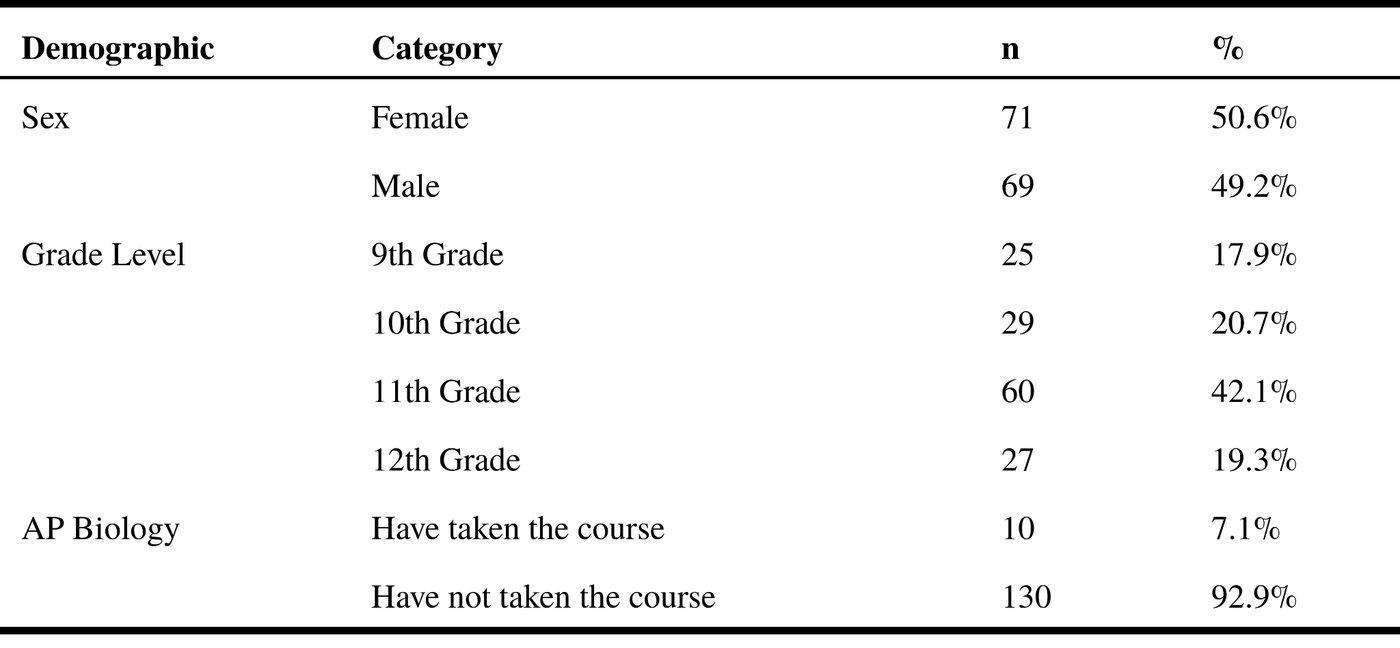
A total of 140 students aged 14-18 from a high socioeconomic background at a private international school in Mexico participated in the survey. As in Chow’s study, for this study, SES will be defined as an individual’s social and economic positions relative to others based on education, occupation, and individual perception of financial resources (Chow et al., 2021). A priori sample size estimation was conducted using a 95% confidence level, a ±7.2% margin of error, and a population size of approximately 560 high school students, which indicated that a minimum of 140 participants would be required for statistically reliable results. “A priori analysis is a sample size calculation performed before conducting the study… calculates the sample size N” (Kang, 2021), which is necessary to determine the generalizability of the study. Inclusion criteria required participants to be between 14 and 18, enrolled at the school during the 2025–2026 academic year, and able to complete the survey in English on their laptop. If these requirements were not met, then participants were not eligible. Students outside the specified age range or who did not provide parental consent were excluded. Demographic characteristics, including sex distribution, grade level, and prior enrollment in AP Biology, are summarized in Table 1.
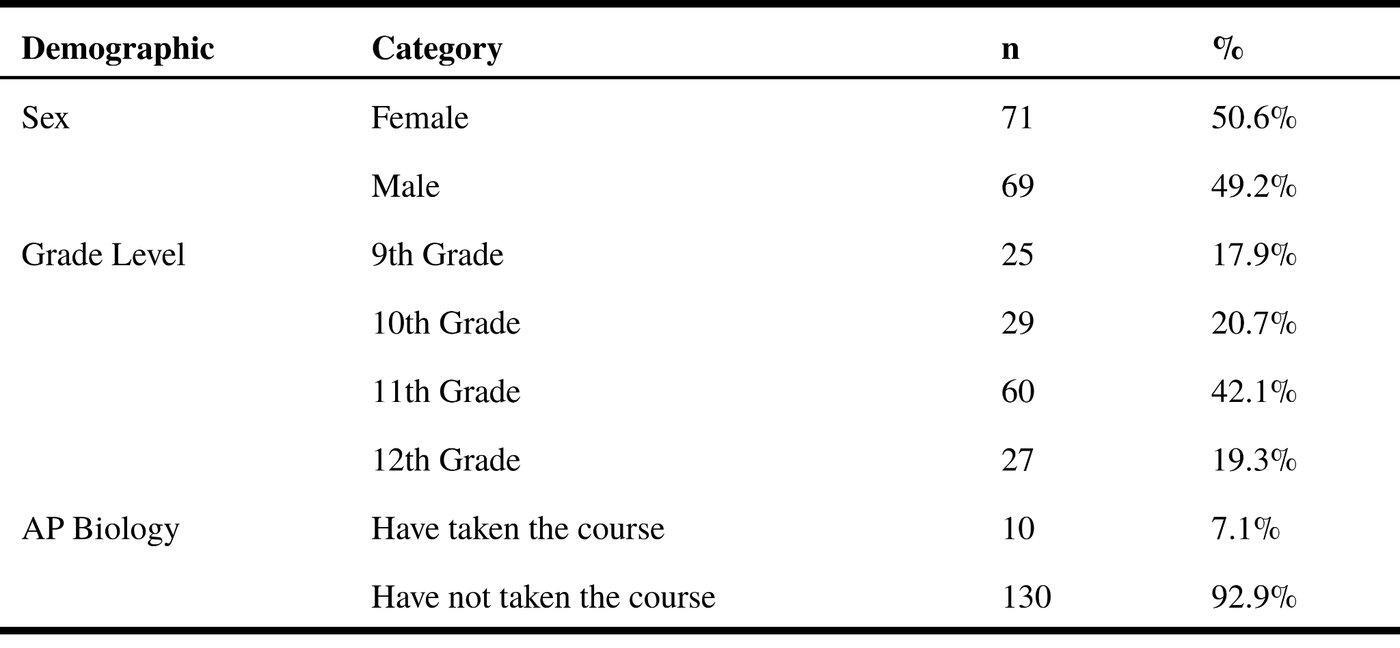
In compliance with the American Psychological Association Ethics Code (American Psychological Association [APA], 2026), I completed an inquiry proposal, which was reviewed by an Institutional Review Board (IRB) made up of three teacher advisors. In my proposal, I confirmed that I included a parent consent form and an informed assent form for students. These forms outline the study procedures, risks, and benefits of participation (a cookie was given as a reward), confidentiality, and data collection. My questionnaire was created using Weavly, a survey creator that allows for many question formats such as multiple choice, select all that apply, and the option to digitally sign the consent and assent forms, which is accessible to the specific population, who mainly use electronic devices. Flyers were sent in generation group chats to invite students to participate. As all high school students are in generation chats, this method of contacting complies with the APA Ethics Code by avoiding discrimination, as all students had an equal opportunity to participate. The consent and assent forms were integrated at the start of the survey. After agreeing, the survey proceeded to the question portion. Without completing the forms, participants could not continue. Participants could opt out of the questionnaire at any given point and skip any questions they did not feel comfortable answering. After submitting the survey, a screen with a debriefing message was shown. Additionally, I kept the results confidential to protect participants’ privacy and changed their names to numbers to avoid bias; the data was stored in a password-protected device. Before beginning the study, the IRB revised my proposal. They deemed my study to be ethical and non-triggering. As an extra precaution, I included the school’s psychologists on the assent form. Since participants completed the survey voluntarily, there is a possibility of a confounding variable of self-selection bias, where those who are more likely to participate in a study may have similar levels of awareness.
Manipulating variables in this scenario would be highly unethical; for this reason, a correlational analysis establishing a relationship without causation was chosen. I considered administering the survey during a set period of time as an alternative method to control the testing environment; however, in-person administration was not selected because it decreased the response rate significantly. Additionally, a fully qualitative interview-based approach was considered but rejected due to its limited generalizability and increased susceptibility to interviewer bias. A structured, survey-based method, therefore, provided the most appropriate balance between credibility, feasibility, and alignment with the research question.
The procedure of this study was informed by population surveys examining antibiotic usage behaviors and antimicrobial resistance awareness. These studies provided a structured approach to measuring antibiotic knowledge, behaviors, and misconceptions.
The questionnaire was based on the structure and scoring framework of a previously validated survey developed by Emelda Chukwu, a researcher at the Nigerian Institute of Medical Research, which compared demographic variables, antibiotic usage behaviors, and AMR knowledge. Although the original instrument could not be obtained, its framework guided the organization and weighting of the survey sections. “The percentage scores were determined and then used to classify respondents’ knowledge levels” (Chukwu et al., 2020). Scores ≤ 25% were considered low antibiotic knowledge, scores ≥ 75% were considered high antibiotic knowledge, and scores between 25% and 75% were fair knowledge (Chukwu et al., 2020). This same categorization was applied to my data so that participants could be analyzed in groups and not individually. Antibiotic usage (AU) knowledge refers to participants’ understanding of appropriate antibiotic use, while AMR knowledge refers to the understanding of antibiotic resistance mechanisms and consequences. To ensure content validity, individual questions were adapted from established sources rather than creating a novel instrument ex nihilo. Specifically, knowledge-based questions were adapted from the WHO’s Antibiotic Resistance: Multi-Country Public Awareness Survey (WHO, 2015), which has been widely used to assess understanding of antibiotic resistance. Before conducting this study, I did a pilot study to test the validity of the questionnaire and the feasibility of the procedure. Feedback indicated that questions about prior science courses were confusing, particularly regarding courses unrelated to antibiotic use. As a result, only AP Biology was retained as a demographic variable for courses in the final survey. None of the pilot study data was used in the final analysis. After running a pilot study, there were questions that confused participants because the WHO survey was designed for adult populations. Therefore, I linguistically simplified and contextualized questions for adolescent comprehension, while preserving their intent. These refinements strengthened the feasibility of the instrument and reduced the likelihood of misinterpretation during data collection. Additional multiple-choice questions were adapted from “Population knowledge and awareness of antibiotic use and antimicrobial resistance” (Tangcharoensathien et al., 2021), which provided validated measures of antibiotic usage, seeing as “The questionnaire was peer-reviewed by four external experts from different fields (pharmacologist, public health specialists, and health promotion specialists) for content validity, logic, and clarity of the content” (Tangcharoensathien et al., 2021). Specifically, the questions in the first section were used to explore antibiotic usage. The second and third sections were then used to assess AMR knowledge with true or false statements. “To ensure the accuracy of ‘yes’ and ‘no’ answers…a ‘do not know’ answer option was also provided” (Tangcharoensathien et al., 2021). These questions were implemented into my questionnaire with the “do not know” choice.
To address adolescent limitations in existing instruments, selected questions were adapted from a qualitative study, “Knowledge and attitudes of adolescents towards the human microbiome” (Hayes et al., 2021). Originally open-ended, these questions were converted into multiple-choice to ensure standardization and quantitative analysis. Finally, scenario-based questions were modeled after a study by Fonseca, a researcher at the University of Porto, Portugal, who examined decision-making related to antibiotic use (Fonseca et al., 2012). These scenario-based items were included because hypothetical contexts for high schoolers can accurately capture how adolescents apply their knowledge in real-life situations, allowing the study to assess whether higher AMR knowledge translates into more appropriate usage choices, as posed by the research question.
A Weavly survey was administered to those who clicked on the survey link and filled out the consent forms at any time convenient. The average time to complete the survey was 10 minutes.
Data Analysis
Responses were first organized into two datasets: metadata and data. The metadata included participant characteristics such as sex and grade level, while the data consisted of participants’ AMR knowledge scores and AU knowledge scores. Separating metadata from data variables allowed for the comparison of knowledge and behavior across demographic groups. Knowledge scores were calculated based on the number of correct responses (each correct answer was worth one point) and then grouped into low, fair, and high knowledge categories. These categories were created by dividing the possible score range into three intervals (<25%, 25%-75%, and >75%). AU knowledge was similarly quantified using correct-response totals (Chukwu et al., 2020). Quantitative analysis was conducted using the Stars app version 2.0.0 (57), a statistical and data-visualization platform developed by Aseesa Inc. This software calculated descriptive statistics, including means and standard deviations, and conducted correlation analyses between AMR knowledge scores and AU scores. Pearson correlation coefficients (R) were calculated to assess the strength and direction of the relationship between variables (Schober et al., 2018).
To analyze individual survey questions and response patterns across groups, the Qvey app version 1.0.0 (4), also developed by Aseesa Inc., was used. This platform enabled the creation of participant groups based on metadata attributes, such as sex and grade level, allowing responses to be compared across these groups. Qvey calculated the percentage of correct responses for each question by group to identify differences in AMR knowledge and AU knowledge. Inferential statistical tests were selected based on the variables being compared. To examine the mean scores with the combined effects of grade level and sex, a two-way ANOVA was performed, “Analysis of Variance (ANOVA) is a statistical formula used to compare variances across the means (or average) of different groups” (Spotfire, n.d.). Since the ANOVA was found to have statistically significant differences, a Tukey post-hoc test, which determines which specific group means differ from each other (Allen, 2017), was used. All analyses were conducted using a significance level of α = 0.05. Together, these statistical procedures allowed for both group-based comparisons and correlation-based analysis, producing a comprehensive evaluation of how demographic factors and AMR knowledge relate to adolescents’ antibiotic usage behaviors, following sample studies: “Data were summarized using descriptive statistics. Demographic characteristics were compared with either a parametric or non-parametric test as adequate… A p-value of < 0.05 was significant” (Chukwu et al., 2020).
Findings
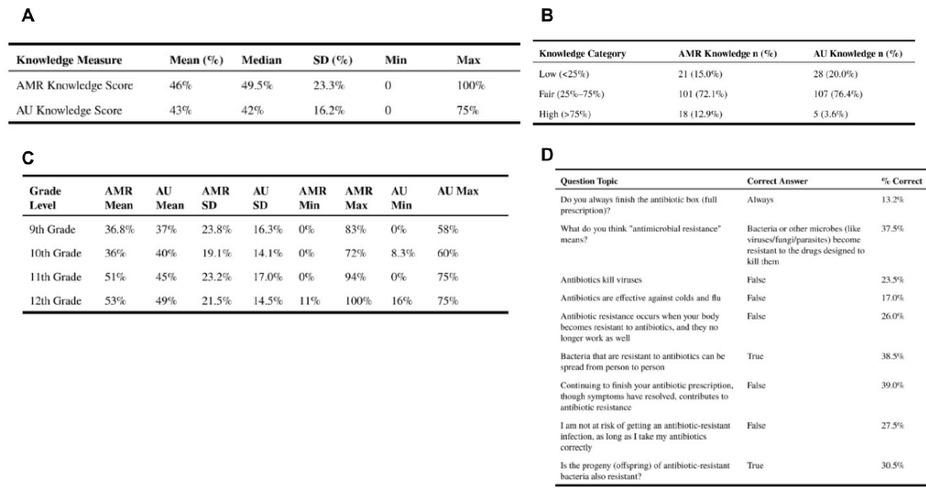
Descriptive statistics were calculated to summarize overall knowledge levels of antimicrobial resistance (AMR) and antibiotic usage (AU). Descriptive statistics measure central tendencies and variation within data (Purdue Online Writing Lab, n.d.). Participants had mean scores of 46% for AMR knowledge and 43% for AU knowledge, indicating fair knowledge. Large standard deviations denote variation in student knowledge, as shown in Figure 1A.
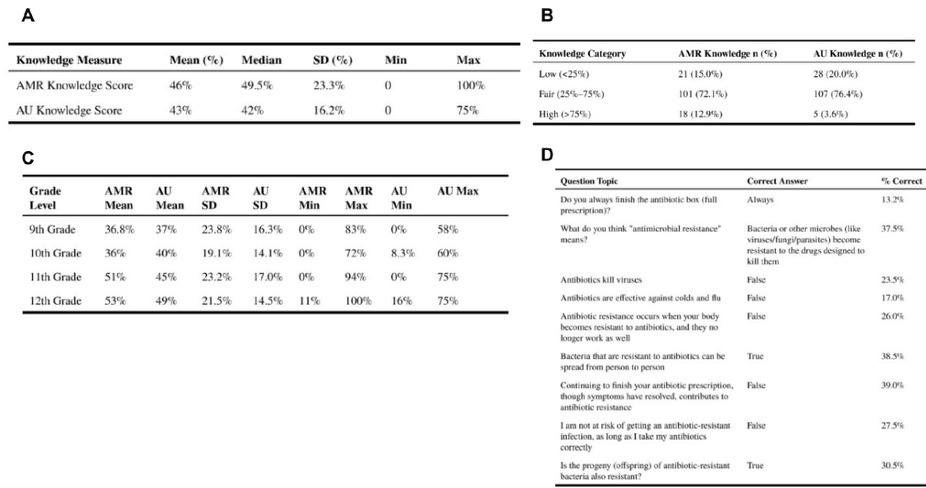
To better understand knowledge distribution, scores were categorized into low, fair, and high knowledge groups (as explained in the methodology section). Most participants fell within the fair knowledge category, while relatively few achieved high knowledge levels. This distribution shows that most participants scored in the fair knowledge range. These results are shown in Figure 1B.
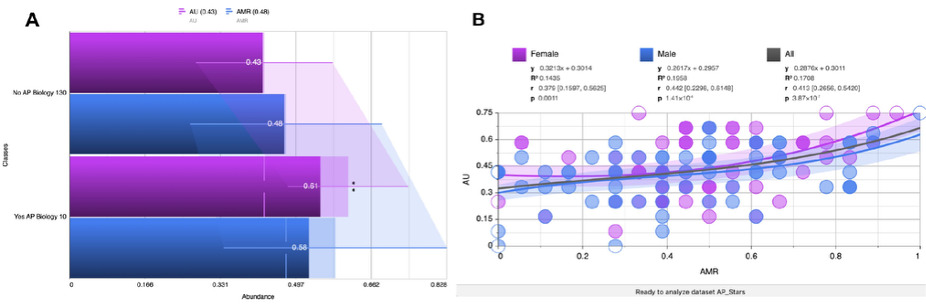
For both AMR knowledge and AU knowledge, mean scores increased for students taking AP Biology; this difference is only statistically significant for AU knowledge (p = 0.001). These results are shown in Figure 2A.
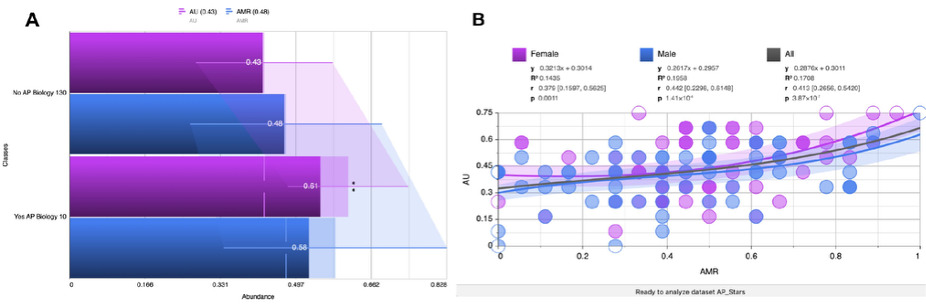
A Pearson correlation analysis was conducted to examine the relationship between AMR knowledge and antibiotic usage (AU) knowledge. As illustrated in Figure 2B, AMR and AU knowledge scores show a moderate positive linear relationship (r = 0.413, p < 0.001). However, the coefficient of determination (R2 = 0.1708) indicates that AMR knowledge explains only 17.1% of the variation in antibiotic-use knowledge.
To examine whether knowledge differed across grades and sex, a two-way ANOVA was conducted (Kim, 2014). Results revealed significant differences in AMR knowledge across grade levels, F(3,132) = 5.34, p = 0.0017, η2 = .11. with older students generally achieving higher scores. In contrast, differences in antibiotic usage knowledge across grade levels were not statistically significant, F(3,132) = 2.56, p = 0.058. Tukey post-hoc comparisons were made to determine exactly which pair of group means differ (Kim, 2014), indicating that these differences were driven by lower AMR knowledge among Grade 10 (n = 29) participants compared with older grade levels. Grade-level comparisons are presented in Figure 1C. The test revealed, however, no significant differences between sexes, F(1,132 ) = 0.09, p = 0.3, with an effect size (η2 < .10).
Question-by-question analysis identified several common misconceptions, including the belief that antibiotics treat viral infections and uncertainty about appropriate antibiotic use. These misconceptions show lower correct-response rates on specific questions. The lowest-performing questions are summarized in Figure 1D.
Discussion
The purpose of this study was to examine how the understanding of antimicrobial resistance (AMR) among adolescents aged 14–18 from high socioeconomic backgrounds at an international school in Mexico influences their antibiotic usage knowledge. Using a descriptive correlational survey, the study explored whether higher levels of AMR knowledge were associated with more appropriate antibiotic usage. The study found that among high-SES teenagers in a Mexican international private school, greater knowledge of antimicrobial resistance was moderately associated with better antibiotic use knowledge. A statistically significant moderate positive correlation (r = .413, p < .0001) was identified between AMR understanding and antibiotic use knowledge. However, AMR only explains a limited proportion of behavioral knowledge. In older students, conceptual knowledge increases as shown by the ANOVA in the findings section, indicating that education might play a role in knowledge. But behavioral patterns did not increase significantly in older students, indicating that other factors might play a role other than knowledge. Suggesting that AMR understanding influences antibiotic usage, but it does not solely determine it. While increased knowledge is associated with improved decision-making, additional contextual and behavioral factors likely shape antibiotic practices among adolescents in this population.
The moderate strength of the relationship (r = .413, p < 0.001) is consistent with behavioral health models proposing that knowledge contributes to (but does not guarantee) behavioral change. This aligns with findings by Tangcharoensathien and colleagues, who argue that the antimicrobial problem requires both knowledge and systemic reinforcement mechanisms (Tangcharoensathien et al., 2021). Similarly, Hayes identifies adolescent knowledge gaps as one component of misuse (Hayes et al., 2021), but it is not the sole driver, as sources like the WHO have mentioned (WHO, 2023). The relatively low coefficient of determination (R2 = 17%) indicates that although AMR understanding plays a statistically significant role, most variation in antibiotic use knowledge remains unexplained by AMR expertise alone. This supports prior research suggesting that factors like pharmacy access, parental decision-making, and cultural norms may shape antibiotic consumption patterns. In Mexico, where over-the-counter antibiotic access contributed to misuse, Ortiz notes that informal acquisition persists despite regulatory reforms (Ortiz et al., 2022). Thus, adolescents’ behavioral decisions may be influenced not only by what they know but also by what is socially normalized within their households.
ANOVA results demonstrated statistically significant differences in AMR knowledge across grade levels, with older students scoring higher on average. The effect size for grade-level differences in AMR knowledge (η2 = .11) indicates that approximately 11% of the variance in AMR scores can be attributed to grade level, representing a moderate effect size. This suggests that educational progression contributes meaningfully to conceptual understanding of antimicrobial resistance. However, differences in AU knowledge were not significant across grade levels. The divergence between AMR and AU knowledge suggests that while theoretical understanding of resistance mechanisms develops over time with cognitive maturity and cumulative science exposure, practical behavioral norms may form and stabilize earlier, a prediction supported by Arafa and colleagues in adolescent habit formation (Arafa et al., 2024). This finding connects to the work of Hayes, who documented persistent misconceptions about antibiotic usage among UK adolescents even after advanced biology courses (Hayes et al., 2021). Indicating yet again that behavioral knowledge could be formed in earlier ages.
In this study, participation in AP Biology significantly improved antibiotic usage knowledge, yet did not produce an equally strong increase in AMR conceptual understanding, having the opposite effect than grade level. This may suggest that the course curricula emphasize appropriate usage (e.g., “finish the course,” “don’t take antibiotics for viruses”) more than the microbial mechanisms underlying resistance. Therefore, specific educational exposure appears to shape behavioral awareness. However, this conclusion can be limited considering that only 10/140 participants were taking or had taken AP Biology, and their increased behavioral knowledge may be shaped by a confounding variable: their personal interest in biology rather than the AP Biology course curriculum itself.
Despite the high socioeconomic status and international academic context of the sample, several misconceptions persisted, specifically:
-
Confusion between bacterial resistance and bodily resistance
-
Incomplete understanding of viral versus bacterial infections
-
Uncertainty about stopping antibiotics early
In fact, the overall scores for both AMR knowledge and AU knowledge were below 50% (AMR 46%, AU 43%). These findings replicate patterns observed in European adolescent populations (Hayes et al., 2021) and support World Health Organization reports emphasizing that misunderstanding AMR mechanisms is a global phenomenon (WHO, 2023). Importantly, the presence of misconceptions within a high-SES, bilingual, academically advanced student population challenges assumptions proposed by Tangcharoensathien that privilege alone eliminates misconceptions (Tangcharoensathien et al., 2021).
No quantitative correlational studies focus on high-SES adolescents in Mexico. By isolating this demographic, this study demonstrates that even within resource-rich educational environments, AMR understanding and antibiotic-use behavior remain low. Thus, the data suggest that antimicrobial misuse risk is not confined to populations lacking access or education. Instead, it may be partially embedded in broader sociocultural practices surrounding medication access and family decision-making. In sum, this study demonstrates that among high-SES Mexican adolescents, understanding of antimicrobial resistance exerts a measurable but limited influence on antibiotic usage knowledge. While greater AMR comprehension is associated with improved antibiotic decision-making, the moderate relationship suggests that knowledge-based interventions alone may be insufficient to fully address misuse.
Conclusion
The new understanding generated by this study is that antimicrobial literacy in affluent adolescent populations in Mexico remains incomplete and only partially predictive of appropriate antibiotic decision-making. Therefore, socioeconomic advantage does not eliminate the knowledge-behavior gap in antimicrobial responsibility, and practical antibiotic behaviors may stabilize before understanding AMR.
However, it is important to consider the specific context of the study. The population for the cross-sectional correlational study was one international private school in northern Mexico, where 140 out of 560 total high school students participated. Limitations of this study include the use of convenience sampling, which limits the generalizability of the findings to all high schoolers with a high SES background, and reliance on self-reported survey data, which may be affected by recall bias or social desirability bias and might not reflect actual antibiotic practices. The English-language instrument may have influenced comprehension, as it is most students’ second language and is not routinely used at home. Additionally, antibiotic usage knowledge does not directly measure actual medication consumption patterns and relies on self-reporting, which could be influenced by the social desirability bias. Thus, findings should not be generalized to all Mexican adolescents or broader socioeconomic contexts without further replication, and no causal relationships can be inferred from this study.
For educators in this population, the results suggest that science curricula should more explicitly integrate mechanistic AMR instruction alongside appropriate behavioral guidance. Addressing misconceptions directly may strengthen conceptual retention. For policymakers in the area, the findings indicate that antimicrobial stewardship campaigns targeting adolescents should go beyond awareness messaging and incorporate behavioral reinforcement strategies, such as restricting over-the-counter access to all antibiotics. For healthcare providers, the study underscores the importance of engaging adolescents directly in explanations about resistance mechanisms during consultations, as this age group is forming long-term medication habits.
Future researchers should conduct a randomized educational intervention assessing whether integrating mechanism-based AMR and appropriate usage behavior instruction into earlier grades, such as Grade 9 biology curricula, produces measurable improvements in scenario-based antibiotic decision-making. As well as a longitudinal study tracking whether adolescent understanding of AMR predicts adult antibiotic behaviors, measuring actual antibiotic behaviors using pharmacy data. It would also be useful to compare high-SES and low-SES populations in Mexico to examine socioeconomic differences. In the future, a mixed-method approach incorporating interviews to examine parental and cultural influences would be useful not only to identify the trend but also to explore its potential underlying causes.