
Introduction
Women remain underrepresented in science, technology, engineering, and mathematics (STEM) education and employment both in Japan and globally, constraining socio-economic development, limiting innovation, and hindering progress toward the Sustainable Development Goals (ASTC, 2019; Morais Maceira, 2017). Although women comprise the majority of tertiary graduates in many countries, their participation in STEM fields remains persistently low, particularly in high-growth and high-wage sectors such as engineering, information technology, and artificial intelligence. This underrepresentation is unlikely to shift soon. A UNESCO study found fewer than 2% of girls planned to become engineers or computer scientists (UNESCO, 2021, p. 3). As a result, a global STEM skill shortage is expected to impact Industry 4.0 (Schwab, 2016), the current industrial era driven by automation technologies.
Japan’s STEM gender gap is among the most pronounced in the OECD. In 2021, Japan recorded the lowest share of women among tertiary STEM graduates (7%) compared to men (36%) across 38 member countries (OECD, 2021, p. 209). Gender disparities extend beyond education into the STEM workforce. Women account for a relatively small proportion of researchers in universities, public research institutes, and private-sector firms, with particularly low representation in engineering and technology-related occupations. (UNESCO, 2021, pp. 16–18). These patterns point to structural barriers that limit women’s entry into, retention within, and advancement across STEM careers.
Japan’s growth strategy, Society 5.0 seeks to address population aging, depopulation, and resource constraints through the widespread application of digital technologies, artificial intelligence, and data-driven innovation (Government of Japan, 2021, p. 11). Achieving this vision depends on the availability of sufficient and highly skilled STEM human capital. The underrepresentation of women in STEM therefore represents not only a gender equality concern but a direct constraint on Japan’s future growth.
Japan’s demographic trajectory further constrains STEM gender policy outcomes. Declining fertility and population aging are shrinking the cohort of potential STEM students while simultaneously increasing unpaid caregiving demands that disproportionately affect women, limiting their sustained participation in STEM education and careers (United Nations, Department of Economic and Social Affairs, Population Division, 2024; The Mainichi, 2025).
Despite formal legal frameworks (i.e. Equal Employment Opportunity Law and Labor Standards Act) prohibiting gender-based discrimination in recruitment, promotion, and pay, enforcement remains weak (Nakakubo, 2022). Japan’s low and largely unchanged position on the OECD glass-ceiling index (27th out of 29 in 2024) further reflects the limited progress women have made in gaining influence within the workforce (The Economist, 2024).
Economic significance of closing the gender gap
Existing literature, albeit scarce, identifies micro- and macroeconomic channels through which increased female participation in STEM enhances productivity, innovation, and long-term economic performance.
Microeconomics – Closing the gender gap and positive externalities
From a microeconomic perspective, STEM education and employment offer women higher wages, improved career prospects and greater economic security. At the firm and societal level, increased female participation enhances workforce diversity, which has been associated with improved innovation outcomes, and organizational performance. These benefits extend beyond individual workers, generating positive externalities such as reduced gender pay gaps and more inclusive workplace cultures contributing to broader welfare gains (PWC, 2025).
Macroeconomics – Closing the gender gap and economic growth
From a macroeconomic perspective, modelling studies suggest that closing gender gaps in STEM education and employment can wield substantial economy-wide benefits (Croak, 2018, p. 56). The European Institute for Gender Equality modelling indicates that increased female STEM participation leads to more high-value, high-wage jobs and narrows the gender pay gap. In the EU, GDP per capita could rise by 0.7-0.9% by 2030 and 2.2-3.0% by 2050 through higher productivity and improved economic capacity (European Institute for Gender Equality, n.d.).
In Japan, an economic model with STEM talent as a growth engine found that removing barriers for women could accelerate productivity growth by 20%, raising wages, output, and consumption. This reflects an increase in STEM workers driving innovation and expanding the technological frontier. The average welfare of all Japanese workers could rise by 4% (Xu, 2023).
Without effective policies to promote women in STEM, Japan risks exacerbating future skill shortages and forgoing substantial productivity, welfare, and growth gains critical for achieving Society 5.0.
Existing studies on gender inequality in Japan’s STEM fields tend to focus on specific policy measures, with limited systematic evaluation of policy implementation and effectiveness (Ogawa, 2024; Yokoyama et al., 2024). This study addresses this gap by evaluating Japan’s STEM gender policy framework through expert assessment, drawing on structured interviews with experts from academia, local government, and the private sector. Given the importance for Japan to close the STEM gender gap to improve gender equality and support economic development, can Japan’s current STEM policies effectively close the gender gap to achieve these goals?
Methodology
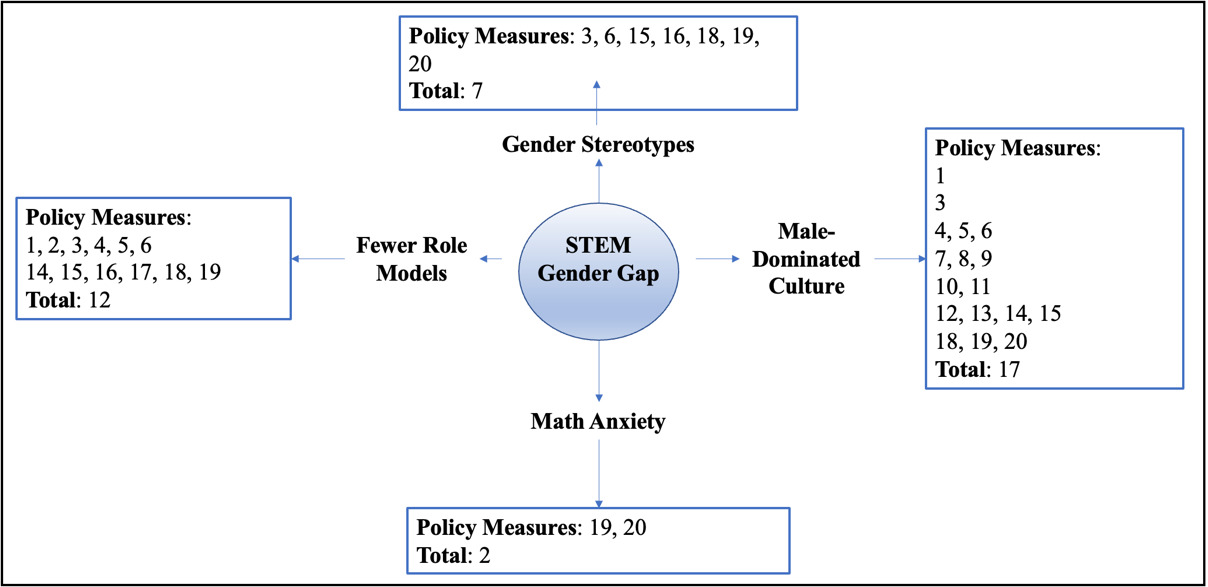
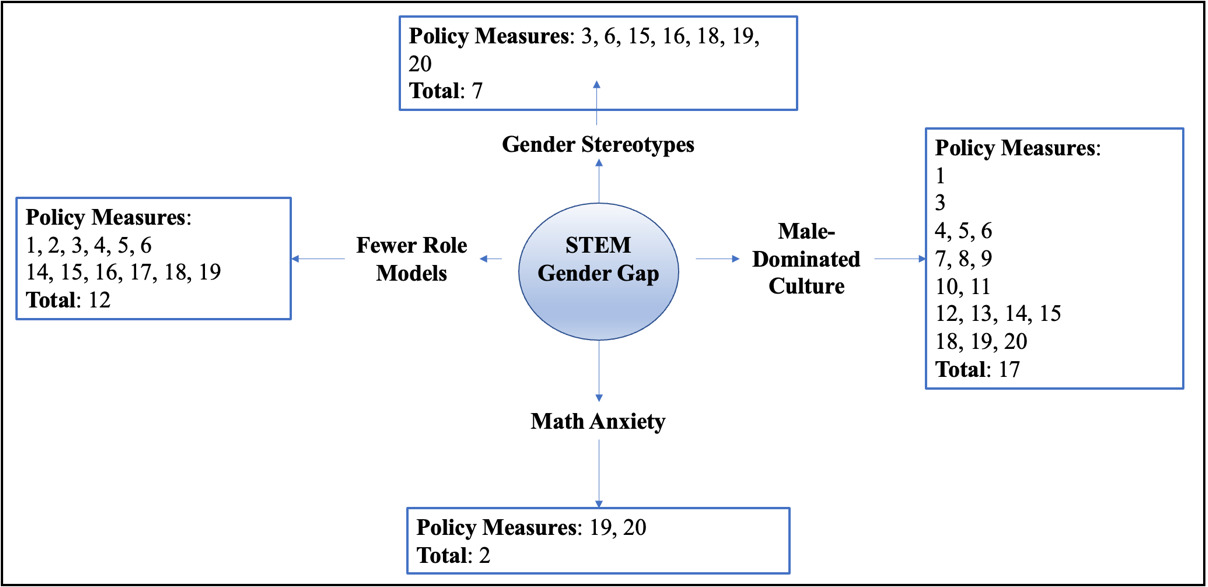
The methodology to assess Japan’s STEM policies consists of four steps. First, Japan’s policy agenda addressing the STEM gender gap was identified using the five-year Basic Plans for Gender Equality, the Science, Technology and Innovation Basic Plan (2021), and documents from relevant ministries, including the Gender Equality Bureau (Cabinet Office), the Ministry of Education, Culture, Sports, Science and Technology, the Ministry of Economy, Trade and Industry, and the Ministry of Health, Labour and Welfare, in coordination with local governments. These policies are summarized below. Second, policy measures were evaluated for alignment with factors driving the gender gap, drawn from international and Japan-specific literature. Each policy was matched to causal factors as an initial validity check to assess whether it addressed root causes (see Figure 1).
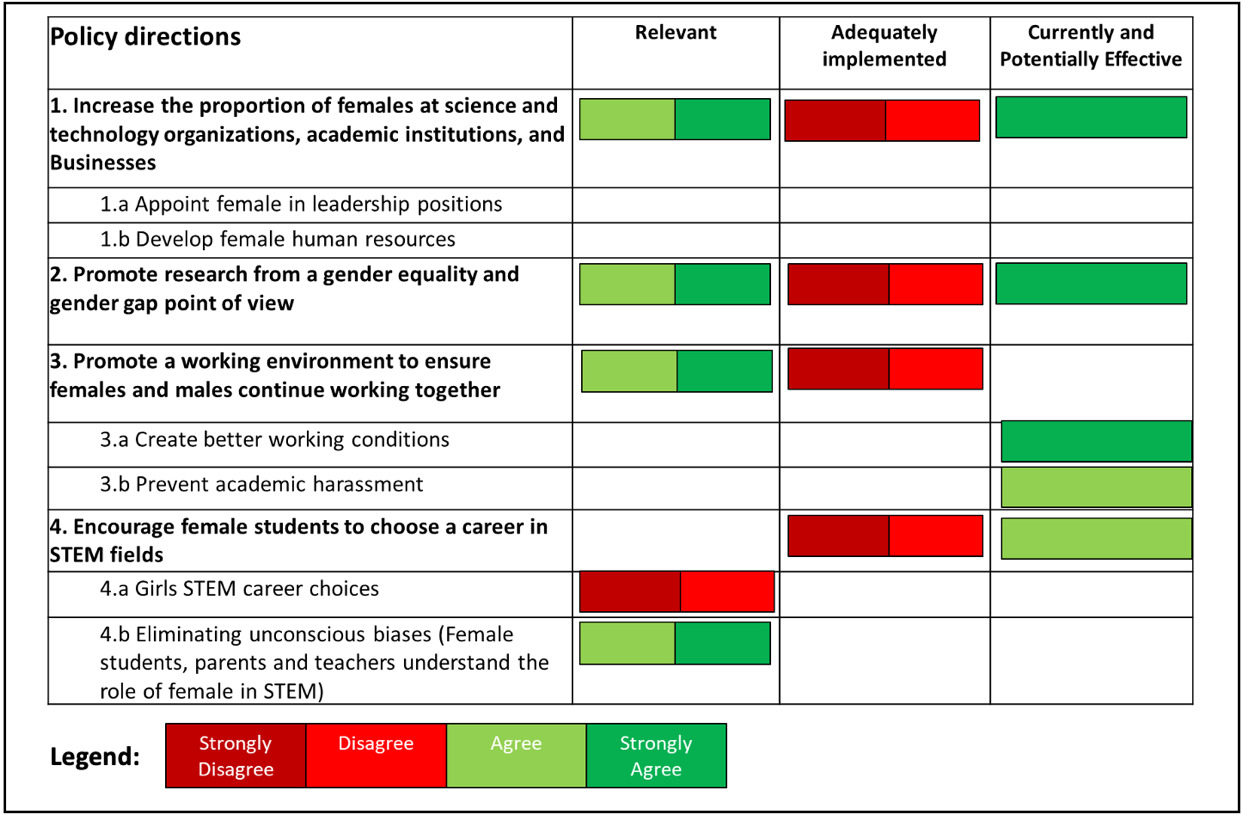
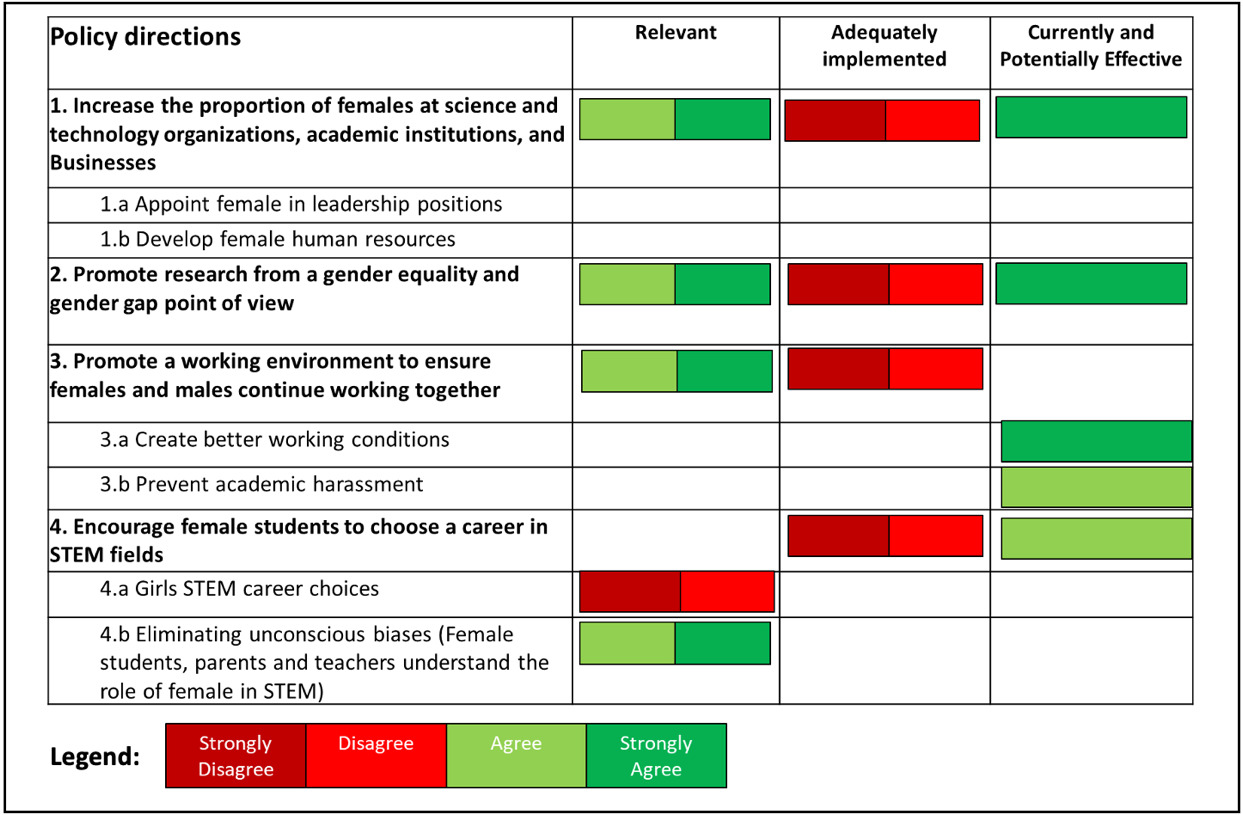
Third, progress since 2005—when Japan first introduced STEM gender policies—was assessed through analysis of official government documents, focusing on key indicators and targets. Fourth, structured interviews were conducted with experts to evaluate policy relevance, implementation, and effectiveness. Of thirty experts contacted, twelve participated (three from academia, five from local government, and four from the private sector; six were female). Interviews, conducted online or via email, were guided by the policies outlined and focused on policy design, implementation capacity, effectiveness, and key constraints shaping outcomes. Results are summarized in Figure 2.
Results
Japan’s STEM policy measures
The government measures are comprehensive as they include policies to attract females in STEM studies and the workforce and promote and retain women in these fields. Policy objectives are presented in first-level bullets, policy directions in second level (sub-) bullets, and policy measures in third-level bullets.
- Increase the proportion of females at science and technology organizations, academic institutions, and Businesses
- Increase female hiring and appointments in leadership positions, such as managers, professors, and leaders of research groups
- Set targets, monitor progress, publish data, and apply positive action
- Collect leadership gender-gap data and implement solutions
- Raise female membership in the Science Council of Japan Develop female human resources at science and technology organizations, public institutions, business corporations, and academic institutions. (Capacity building)
- Recruit female leaders/researchers via clear career pathways and consultation
- Build capacity through networks, mentorship, and role models
- Train managers to value diversity and gender equality in STEM
- Increase female hiring and appointments in leadership positions, such as managers, professors, and leaders of research groups
- Promote research from a gender equality and gender gap point of view
- Integrate gender and sexual-difference perspectives into research, innovation, and institutional systems.
- Promote research and technological development that consider sexual differences
- Include gender criteria for national procurement and competitive funding (e.g., representation, maternity leave and leave to care for children and elderly)
- Adjust hiring/training to challenge stereotypes and discrimination
- Integrate gender and sexual-difference perspectives into research, innovation, and institutional systems.
- Promote a working environment to ensure females and males continue working together
- Create better working conditions for male and female researchers and engineers to keep a work-life balance, especially to care for children and elderly.
- Shorten hours, implement "flexitime" and teleworking, provide childcare/eldercare facilities and support desks
- Support re-entry after caregiving (e.g. extend research periods, arrange substitutes, create new measures, considerations of short-term withdrawals)
- Preventing academic harassment
- Add third-party input in harassment prevention systems for universities, institutes, and businesses
- Apply targeted harassment prevention for female academics and students
- Create better working conditions for male and female researchers and engineers to keep a work-life balance, especially to care for children and elderly.
- Encourage female students to choose a career in STEM fields
- Promote female human resources in STEM who will lead the next generation
- Promote IT/AI education for Society 5.0
- Boost STEM interest via "Super Science High Schools" and stronger high school STEM programs
- Link companies with schools to provide female role models
- Subsidize universities encouraging women in STEM
- Foster cross education level collaboration on gender equality
- Help female students, parents and teachers to understand the role of STEM for Japan
- Raise awareness, through government institutions, business, academia, and civil organizations, of female students, parents and teachers to understand advantages of choosing a career in STEM and working in the STEM field
- Counter unconscious bias against women in STEM
- Promote female human resources in STEM who will lead the next generation
Alignment of Japan’s STEM policy agenda with the factors causing the STEM gender gap
A first validity check was performed by assessing how well Japan’s STEM policy measures are aligned with the factors perpetuating the gender gap.
Factors that perpetuate the STEM gender gap have been extensively studied internationally and in Japan-specific literature. Drawing on synthesis by the American Association of University Women (AAUW, n.d.) and empirical studies in the Japanese context, (Libertas Consulting Co., Ltd., 2018; Yokoyama et al., 2024), this study summarizes four recurring factors: gender stereotypes, male-dominated culture, lack of female role models, and math anxiety.
Gender stereotypes often portray STEM as masculine, leading parents and teachers to underestimate girls’ math abilities from a young age, despite no biological differences in aptitude. STEM’s male-dominated nature fosters exclusionary culture discouraging women and minorities from entering or staying in these fields. Girls have fewer role models, with limited representation of female of female scientist and engineers in media and education. Math anxiety, particularly among female teachers, is frequently passed onto girls, who are also often graded more harshly and expected to work harder than boys (Libertas Consulting Co., Ltd., 2018; Yokoyama et al., 2024).
The policy measures target all four factors perpetuating the STEM gender gap pointing to their comprehensiveness (Figure 1): Most policy measures (17) target “male-dominated culture.” “Fewer role models” is the second most frequently targeted factor (12). “Gender stereotypes” are addressed by 7 measures aimed at teachers, parents and students. “Math anxiety” is targeted by only 2 measures.
Progress in closing the STEM gender gap
This section presents official indicators tracking changes in women’s participation in STEM education and employment since the introduction of government policy measures.
Data from the National Women’s Education Information Center (NWEIC, 2024) indicate gradual changes in women’s participation in STEM education over time. Between 1993 and 2024, the proportion of female undergraduate students in science increased from 20.7% to 28.3%, representing an average annual increase of approximately 0.25%. Ministry of Education (2021) data show similar patterns in academic employment, with the proportion of female academic staff in science increasing by approximately four percentage points between 2016 and 2021 from a base of 7.98%.
Government targets for increasing women’s participation in STEM remain modest. Official planning documents generally define objectives in relative terms, such as achieving incremental increases over previous years, rather than setting fixed numerical benchmarks for parity (Ministry of Education, Culture, Sports, Science and Technology, 2021). As a result, progress is monitored primarily through year-on-year changes in participation rates rather than against predefined end goals.
Relevance, implementation, and effectiveness of Japan’s STEM gender policies
This section presents summary findings from structured expert interviews assessing the relevance, implementation, and effectiveness of Japan’s STEM gender policies. Figure 2 presents a summary of the experts’ opinions. To preserve interview anonymity, experts are identified solely by their sector: academic, business, or government.
Policy Relevance
Overall, experts assessed Japan’s STEM gender policies as broadly relevant to addressing gender inequality in STEM. Many experts noted that the policy agenda reflects key factors identified in the literature, including gender stereotypes, male-dominated organizational culture, and the lack of female role models.
However, two thirds academic respondents questioned the relevance of measures aimed at encouraging girls’ STEM career choices, particularly under policy area 4.a. One of the two experts’ comment is illustrative:
“Most of the policy measures under 4.a. are not relevant or realistic in the Japanese educational context such as female role models “imposed” on schools with little link to reality, or subsidies provided to universities, which should be directed to lower level of education instead to encourage high school girls to choose STEM careers at university, and furthermore, cross education level collaboration which does not lead to results questioning their relevance.”
In addition, five experts highlighted limited awareness of existing policies among key stakeholders, including local governments, schools, universities, companies, teachers, and parents. As one academic expert noted:
“The policies themselves are adequate, but many stakeholders simply don’t know the details.”
Policy Implementation
All experts consistently identified policy implementation as the central challenge confronting Japan’s STEM gender policies. All respondents selected “disagree” or “strongly disagree” when asked whether existing policy measures are adequately implemented. Although these measures were frequently described as well intentioned, their execution was widely viewed as inconsistent across sectors and institutions.
A recurring theme was variation in organizational capacity. Several experts emphasized substantial differences between institutions in terms of resources, leadership commitment, and experience with gender equality initiatives. One expert from the business sector stated:
“There is a huge difference between organizations some are progressing, and some are behind.”
The business sector was frequently identified as facing particular implementation challenges, with many companies lacking experience in addressing gender inequality in STEM and translating policy guidance into practice. As one industry-expert explained:
“The (business sector) lacks experience and does not know how to deal with the minority of women (in their companies).”
Coordination and governance issues were also highlighted. Experts reported limited clarity regarding responsibilities across national and local governments, as well as insufficient coordination between public institutions and private actors. Concerns were raised about the speed of implementation and the use of targets, with one business-expert noting:
“I think that the implementation speed and the setting of targets need to be considered more in details based on the characteristics of the industry fields and areas.”
In addition, experts observed that many organizations implement measures independently, without shared frameworks or benchmarks. Transparency and monitoring were identified as uneven, with an expert from the business-sector commenting:
“Many enterprises are implementing these measures individually without a concerted approach”.
These assessments suggest that implementation challenges stem less from policy design and more from differences in capacity, coordination, and monitoring across institutions.
Policy Effectiveness and Future Potential
Despite concerns regarding implementation, experts expressed cautious optimism about the long-term effectiveness of Japan’s STEM gender policies. Five experts from the academic, business and public sectors emphasized that social and institutions change requires time, particularly within established organizational cultures. As one private sector expert observed:
“Change takes time in a conservative society like Japan, and it is important to continue implementing the policy measures”
Experts suggest that current measures can be effective if applied consistently over time. One interviewee from the academic sector stated:
“the measures are reasonable, implemented, and effective, as the number of women in STEM is increasing”
In addition, four experts highlighted the potential role of technological change to support policy effectiveness. Advances in digital technologies, automation, and remote work were seen as offering new opportunities to reduce time constraints associated with caregiving responsibilities and to enable more flexible participation in STEM careers. As one academic respondent noted:
“Machines can perform many research tasks, which used to take much time in the past, such as remote control of field experiments with the help of drones and robotic analysis of samples; this will give women the opportunity to pursue a career without giving up on child or elderly care.”
This perspective aligns with Society 5.0’s vision of integrating advanced technologies and AI to expand opportunities for women.
Expert’s felt that cultural constraints undermine implementation and ultimately effectiveness of the STEM gender policy agenda. In response, one female expert from the academic sector, despite strong opposition from men, are advocating for:
“More affirmative action in favor of women and the introduction of gender quotas”.
But two other academic informants feel that a quota system to recruit women might increase men’s frustration. Academic informants underlined that in the academic sector, researchers (men and women) are submitted to harsh employment regimes with a lot of uncertainties as to their career path. A quota may result in even fewer researchers of both sexes.
Some informants are worried about future policy directions promoting diversity and diluting the notion of STEM gender gap. An academic informant declared:
“Recently the term gender gap is obscured by the use of the term diversity”.
Further, a local government representative stated
“Schools do not like to promote STEM to female students because they complain that only girls are given preferential treatment. Now we choose content that is useful for everyone regardless of gender”.
The risk of proposing content fitted to everybody will certainly dilute the message on the STEM gender gap. Overall, expert assessments point to conditional optimism. While current STEM gender policies are viewed as relevant and potentially effective, their impact is seen as dependent on sustained implementation, coordination, and institutional capacity.
Discussion
The discussion draws on findings from the literature review, policy analysis, and expert interviews to examine whether Japan’s current policies can close the STEM gender gap.
Policy Coverage vs. Policy Impact
The mapping of Japan’s STEM gender policy measures against factors perpetuating the STEM gender gap identified in the literature indicates broad policy coverage. Existing policies address key contributors to gender inequality in STEM, including gender stereotypes, male-dominated organizational cultures, and the lack of female role models. This alignment suggests that, at the level of policy design, Japan’s STEM gender agenda reflects internationally recognized drivers of the gender gap.
However, the analysis also reveals gaps in emphasis that may limit policy effectiveness. Comparatively few measures directly target early-stage educational mechanisms such as math anxiety and confidence formation, despite strong evidence in the literature that these factors shape later educational and career trajectories. Similarly, policies that promote role models tend to emphasize exceptional individual success rather than attainable models, potentially limiting their impact on broad participation (Gender Equality Bureau, Cabinet Office, n.d.).
Japan’s STEM gender policies broadly align with identified causes of the gender gap, but alignment alone is insufficient for transformative impact. Effectiveness depends not only on policy coverage, but on the intensity, timing, and integration of measures across the education-employment continuum.
Why Change Remains Slow: Implementation as the Main Bottleneck
The data show that women’s participation in STEM education and research in Japan has increased over the last three decades, but only marginally. Given the length of time gender equality policies have been in place and the growing demand for STEM workers due to population aging, this rate of change is insufficient.
The main limitation lies in implementation rather than policy design as clearly expressed in experts’ opinions. Japan has an extensive STEM gender policy framework, but results vary widely because execution is inconsistent. Implementation responsibilities are spread across ministries, local governments, educational institutions, and private companies, often without clearly assigned accountability or shared performance standards. Differences in organizational capacity and commitment lead to uneven uptake and limit the cumulative impact of existing measures.
Implementation is further weakened by low awareness of national policies and weak enforcement mechanisms, as experts expressed and as noted in earlier evaluations (EPMEWSE, 2017). Targets are frequently incremental and timelines unclear, which allows institutions to meet formal requirements without changing practices in a meaningful way. Monitoring is limited, reducing pressure on organizations to improve outcomes.
The planned establishment of a national gender equality body in 2026 aims to address leadership gaps, pay inequality, and workplace harassment. While these objectives align with the sources of the gender gap, details on authority, funding, and enforcement remain unclear. Proposed financial support for female STEM students likewise lacks concrete timelines and budget commitments (Government of Japan, 2024).
Critical Constraints
The experts’ interviews and existing literature identified two major constraints—demographic and cultural—that limit the effectiveness of Japan’s STEM gender policies. Cultural constraints include gender discrimination and harassment.
First, Japan’s aging population increases eldercare demands, while declining fertility reduces the number of adults among whom caregiving responsibilities can be shared. Care obligations disproportionately fall on women. Fiscal pressures on long-term care systems prioritize home care, further increasing unpaid caregiving within households (Fu et al., 2023; OECD, 2021). These responsibilities limit women’s sustained participation in STEM education and careers, especially in fields with long hours and inflexible career trajectories.
Technological advances, including automation, digitalization, and remote work, may partially mitigate caregiving time constraints, potentially increasing women’s labor market participation, though effects depend on access and broader labor market conditions (Hertog et al., 2023). Despite policies promoting men’s participation in household work, time-use data show limited and slow progress (Shohei, 2026). Declining fertility also reduces the pool of STEM students, constraining policies aimed at increasing female participation.
Demographic factors thus make the STEM gender gap difficult to address through policy alone. Aging, declining fertility, limited male participation in care, and policies emphasizing home-based eldercare collectively constrain women’s engagement in STEM.
Second, cultural constraints further limit women’s participation. Gender discrimination persists due to weak enforcement, entrenched workplace cultures, and institutional exclusions, such as the Tokyo Medical School case (The Guardian, 2018). Harassment also remains a barrier. Interviews suggest reluctance to discuss harassment openly; informants believe anti-harassment measures can be effective, but implementation is inconsistent. Literature debates whether harassment is primarily gender-based or linked to hierarchical relationships (Kato, 2014; Tsuchiya, 2019).
Overall, expert interviews and literature indicate cautious optimism. Faster progress requires prioritizing implementation over new policies, with stronger coordination, enforceable targets, accountability, targeted financial support, and technological solutions. Demographic and cultural constraints must be integrated into planning, or progress will remain limited.
Conclusion
Japan’s STEM policies face two critical constraints and poor implementation, limiting effectiveness. Despite relevant policies, the gender gap has narrowed only slightly over decades. Demographic pressures—low fertility and aging—shrink the STEM student pool and increase caregiving demands on women. Entrenched workplace discrimination persists in male-dominated STEM environments. Society 5.0’s success depends on improved policy implementation. Strengthened institutional capacity, coordination, accountability, and funding reforms could support welfare gains and STEM-related sustainable development goals.
Study limitations include scarce economic literature, a small expert sample, and variation in familiarity with policy measures. This research contributes by integrating policy analysis, literature review, and expert evaluation. Further representative studies are needed to improve policy implementation and assess economic impacts in Japan.