Introduction
With the largest visually impaired population in the world, China faces many responsibilities in attending to special education and policy support for the disabled. Education is a core value of Chinese culture heavily influenced by Confucian ideals, but the development of special education is relatively recent. Education plays a pivotal role in employment, especially in Chinese culture, where academic competition is highly valued and normalized. Education proves to be the primary and most successful way for blind or visually impaired (BVI) individuals to seek an independent career, yet systemic barriers persist. Policy regulations, along with sociocultural norms, hinder their ability to receive adequate education to support their life in the future. National policies are able to shape educational access and structures. From vocational access to exam accommodations, BVI individuals’ education is determined by various policies that shape their accessibility and agency. While individual challenges and general disability employment policies have been studied, little research directly examines how specific educational practices and relevant policies interact to affect BVI career independence in China. This encompasses agency in mobility/navigation, access to opportunities, and educational pathways supporting future career aspirations. This study will explore the national educational and policy factors in China that contribute to major limitations on BVI individuals’ autonomy in determining their career path. With a wider focus on national policy instead of a narrow local approach, this study aims to examine wider implications and common trends that result from existing structures. This study adopts a structural disability studies perspective, drawing specifically on theories of structural ableism (Campbell, 2009) and capability-based conceptions of agency (Sen, 1999) to analyze how educational and policy systems in China shape the career trajectories of blind and visually impaired (BVI) students. Hence, the research question is as such: How do specific educational practices and relevant policies in China limit visually impaired students’ ability to pursue an independent career post grade school?
Literature Review
Overview of Chinese Special Education
Regarding a comprehensive analysis of special education in China, Deng et al. (2001) illustrated the sociocultural foundations as well as a modern approach to special education. Their research suggests that although education is an essential aspect of Chinese and Confucian culture, China’s traditional agriculturally based culture supports a belief that individuals with learning or physical disabilities do not require much education. Furthermore, as the majority of disabled children live in rural areas, they often lack access to education. However, this study also notes how opportunities for special education are expanding. Universities such as Binzhou Medical University, Tianjing Science and Engineering University, and Changchun University offer special programs for disabled students.
In a more specific examination of visually impaired education, Hu (2022) shows that while China has made policy progress, especially since 2014, when BVI individuals can apply for Gaokao accommodations, systemic under-provision, policy restrictions, and entrenched social attitudes keep most visually impaired students excluded from higher education and meaningful career pathways. Hu’s study took on a literature-based analysis, and the findings revealed low enrollment of BVI students at around 31.9%; systemic barriers, lack of specially trained educators and shortage of blind schools with 30 nationwide in 2015; and policy developments that impacted BVI education. In the 1980s, the Learning in Regular Classrooms movement allowed BVI individuals to attend mainstream schools, but many were treated without adequate support. In 2014, a first national policy was implemented, allowing braille and large print Gaokao/CEE papers. However, only 11 BVI students have taken it in 2021, despite 10.78 million other test takers.
Chen (2024) investigated general education and work experiences of BVI individuals in China. This study’s sample population of BVI students shows a 44% dropout rate of compulsory education and a completion rate of 53.8%. Furthermore, the study finds that in tertiary education, BVI students generally undergo massage or piano courses. Each participant also showed different processes of educational transition to work, with some dropping out of school, returning after dropping out, or continuing education before transitioning to work.
Not only are most students streamlined into massage work, but this career is also demanding and unsuitable for many. Li (2021) studied a sample of 40 BVI massage workers in Shanghai using the Cornell Musculoskeletal Discomfort Questionnaire (CMDQ). Their key findings suggest that BVI masseurs face excessive workload, high musculoskeletal risk, and barriers to job change. With a mean working time of 13.35 hours per day and over 92.5% working over weekends, these individuals showed high strain in their hands and deformities in fingers (bending, joint issues) observed due to long-term strain. Furthermore, the results also find that visually impaired workers cannot easily switch careers even if injured, unlike their sighted counterparts. This study highlights the occupational health inequalities faced by disabled workers and the restrictive nature of the massage occupation for BVI individuals.
Bo and Hock (2023) followed a similar focus, studying BVI students at Binzhou Medical University, a specialized institution in China for higher education of disabled individuals. They found that junior students scored higher than freshmen on quality of life and that students generally showed growing self-esteem and self-efficacy. This study highlights that adaptation improves over time in inclusive settings, a positive but incomplete signal for long-term outcomes. It also recommends integration of education and rehabilitation, enhancement of professional training for BVI individuals, and improving employment support systems. This conclusion supports the need for further research into what inherent barriers exist for BVI individuals as they enter the workforce post-education.
Methods and Theoretical Framework
This study is guided by a structural perspective on disability that is grounded in the interaction between educational institutions, policy frameworks, and the lived experiences of BVI individuals. Specifically, the concepts drawn upon include structural ableism, agency, and epistemic injustice to interpret the research question.
First, the concept of structural ableism provides the central analytical lens. Ableism is the institutionalization of norms and practices that give privilege to able-bodiedness while systematically marginalizing disabled individuals (Campbell, 2009). Within education and employment systems, structural ableism manifests through segregated schooling, narrow curricular offerings, and policy designs that appear inclusive in principle but exclusionary in practice. In the Chinese context, such structures include specialized blind schools with limited academic pathways, vocational systems that funnel BVI individuals toward massage and acupuncture, and weak enforcement of inclusive employment policies.
Second, this study utilizes the concept of agency to examine how structural conditions affect BVI students’ capacity to make meaningful decisions about their educational and career paths. Agency is defined as the ability to act intentionally and pursue goals within a given social context (Sen, 1999). Importantly, agency is not an inherent personal trait, but rather something enabled or constrained by institutional arrangements, access to information, and social expectations.
Third, the framework incorporates the concept of epistemic injustice to account for how BVI students’ knowledge, aspirations, and self-understandings are marginalized within educational systems. Epistemic injustice occurs when individuals are unfairly excluded as receivers of knowledge or when their perspectives are systematically devalued (Fricker, 2007). In the context of BVI education, students’ interests are often disregarded in favor of institutionally established pathways that prioritize administrative convenience and sociocultural norms.
The overall approach of data collection will be dominantly qualitative but demonstrates a mixed methods approach, integrating semi-structured interviews, one standardized survey, and policy document analysis. It adopts an epistemological stance that values both experiential and structural forms of knowledge, recognizing that lived experiences of visually impaired students are as essential to understanding barriers as policy documents and statistical data.
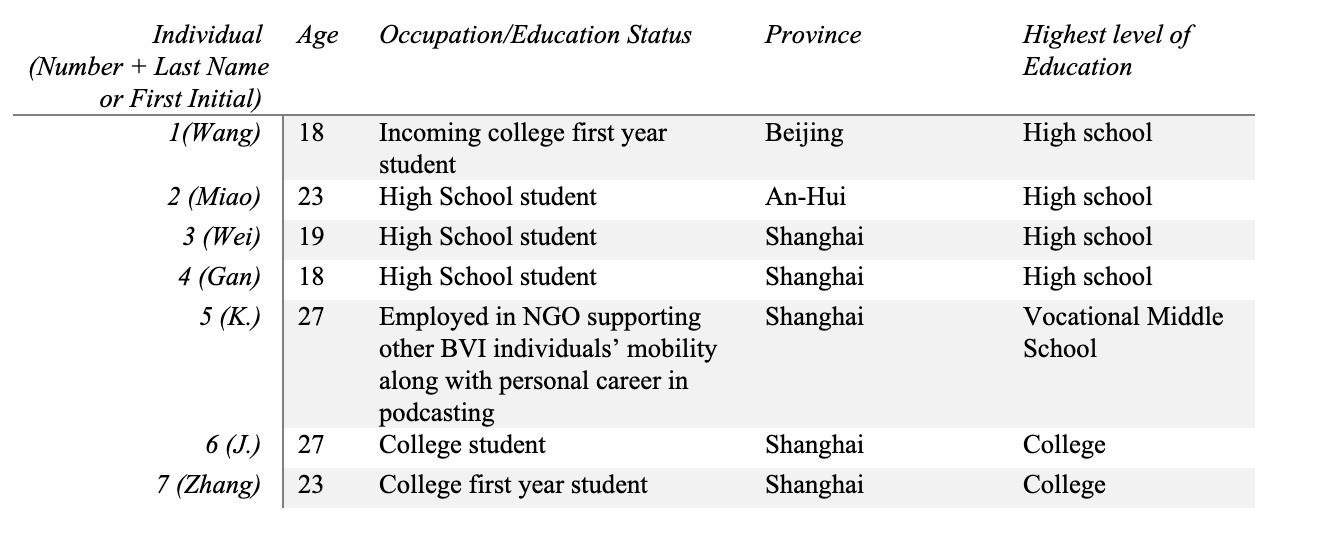
Participants were selected to participate in both the interview and to respond to the survey. A sample of this population was selected via purposive sampling to ensure representation from different provinces, school types, and career outcomes.
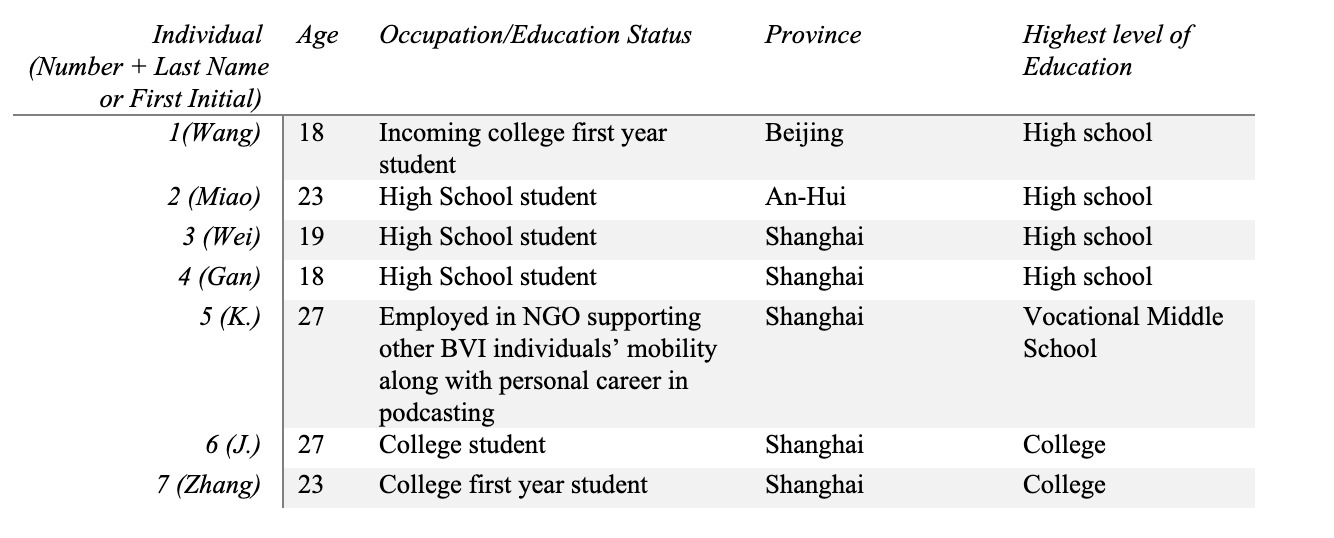
The inclusion criteria for interview participants were individuals who are BVI and have undergone education in China. The survey, on the other hand, has a population that includes all BVI individuals in China. Participants were sampled through volunteer and snowball sampling online. There were 53 total respondents. Participants all gave consent before participating in either the interview or survey. The data has also been anonymized, with each participant represented by a numerical value.
Data collection procedures vary for each approach. The semi-structured interviews lasted approximately 30 minutes, with the interviewer asking 4 fixed questions along with other specific questions arising from conversation. The interviews were conducted on Tencent Meeting and were recorded with the participants’ consent. The 4 fixed questions were:
-
“How well do you feel like your years at school prepared you for an independent life?”
-
“Did you ever get exposed to different career opportunities at school?”
-
“What did you hope to get out of your education experience? Does it relate to your aspirations for the future?”
-
“Do you have any other thoughts regarding education and potentially joining the workforce?”
The survey was structured to include both Likert scale, multiple choice, and open-ended questions. The survey was tested with 3 BVI individuals to ensure accessibility and clarity before it formally opened. The questions are the following:
-
Age
-
Highest level of education
-
Area of residence
The distribution for question 2 was 13.2% middle school , 32.1% high school, and 54.7% college.
The second section used a 7-point Likert scale (1 being strongly disagree to 7 being strongly agree) to measure participants’ experience in Chinese disability educational systems and their impacts on their career. Open-ended questions were used as optional responses to further understand their ratings. Each rating number was defined lexically as strongly disagree, disagree, slightly disagree, neutral, slightly agree, agree, and strongly agree. The questions included:
-
I enjoy my education from elementary school to higher education
-
My education at school includes lessons and instructional courses on independent navigation
-
I think the structure of my education supports my academic interests
-
I think the structure of my education supports my career interests
-
My education has successfully introduced various careers that support my interests
-
Please explain, optional
-
The education system successfully equips me with the knowledge I need to pursue a job of my choice
-
Please explain, optional
The policy analysis followed a different approach for data collection. The scope of the policy analysis ranges from reviewing national and provincial education policies, disability laws, and employment regulations in China relevant to BVI individuals. Policies were selected based on their relevance and direct impact.
Results
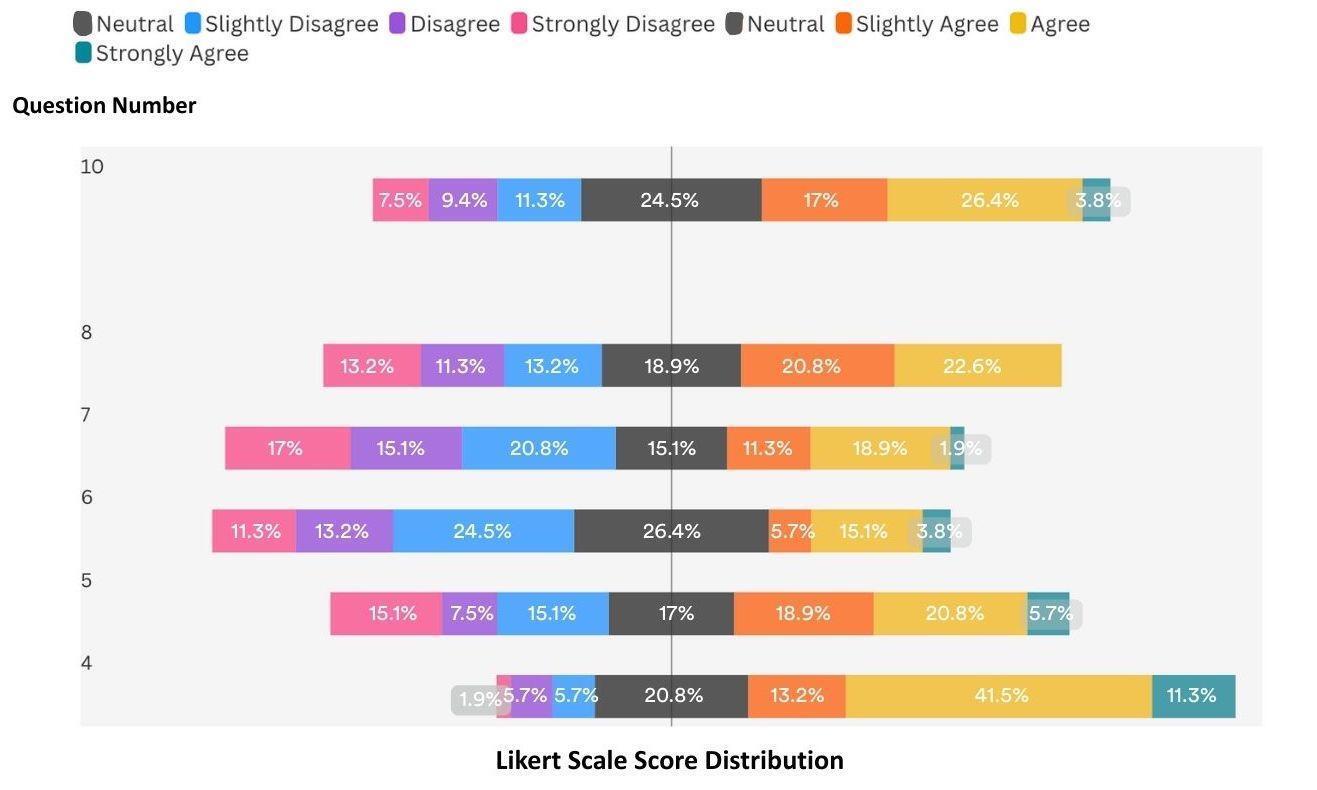
The sample size for the survey was 53, with a mean age of 24.06, and area of residence, including 23 distinct regions in China, with Shanghai being the most recurring (20 participants lived in Shanghai). The following figure summarizes the distributions of Likert scale results.
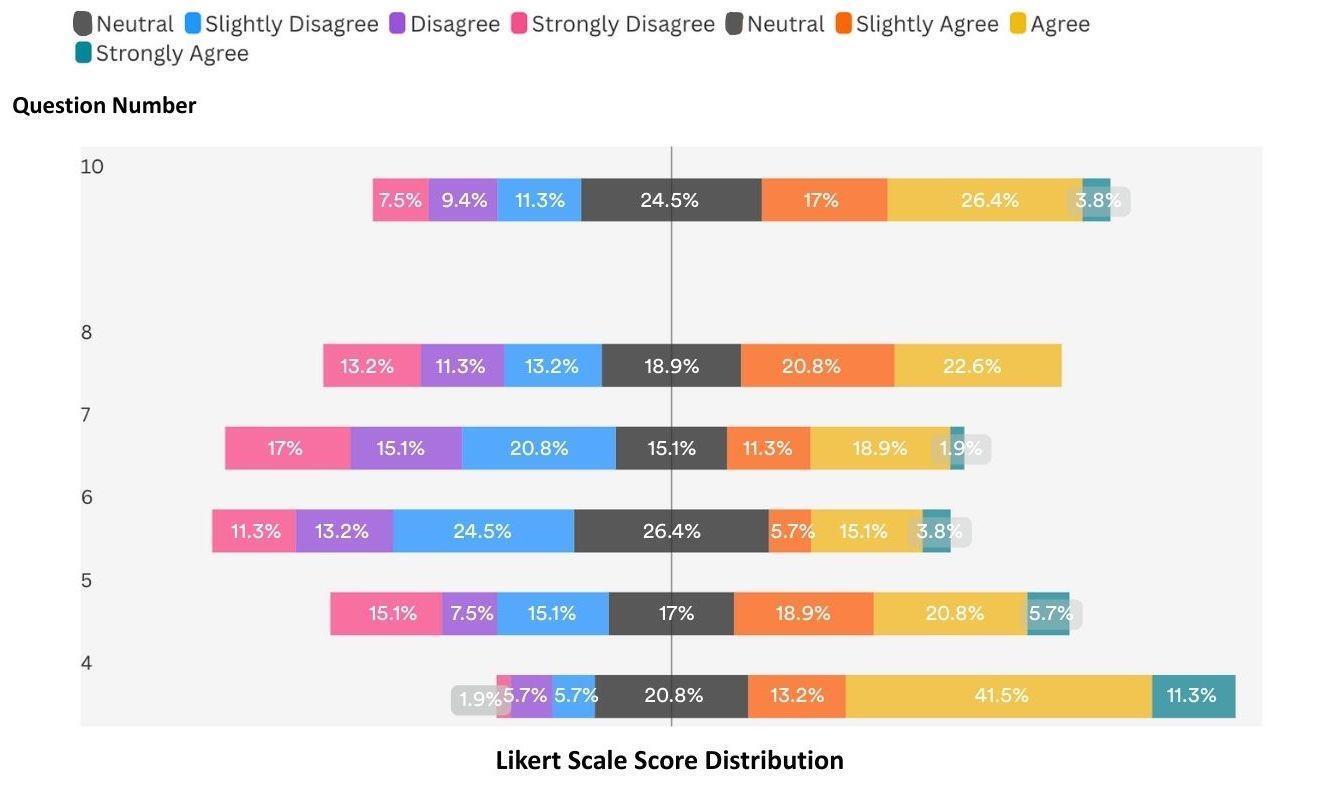
Survey responses indicate a clear distinction between general educational satisfaction and perceived career preparedness. While respondents reported relatively positive experiences of schooling overall (mean = 5.08), ratings declined substantially when questions addressed independence training, alignment with academic interests, and preparation for diverse careers (means ranging from 3.3 to 4.3). This contrast of numerical data suggests that enjoyment of schooling may not translate into preparation for post-educational independence.
The open-ended questions, questions 9 and 11, are extensions of questions 8 and 10, respectively and ask respondents to “Please explain”. Key responses to question 9 included 3 key general themes: participants’ interests were supported by their education system due to a coincidental alignment, frustration with constant integration into the massage industry, and lack of resources/exposure at school. For instance, participant 52 wrote: “I just happen to like music performance, and the major at the university I attend just happens to recruit students like us” - suggesting coincidental alignment. Participant 27 wrote: “Most schools have nothing but massage. I’m really fed up with this major. I really don’t like this major” - demonstrating occupation funneling frustration.
Question 11 showed similar patterns in response to question 9. The 2 major themes included satisfaction with preparation for music and massage occupations, but frustration with resources and support in other career interests. For instance, participant 9 wrote “Basically, special education schools generally allow visually impaired people to participate in separate examinations and recruitment, obtain acupuncture and massage majors, and engage in massage professions”. Conversely, participant 27 wrote: “I want to learn some skills besides massage, but the education system in our country has not yet achieved this”. This reveals a pattern of structural narrowing of options, especially in massage-oriented pathways.
These patterns point to a system that offers educational continuity and social belonging while simultaneously limiting the scope of skills and aspirations that are institutionally supported.
Interview data reinforce how institutional environments shape both perceived and actual choice. Responses to the first question show that opportunities for independent navigation are closely tied to school context. Interviewees 1, 3, and 4 reported regular exposure to independent living skills, while Individual 2, who attended school in Anhui, described strict campus restrictions that limited such development.
Responses to the second question reveal that career exposure was largely symbolic rather than practical. Participants described encounters with guest speakers, but these experiences lacked meaningful insight into career pathways. This suggests that exposure emphasized visibility over access. In contrast, K. (Individual 5) experienced more structured vocational training through zhong zhuan, including internships. However, he emphasized that options were limited and largely predetermined. Although vocational pathways provided clearer routes to employment, they were typically restricted in scope. K. ultimately left this path due to lack of interest.
Responses to the third question highlight strong expectations around “appropriate” careers for BVI individuals. Vocational tracks were often experienced as compulsory rather than optional. When participants pursued alternative interests, it required significant individual effort rather than institutional support. While some were able to develop personal interests, others experienced school primarily as a social or academic space without clear career direction.
Responses to the fourth question emphasize limited access to academic majors in higher education. Participants noted being restricted in their fields of study despite personal interests. Additionally, the segregated nature of special education was identified as a barrier, limiting access to mainstream higher education opportunities.
Policy Analysis
The policy analysis will first examine BVI individuals in the workforce. In 2023, the employment of disabled individuals in China reported that a total of 544,000 disabled individuals were employed. This establishes that the disabled in China have employment opportunities, although this rate consists of a large range of certified disabilities. Furthermore, China’s legal framework now includes a 1.5% disability employment quota (China Law Translate, 2012) and a 2023 accessibility law; however, evidence suggests weak enforcement and substitution (Xinhua, 2023) China’s employment rate of disabled individuals is reported at 24.7% in 2023 (People’s Daily, 2023), a major factor contributing to their rate being the inadequate access to information, a factor especially relevant for BVI individuals. The sociocultural norms and education structure promoted to BVI individuals strongly limit them to a career in massage. The United Nations Committee on the Rights of Persons with Disabilities has also identified BVI employment in massage in China as reserved employment in 2012 (X. H. Li et al., 2022). This creates a “semi-reserved” policy for the blind in message, which can be beneficial for their employment in this sector but limits their opportunities in pursuing other careers. In 2017, approximately 27% of employed BVI individuals worked in massage (Zhang, 2022), and in 2023, over 9,970 BVI individuals were trained to become medical masseurs (Xinhua, 2024). With such high numbers of BVI individuals in the massage industry, it may appear as though there is no apparent issue regarding their employment opportunities. However, not only is massage unsuitable for many individuals and their physical health in the long term, but scholarly analysis also demonstrates how China’s legal framework finds weak enforcement of antidiscrimination rules in the workforce. Employers often opt to pay the levy detailed in the Disability Employment Security Fund rather than hire persons with disabilities (Employment legal framework, 2020). Thus, gaps between policy and practice exist for the real inclusion of persons with disabilities in the workforce.
The second phase of policy analysis takes on a specific focus on the BVI education practices and systems in China. BVI students are separated from the traditional education path as they follow a separate system for opportunities post-grade school.
-
Stage 1: Elementary School
-
Stage 2: Middle School
- Some students drop out after this stage to begin working early
-
Stage 3 (Path 1): High School → Stage 4: College
-
Stage 3 (Path 2): Vocational School → Stage 4: Employment
Summary: After middle school, students either continue on an academic path (high school to college) or a vocational path (vocational school to employment), while some may leave school early to work.
In the recent decade, an important step toward more inclusive practices in Chinese education was the shift to allow BVI individuals to take the Gaokao exam with special accommodations such as braille papers, large-print papers, and extra time (Zou, 2018). Originally introduced in 1952, the Gaokao is a college entrance exam taken by virtually all Chinese students, 9.7 million in 2017 (Bullard, 2025). It consists of three mandatory subjects: Chinese, mathematics, and English, along with an optional fourth subject depending on students’ academic interests. This exam reflects Chinese values regarding education and plays a pivotal role in shaping a student’s future academic path. Even with the provided accommodations for BVI students, the test still proves to be difficult for them to take, especially with more advanced mathematical concepts. Reporting and case studies support the finding that despite policy openings, admissions, major selection, and on-campus support remain inconsistent, leading many BVI students to specialized tracks with fewer mainstream career options (Zhu, 2021).
Discussions
Guided by a framework of structural ableism and constrained agency, the following discussion interprets participants’ experiences not as individual shortcomings, but as outcomes of institutionalized educational and policy structures. By analyzing survey, interview, and policy data together, several interconnected themes emerged that reveal systemic barriers and opportunities for transformation.
In this study, independence is defined not only as self-sufficiency in meeting basic needs, but as the capacity for economic self-determination, informed choice, and social participation supported by education and policy. The findings indicate that while BVI students may achieve technical employability, their ability to choose among careers remains constrained by institutional structures that predefine acceptable outcomes. This helps explain why participants report satisfaction with schooling while also expressing frustration with career preparation: education promotes social integration and routine stability but does not consistently expand future-oriented agency. Survey results show high satisfaction with general education, particularly in question 4, alongside weaker ratings for independence and navigation training. Interview data reinforce this pattern, highlighting regional variation in such training. Independence and mobility are also seldom emphasized in national curricula for BVI education. Overall, these findings suggest that while BVI individuals value education as a space for social engagement, it does not consistently equip them with the skills necessary for daily independence, which is essential for adult integration. Although independent navigation is not the central focus of this study, understanding the level of support within educational systems is key to assessing how effectively they prepare BVI individuals to pursue careers of interest.
The second major theme is the misalignment between BVI individual interests and the education system, revealing deep epistemic injustice. Educational practices—such as segregated schooling and limited curricula—constrain agency by narrowing subject availability and emphasizing standardized vocational pathways. These structural and pedagogical limitations reflect assumptions about BVI students’ capacities and labor market roles. This is not an indictment of specialized education itself, but of institutional rigidity: segregation restricts choice rather than supporting diverse pathways. Survey responses showed neutral to negative-leaning support for academic and career interests, with students expressing desires for subjects like history, Mandarin, and broadcasting, yet lacking resources to pursue them. Policy analysis revealed that colleges typically offer only 1–3 majors, often social work, massage, or acupuncture, excluding fields deemed unsuitable for BVI individuals. These findings show that the Chinese special education system and related policies constrain career aspirations and reinforce dependency on narrow academic tracks, even though some students coincidentally benefit from the system—highlighting epistemic injustice when aspirations are overlooked for systemic convenience.
The third theme is occupational funneling into massage. Respondents expressed frustration at this default path, a reflection of structural ableism and epistemic injustice. Massage is socially encouraged for BVI individuals, and vocational schools overwhelmingly offer massage or acupuncture. Semi-reserved employment policies reinforce this, with over 27% of employed BVI individuals in the sector. This demonstrates structural harm: the appearance of inclusion masks restricted agency and career unsuitability, shaped by institutional convenience, cultural norms, and weak policy enforcement. Finally, the fourth theme concerns insufficient resources, exposure, and accessibility in BVI schools. Career speakers rarely clarified entry pathways for BVI students, and policy reforms like Gaokao accommodations (Braille, large print) since 2014 have had limited uptake—only 11 takers nationwide at peak. These surface-level reforms reveal a gap between proposed access and practical implementation.
Practical solutions need structural changes in BVI education and relevant policies to enforce meaningful changes. To address the misalignment of interests and opportunities the education system provides, resources can be shifted so that students are taught both key academic courses in addition to optional courses/electives where students can study areas outside of the core classes. Colleges could survey incoming first years to assess their majors of interest to expand beyond the traditional subjects they offer, accommodating these interests and reallocating resources accordingly. To address the policy and practice gap in inclusive education, student complaint systems can be established nationwide with legal backing for BVI individuals facing exclusion. Ultimately, various structural and policy changes can be made, thus prompting future research to evaluate such solutions.
Limitations
Future research could also take note of the limitations of the findings of this paper. In the survey, the sample size was limited to 53 participants for the survey and 7 for the interviews. This resulted in limited diversity of gender and age, and created a geographic skew addressed in 5-5. Accessibility of the survey (e.g., online format, screen-reader use) may have also excluded those with less technology access or experience from participation. The survey’s Likert scale format also serves as a limitation, as it simplifies complex experiences into numerical categories, potentially losing nuance. Specific to the interview, a key limitation could have been the social desirability bias: participants may have moderated responses, especially when discussing sensitive topics like frustration with schools or personal experiences, to be more socially desirable. Regarding policy analysis, the scope was limited as the only documents analyzed were available and accessible online. Some provincial or internal documents may not have been reviewed.
The concentration of participants in Shanghai highlights the necessary caution in generalizing these findings across China. Given regional disparities in educational resources and policy implementation, the constraints identified here may be more pronounced in less developed areas. Rather than undermining the findings, this imbalance suggests that the patterns observed likely represent a best-case scenario, underscoring the need for broader structural reform and further wide scale research.
These limitations call for future research. To address the limited sample size, future research could have larger, more representative surveys to develop a more concrete understanding of this research topic. Future research could also conduct longitudinal studies, following BVI students along their entire educational pathway and analyzing the relevant effects on employment. Another key topic for future research is policy implementation analysis. It could move beyond policy text to study how policies are applied in schools and workplaces.
Conclusion
The four key themes analyzed in the discussion section present the complexity and multifacetedness of BVI education and policy impact on their future career path, opportunities, and abilities to become employed. While BVI students may enjoy their education, systemic practices and policies channel them into narrow occupational roles and undermine their career independence. Furthermore, certain national quotas and accessibility laws exist, but enforcement is weak, and educational pathways are restrictive, especially for employment. Linking these findings, it can be concluded that students often find general satisfaction with their education, especially as a means for social interaction and exploring music, but it largely fails to prepare students to pursue a career of their interest. This issue generally stems from the restrictive educational pathway and lack of effective policy enforcement, which prompts structural changes to mitigate such confinement. Education and policy should not only remove barriers but also actively transform systems to promote equity and diverse futures. Without addressing structural ableism embedded in educational pathways, reforms risk reproducing constrained agency under the appearance of inclusion.